
Ontario's commercial construction market reached record highs in 2025, and with major infrastructure and private developments projected for 2026, the opportunity for growth is immense. However, the barrier to entry has evolved. In 2026, only compliant, safety-certified, and digitally-integrated GCs win the most lucrative public and private contracts.
This guide equips you with the five essential phases to navigate the legal, safety, and financial landscape of Ontario commercial construction.

Disclaimer: Ontario does not issue a single provincial "Commercial General Contractor License." Requirements are primarily municipal, project-specific, and tied to regulatory compliance (e.g., permits, insurance, and safety). This guide outlines the foundational steps most successful commercial GCs take in 2026. Always verify requirements with your local municipality and legal counsel.
Phase 1: Corporate Structure & Risk Management
Commercial projects involve higher capital, larger crews, and tighter legal scrutiny. Moving beyond a sole proprietorship is the first step in signaling to developers and government agencies that you are a "qualified constructor."
1. Strategic Incorporation
While you can technically operate a business under your own name, commercial clients in Ontario almost exclusively award contracts to corporations.
- Liability Protection: Incorporation creates a "corporate veil," ensuring that if a project faces a catastrophic lawsuit or debt, your personal home and savings are legally shielded.
- Tax Deferral (2026 Update): By incorporating, you can take advantage of the Small Business Deduction. In 2026, the corporate tax rate for the first $500k of active business income remains significantly lower than personal marginal rates, allowing you to reinvest more cash back into equipment or Billdr subscriptions.
2. The "Bonding Facility" (Bid vs. Performance)
In the commercial world, a "bond" is a guarantee from a third party (a surety) that the job will be done.
- Bid Bonds: These are submitted with your tender to prove that if you win the contract, you will actually sign it at the price you quoted.
- Performance & Payment Bonds: For public projects over $500,000, Ontario’s Construction Act typically mandates a 50% Performance Bond (guaranteeing you’ll finish the work) and a 50% Labour & Material Payment Bond (guaranteeing you’ll pay your sub-trades).
- Action Step: In 2026, bonding companies look closely at your "Current Ratio" (cash vs. debt). Keeping your finances clean in a management platform makes it much easier to secure these bonds.
3. Commercial Insurance Limits
The standard $2M liability policy used in residential work is often rejected in commercial tenders.
- The 2026 Standard: You should carry $5M to $10M in Commercial General Liability (CGL).
- Pollution & Cyber Liability: As of 2026, more commercial contracts are requiring "Environmental Liability" (in case of site contamination) and "Cyber Liability" (protecting digital project data).
- Builder’s Risk: This covers the building while it’s under construction. Ensure your policy includes coverage for "Transit" and "Off-Site Storage," as supply chain delays in 2026 often mean materials are sitting in warehouses for months.
4. WSIB Compliance and the "2026 Ceiling"
WSIB is more than just a fee; it is your primary defense against worker lawsuits.
- The 2026 Earnings Ceiling: The maximum insurable earnings for 2026 is $121,700. You must report and pay premiums on all worker earnings up to this cap.
- Automated Clearances: For commercial GCs, the danger isn't your own WSIB status, it's your subcontractors'. If a sub-trade has a "lapsed" status, you become liable for their premiums and any injuries on your site.
- Sub-Trade Management: Use Billdr to store and automatically alert you when a sub’s WSIB clearance is about to expire, preventing a "hold" on your project progress.
Strategic Advantage: Leveraging Billdr for Phase 1
Navigating the transition from a "solo" mindset to a "corporate" powerhouse is where most GCs hit a bottleneck. Billdr is designed to automate the administrative overhead that comes with this professional shielding.
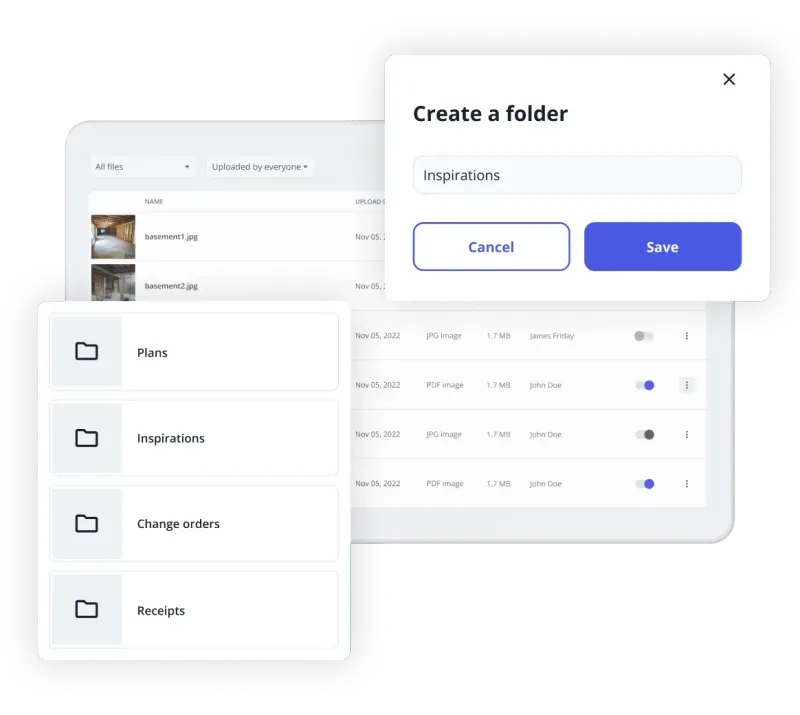
- Document Vault for Tenders: Commercial bids move fast. Use the Billdr Document Hub to store your Articles of Incorporation, $10M Insurance Certificates, and Bond capacity letters. When a high-value tender drops, you can share a secure link to your "Qualifications Package" in seconds, rather than digging through old email threads.
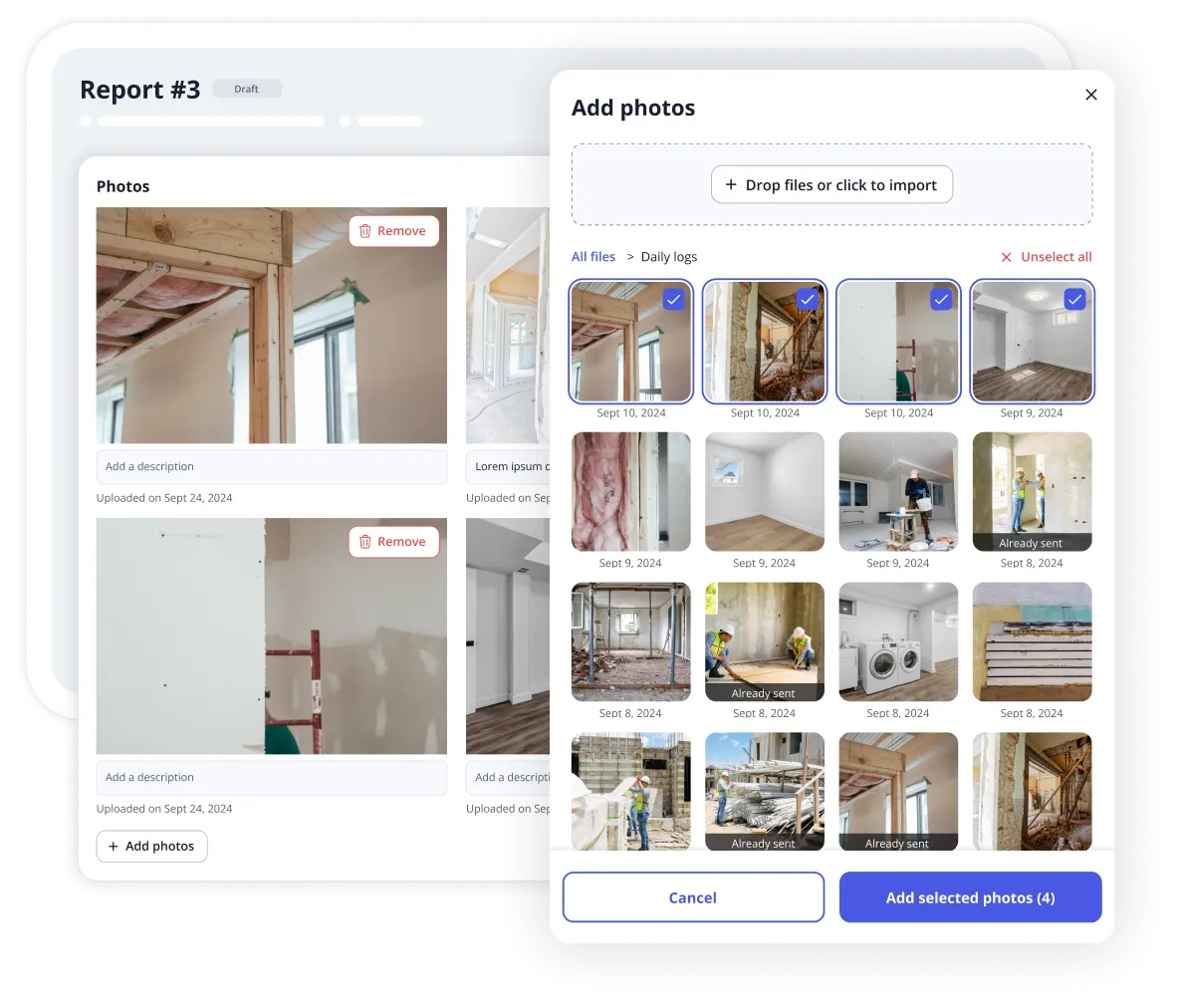
- Safety Compliance Logs: To maintain your COR™ status or meet O. Reg. 157/25 requirements, you need a record of on-site safety. Billdr's Daily Logs allow site supervisors to photo-document the presence of mandatory equipment (like the required 2026 AEDs) directly from their phone, creating a permanent, time-stamped compliance trail.
Phase 2: Municipal Licensing & The "BizPaL" Strategy
In Ontario, the authority to regulate contractors is delegated to individual municipalities. This means your "license to operate" can change every time you cross a city limit.
1. The BizPaL Gateway
Before bidding on work in a new region, your first stop must be BizPaL.ca. This federal-provincial partnership is the "source of truth" in 2026 for identifying every permit and license required based on your specific location and industry. Using it prevents the "surprise" $5,000 fine for operating without a local business registration.
2. Regional Deep-Dives (2026 Standards)
- Toronto (Municipal Code Chapter 545): If your commercial work involves renovations or alterations, you likely need a Building Renovator Licence. This requires a criminal record check and, crucially, a Trade Examination. In 2026, Toronto has digitized this process, but the exam still tests your knowledge of both business acumen and the Toronto Municipal Code.
- Hamilton: Hamilton remains one of the strictest jurisdictions for trade-specific licensing. Per By-law 07-170, you must hold a local Trade Licence for plumbing, HVAC, or even "Building Repair." Their 2026 Reference Guide mandates that a contractor’s license cannot be issued until a "Licensed Building Repair Master" is in your employ.
- Ottawa: As of March 1, 2026, Ottawa has implemented new licensing schedules for specialized work (including Hardscaping and Building Repairs). They require proof of $2M–$5M CGL insurance specifically filed with the Chief License Inspector before a license is granted.
3. The BCIN "Design-Build" Advantage
A Building Code Identification Number (BCIN) is the registration required by the Ministry of Municipal Affairs and Housing (MMAH) for anyone who provides design activities.
- Why GCs want it: While not a "contractor license," having a staff member with a BCIN in categories like "Large Buildings" or "Complex Buildings" allows your firm to sign off on your own design drawings for permit applications (for buildings not requiring an Architect or Engineer's seal).
- The 2026 Edge: In the 2026 "Design-Build" era, clients want a single point of contact. A GC with a BCIN can fast-track the permit process by 3–4 weeks because they aren't waiting on a third-party designer to fix code-compliance errors.
How Billdr Solves Phase 2
Municipal licensing is a paperwork nightmare. Billdr turns this into an automated asset.
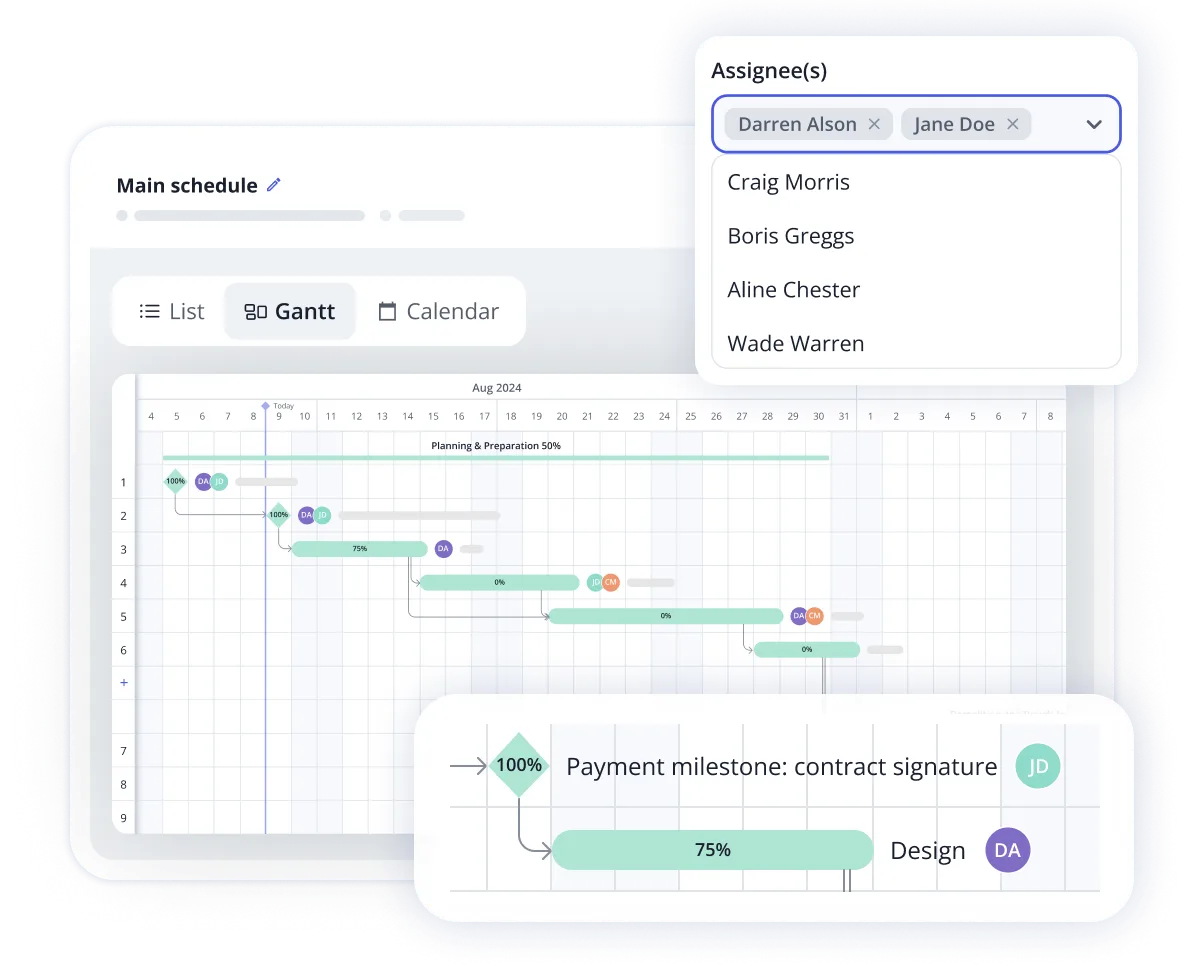
- Permit Tracking & Dependencies: Commercial permits often involve a "chain" of approvals (Zoning → Site Plan → Building Permit). Billdr's Gantt Charts allow you to map these dependencies. If the city delays your plumbing permit, the software automatically shifts the rest of your schedule so you can warn your subs in advance.
Phase 3: Mastering the 2026 Construction Act (Bill 60)
For decades, the "10% holdback" was a source of constant friction, often locked away until the very end of a multi-year project. As of January 1, 2026, Bill 60 has overhauled this system. Annual holdback release is now mandatory for any contract extending beyond 12 months, regardless of the contract price.
1. The 14-Day "Form 6" Trigger
The process is no longer at the owner's discretion. It is triggered by the calendar:
- The Publication Rule: Owners must publish a Notice of Annual Release of Holdback (Form 6) within 14 days of the contract’s anniversary date.
- Where to Publish: In 2026, this notice must be published on a designated "construction trade news website" (such as Daily Commercial News, Link2Build, or Ontario Construction News).
- Why it Matters: If the owner misses this 14-day window, the release is delayed, and the "flow-down" of funds to your subcontractors is choked.
2. The 60–74 Day Payment Window
Once the Form 6 is published, a specific countdown begins:
- The Waiting Period: Payment must be made no earlier than 60 days and no later than 74 days after the notice is published.
- Lien Decoupling: Crucially, Bill 60 "decoupled" holdback from lien expiry. You can receive your annual holdback even while your lien rights for the ongoing work remain intact. The only thing that stops this payment is if a lien has been preserved or perfected against the project during that 60-day window.
3. Transition Rules for "Legacy" Contracts
If you are working on a project that started before the new laws kicked in, pay attention to the "Second Anniversary" rule:
- Pre-2026 Contracts: The first mandatory release occurs on the second anniversary of the contract following January 1, 2026.
- The Catch-Up Payment: At that second anniversary, the owner must release all accrued holdback from the very start of the project. For a project that started in mid-2024, this could result in a massive, project-stabilizing cash injection in 2027.
Phase 3 Recap: The Holdback Timeline
Phase 4: Modern Safety Standards & O. Reg. 157/25
In 2026, safety compliance is no longer a "paperwork exercise". It is a strict legal barrier to project entry. With the enforcement of O. Reg. 157/25, the Ontario government has signaled that constructors (GCs) are now the primary guardians of worker cardiac health and fall prevention.
1. The Mandatory AED Mandate (O. Reg. 157/25)
As of January 1, 2026, the presence of an Automated External Defibrillator (AED) is a legal requirement on specific sites.
- The Trigger: If your project is expected to last 3 months or longer and regularly employs 20 or more workers, an AED is mandatory.
- The Equipment: The device must be licensed by Health Canada. It cannot be "tucked away" in a trailer; it must be in a suitable, unobstructed location, protected from site dust and extreme Ontario temperatures.
- The Kit: Each AED must be stored with a specific kit: a CPR mask, medical scissors, two pairs of gloves, a disposable razor, a garbage bag, and four absorbent towels.
- Quarterly Inspections: A "competent worker" must inspect the AED at least once every three months and keep a signed, dated record of that inspection on-site.
2. The COR™ 2020 Standard (and Beyond)
The Certificate of Recognition (COR™) has moved from a "nice-to-have" to a mandatory pre-qualification for nearly all public tenders in 2026.
- The Ottawa Expansion: As of January 1, 2026, the City of Ottawa now requires COR™ (or an equivalent like ISO 45001) for all construction contracts valued at over $1 million. By 2027, this will drop to $100,000.
- Why it matters: COR™ proves that your safety program is actually active. It requires external audits by the IHSA and proves you have a functioning health and safety management system that has been in place for at least a year.
3. Working at Heights (WAH) & The 3-Year Clock
Fall protection remains the #1 focus for Ministry of Labour inspectors.
- Training Currency: CPO-approved Working at Heights training is only valid for three years. In 2026, inspectors are specifically looking for expired wallet cards. If a worker’s training is even one day past the 3-year mark, they must be removed from height-related tasks immediately until a 4-hour refresher course is completed.
- Site-Specific Training: Beyond the generic WAH certificate, the GC must provide site-specific training on the exact fall protection equipment being used on that specific project.
How Billdr Solves Phase 4
Safety is about documentation. If it wasn't recorded, it didn't happen. Billdr acts as your digital safety officer.
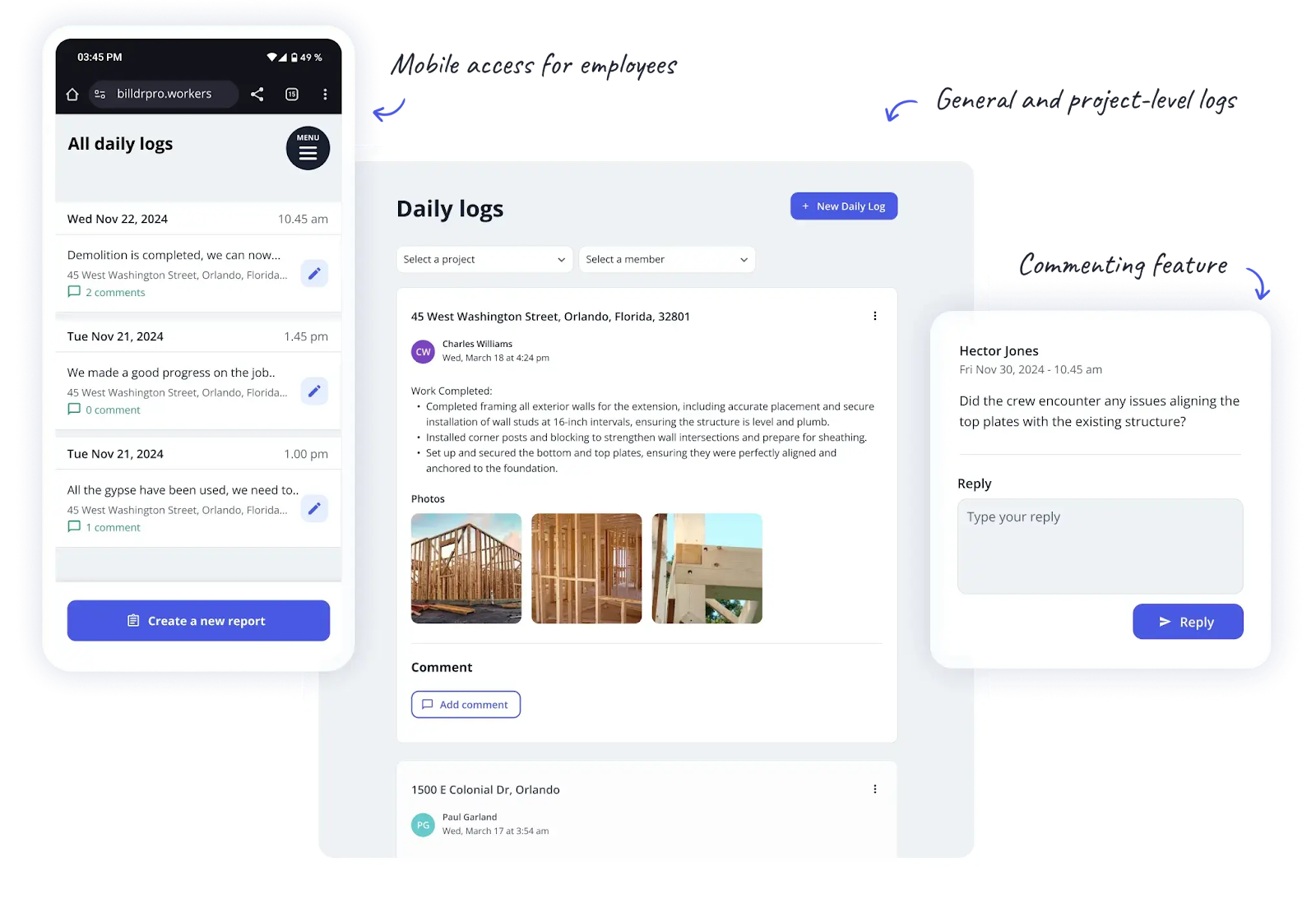
- AED Inspection Logs: Instead of a paper tag that gets covered in drywall dust, site supervisors can use Billdr's Daily Logs to upload a photo of the AED and the signed inspection record every quarter. This creates a permanent, cloud-based audit trail.
Phase 5: The Digital Competitive Edge
In 2026, the "pen-and-paper" GC is effectively locked out of the commercial market. Professionalism is now measured by your digital infrastructure. As project complexity increases and labor stays tight, top-tier GCs are using integrated platforms to maintain "Single-Source-of-Truth" governance over their sites.
1. Automated WSIB & Insurance "Shielding"
In a high-volume commercial environment, manually tracking subcontractor paperwork is a liability.
- The Risk: If a sub-trade’s insurance or WSIB status lapses mid-project, you are legally and financially exposed for any incidents on-site.
- The 2026 Digital Standard: Integrated platforms now provide automated compliance shielding. When a subcontractor’s certificate is 30 days from expiry, the system sends an automated "nudge" to the sub. If they don't update it, the system can automatically flag their next progress draw for a hold, protecting your company's "In Good Standing" status without a single manual check.
2. The Bill 60 "Holdback Calendar"
Phase 3 detailed the strict 14-day window for holdback notices. Missing this window isn't just an admin error, it’s a cash flow disaster.
- Digital Milestone Tracking: Rather than relying on a wall calendar, GCs now use Holdback Dashboards. These tools calculate anniversary dates for every project in your portfolio and create "hard stops" in your workflow to ensure the Notice of Annual Release is published on time.
- The Flow-Down Benefit: Once you receive the holdback, the software automatically calculates the pro-rated disbursement for every sub-trade, reducing your accounts payable (AP) workload by hours.
3. Real-Time Compliance Dashboards & Transparency
Commercial owners in 2026 (especially in the public sector) no longer wait for monthly reports; they want real-time visibility.
- Daily Digital Logs: Gone are the days of the messy site diary. Site leads now use mobile apps to upload time-stamped photos, weather conditions, and safety logs (like the mandatory AED inspections) instantly.
- Owner Portals: By providing your client with a "Read-Only" dashboard, you eliminate 80% of "Status Update" phone calls. They can see the project moving in real-time, which builds the trust necessary to secure their next multi-million dollar contract.
2026 Compliance Cheat Sheet
Conclusion: Leading the 2026 Construction Frontier
Success in Ontario’s 2026 commercial sector is no longer defined solely by the quality of your builds, but by the integrity of your systems. With the implementation of Bill 60 and O. Reg. 157/25, the provincial government has raised the bar for entry, demanding higher levels of financial transparency and site-specific safety. While these regulations may seem daunting, they represent a significant opportunity for the modern General Contractor. By mastering these five phases, from legal incorporation to digital integration, you aren't just staying compliant; you are building a scalable, professional powerhouse that is primed to win the province's most prestigious contracts. The future of Ontario construction belongs to those who leverage technology to turn regulation into a competitive advantage.
Sources & Professional Resources
To ensure your business remains compliant with the most recent 2026 updates, we recommend bookmarking the following official portals and legal references:
1. Legal & Regulatory Frameworks
- Ontario Construction Act (R.S.O. 1990, c. C.30): The primary legislation for Ontario construction. Refer to Bill 60 (2025/2026) for the new annual holdback mandates.
- O. Reg. 157/25 (AEDs in Construction): The specific 2026 regulation requiring Automated External Defibrillators on projects with 20+ workers.
- O. Reg. 213/91 (Construction Projects): The general safety standard, including the 2026 consolidation of fall protection and site hygiene rules.
2. Statutory Notice Publication
Under Bill 60, Form 6 notices must be published on a designated construction trade news website to be legally valid.
- Daily Commercial News (DCN): The most common platform for Certificates of Substantial Performance (CSP) and Holdback Notices.
- Link2Build Ontario: An authorized digital portal for publishing statutory legal notices in Ontario.
3. Business & Licensing Tools
- BizPaL Ontario: Use this to generate a customized list of municipal permits and licenses for any city in the province.
- Toronto Building Renovator Licence: Detailed requirements for Chapter 545 compliance, including trade exam dates.
- BCIN - QuARTS Search: Verify the qualification and registration status of designers and firms holding a Building Code Identification Number.
4. Health, Safety & Insurance
- IHSA COR™ 2020 Portal: The official "Authority having Jurisdiction" for granting COR™ certification in Ontario.
- WSIB 2026 Premium Rates & Maximums: Current class rates and the 2026 Maximum Insurable Earnings ceiling (set at $121,700).
- WSIB AED Rebate Program: Official portal to apply for the $2,500 rebate on qualified AED purchases (submissions open through July 31, 2027).
Disclaimer
This guide is for informational purposes only and does not constitute legal or professional advice. While Billdr provides the tools needed to manage Ontario's complex "Prompt Payment" and "Holdback" cycles, it does not guarantee the acquisition of any municipal or provincial license. All builders should consult with a construction law expert regarding the 2026 Construction Act amendments.