

Executive Summary
Launching a commercial contracting firm in Quebec requires navigating a "Dual-Agency" regulatory environment unique to the province. Unlike other jurisdictions, Quebec strictly separates the business's right to operate (governed by the RBQ) from the right to manage construction labor (governed by the CCQ). In 2026, the commercial sector is defined by a rigorous provincial push toward high-performance building envelopes and the stabilization of prompt payment regulations. To succeed, a General Contractor (GC) must not only pass technical examinations but also maintain significant financial security bonds and adhere to mandatory sector-specific collective agreements. This guide provides a strategic roadmap for compliance, financial readiness, and labor management in Quebec’s high-stakes commercial market.

Why Compliance Matters in 2026: The Quebec Risk Profile
- CNESST "Zero Tolerance": On commercial sites, the CNESST (Health and Safety Board) enforces a "Zero Tolerance" policy for fall protection and crystalline silica dust. Failure to provide collective protection for heights over 3 meters or improper dust management can result in immediate work stoppages and fines exceeding $20,000 for serious first-time offenses.
- The RBQ "Security Bond" Trap: If your bond lapses for even 24 hours, your license is automatically cancelled by the RBQ. Every active permit on your commercial sites becomes void instantly, and re-applying can take months.
- CCQ Audit & Ratios: Hiring a worker without the correct "Competency Card" for their specific trade is a top infraction. Quebec enforces strict Apprentice-to-Journeyman ratios (often 1:1, depending on the trade); violating these can lead to retroactive union wage claims and administrative penalties.
- Prompt Payment Compliance: GCs must adhere to prescribed timelines under recent provincial regulations. Payments are generally due by the end of the month following a certified request or early in the second month. Delays trigger mandatory interest penalties and can negatively impact your RBQ Good Standing status.
Phase 1: The RBQ License (The Foundation)
The Régie du bâtiment du Québec (RBQ) issues the mandatory license to operate. For commercial work, the essential designation is Subclass 1.3 (Buildings of all types).

1. The Guarantor: Roles and "Professional File" Options
A guarantor must be "actively involved" in the company. This means they cannot be a "silent partner" or a consultant; they must be an owner, a director, or a full-time manager with decision-making power.
The Four Pillars of Competency
Each pillar represents a specific set of responsibilities that the RBQ monitors:
- Administration: Responsible for financial health, including paying license fees, remitting GST/QST, and maintaining the $40,000 bond.
- Safety Management: Responsible for the Prevention Program. They ensure all sites comply with the CNESST Safety Code.
- Project & Site Management: Responsible for the quality of work, contract signatures, and ensuring that timelines and budgets are met.
- Laws and Regulations: Responsible for ensuring the company follows the Building Act and specific Quebec construction codes.
The "Professional File" Alternative
In 2026, many applicants bypass the exams by submitting a Professional File. If your guarantor can prove 5+ years of relevant experience in the last 10 years, they may be exempt from the exams.
- The Cost: This evaluation costs $877.49 per domain (e.g., $877 for Administration).
- The Benefit: It is often faster and less stressful than the proctored exams if the candidate is already a seasoned industry professional.
2026 Exam Exemptions for Professionals
- Engineers & Architects: Members of the OIQ or OAQ are typically exempt from the Project Management and Technical Execution exams but must still pass the Safety and Laws/Regulations modules, as these are specific to Quebec’s administrative legal framework.
2. The $40,000 Security Bond: How It Works
The security bond is a "guarantee of performance" that protects the public. In the commercial sector (Subclass 1.3), this is mandatory.
What the Bond Covers
The bond is designed to compensate clients for:
- Faulty Workmanship: Defects discovered within one year of project completion.
- Non-performance: If the contractor abandons a site or goes bankrupt mid-project.
- Down Payments: Protecting deposits if the work never starts.
The "Claims Window"
A client has 12 months from the end of the work to discover a defect and notify the RBQ. Once an eligible claim is accepted, a "6-month claim file" is opened. If other clients come forward within that window and the total claims exceed $40,000, the money is distributed pro-rated among all victims.
⚠️ Warning: The bond is not insurance. If the surety company pays out a claim on your behalf, they will legally pursue you (the contractor) for full reimbursement.
Startup Cost Breakdown (2026 Fees)
Phase 2: CCQ and Labor Management
Quebec is the only province where Commission de la construction du Québec (CCQ) registration is mandatory for almost all commercial labor.
Expanding on Phase 2 is essential because the CCQ (Commission de la construction du Québec) is the most rigid part of the Quebec construction ecosystem. While the RBQ gives you the right to have a business, the CCQ gives you the rules for your workers.
In 2026, the industry is operating under modernized "R-20" regulations and updated 2025–2029 collective agreements. Here is the detailed breakdown of what a commercial GC must manage.

1. The Employer Registration & AECQ Membership
Registration is not just a formality; it is a legal requirement to become an "Employer" in the eyes of the law.
- Mandatory Registration: Every contractor hiring labor must register with the CCQ. A registration fee of $350 applies in 2026.
- AECQ Membership: Upon registration, you are automatically enrolled in the Association des entrepreneurs en construction du Québec (AECQ). This body represents all employers during provincial collective agreement negotiations.
- The "Paid Administrator" Change: As of January 2026, the "Status F" for paid administrators has been abolished. Administrators are now reported as regular employees, simplifying the payroll reporting process for company owners who also work on-site.
2. The "Rapport Mensuel" (Monthly Report)
The Monthly Report is the CCQ’s primary audit tool. It is how you declare hours and pay the required social benefits.
- Deadline: Must be submitted and paid by the 15th of the following month.
- Mandatory Electronic Payment: Starting in January 2026, all payments must be made via pre-authorized debit (PAD) or through a financial institution. The CCQ no longer accepts other forms of payment for monthly reports.
- The Penalty Matrix: Late filing or payment is extremely expensive in 2026:
- 1–7 days late: 7% penalty on the total due.
- 8–14 days late: 11% penalty.
- 15+ days late: 20% penalty.
- Daily interest also accrues on any unpaid balance.
3. CCQ Competency Certificates & Ratios
Every worker on a commercial site must hold one of three main certificates:
- Journeyman (JCC): Fully qualified in their trade.
- Apprentice (ACC): In training (usually 1 to 5 periods of 2,000 hours each).
- Occupation: For specialized but non-trade work (e.g., specialized laborers).
The 1:1 Rule: On a commercial site, you must respect the Apprentice-to-Journeyman ratio. For most trades (like Carpenter-Joiner or Electrician), you must have one Journeyman on-site for every Apprentice. If an inspector finds two apprentices working with only one journeyman, the employer faces an immediate fine, and the "extra" apprentice may be ordered off the site.
4. 2026 Wage & Benefit Breakdown
In 2026, wages in the Institutional/Commercial sector are governed by the 2025–2029 Collective Agreement.
- Base Wage: Typically between $45.00 and $52.00/hour for a Journeyman.
- Social Benefits (Remittances): Employers must contribute an additional 30%–35% on top of the base wage. This covers:
- Pensions: Employer contributions are mandatory for every hour worked.
- MÉDIC Construction: Private health insurance for construction workers.
- Vacation Pay (13%): Employers must remit 13% of the gross wage to the CCQ, which is then paid out to workers twice a year (summer and winter holidays).
The Billdr Advantage: Quebec Project Management
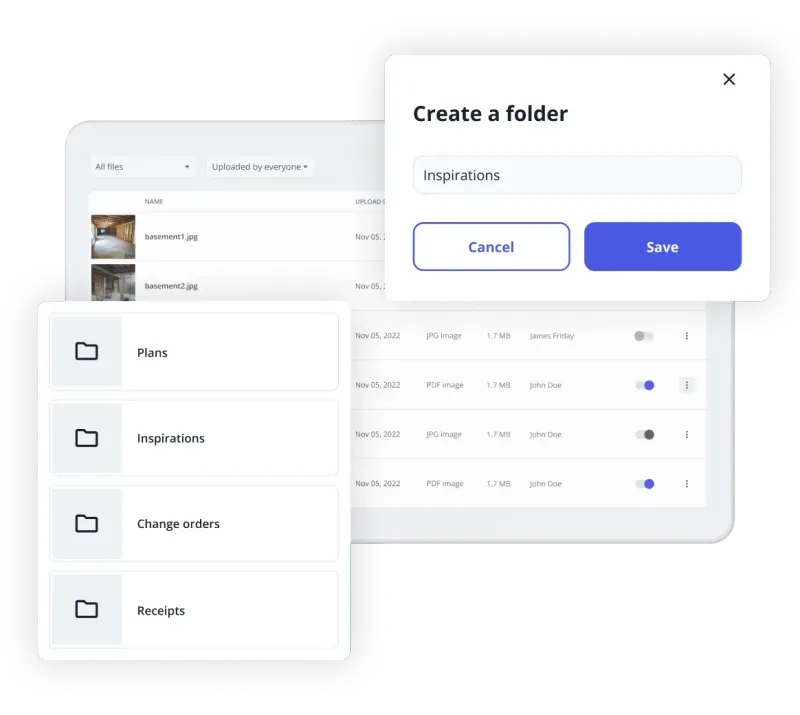
- Centralized Compliance Vault: Store all mandatory Quebec documentation, including your RBQ License, CNESST Prevention Program, and subcontractor CCQ cards, in one secure, project-linked folder for instant retrieval during site inspections.
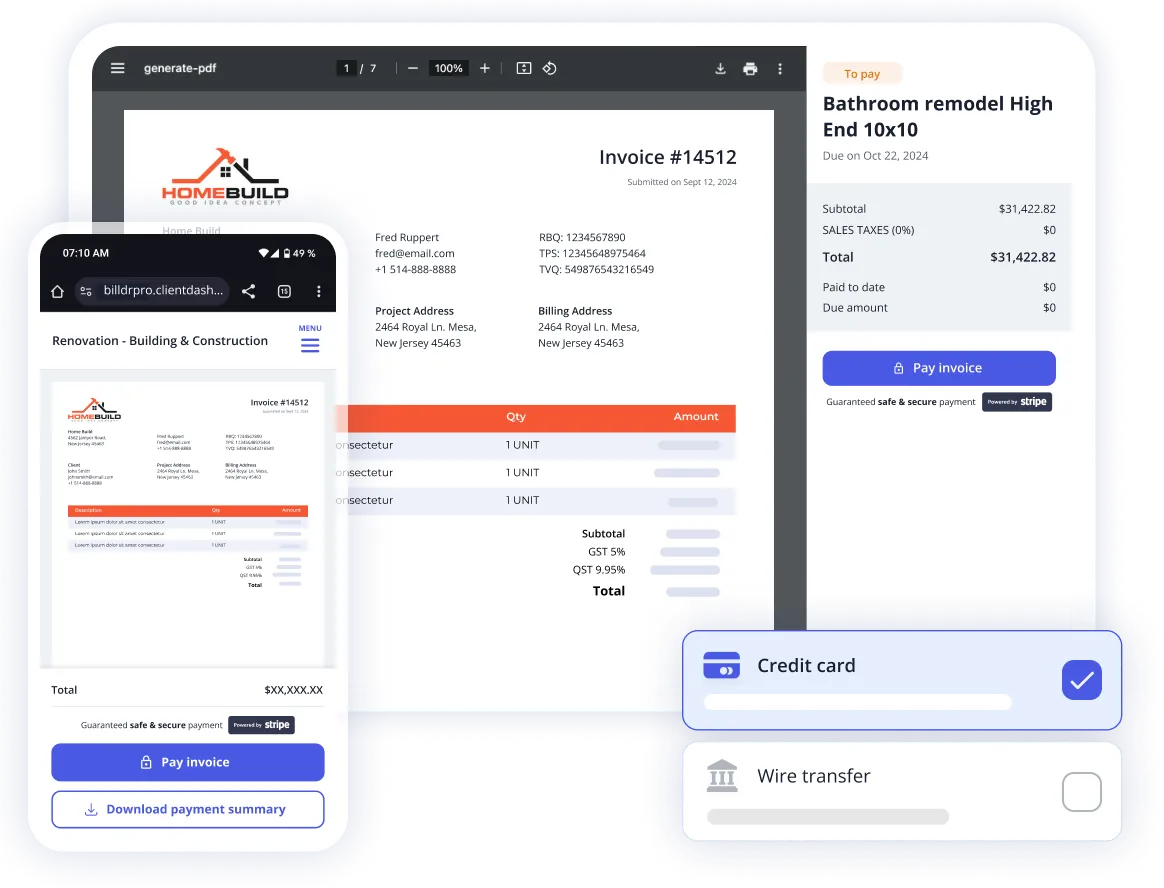
- Professional Client Dashboard: Build trust with commercial clients through a dedicated portal where they can digitally sign change orders, view progress photos, and pay invoices via wire or ACH, ensuring a clear "paper trail" for audit purposes.
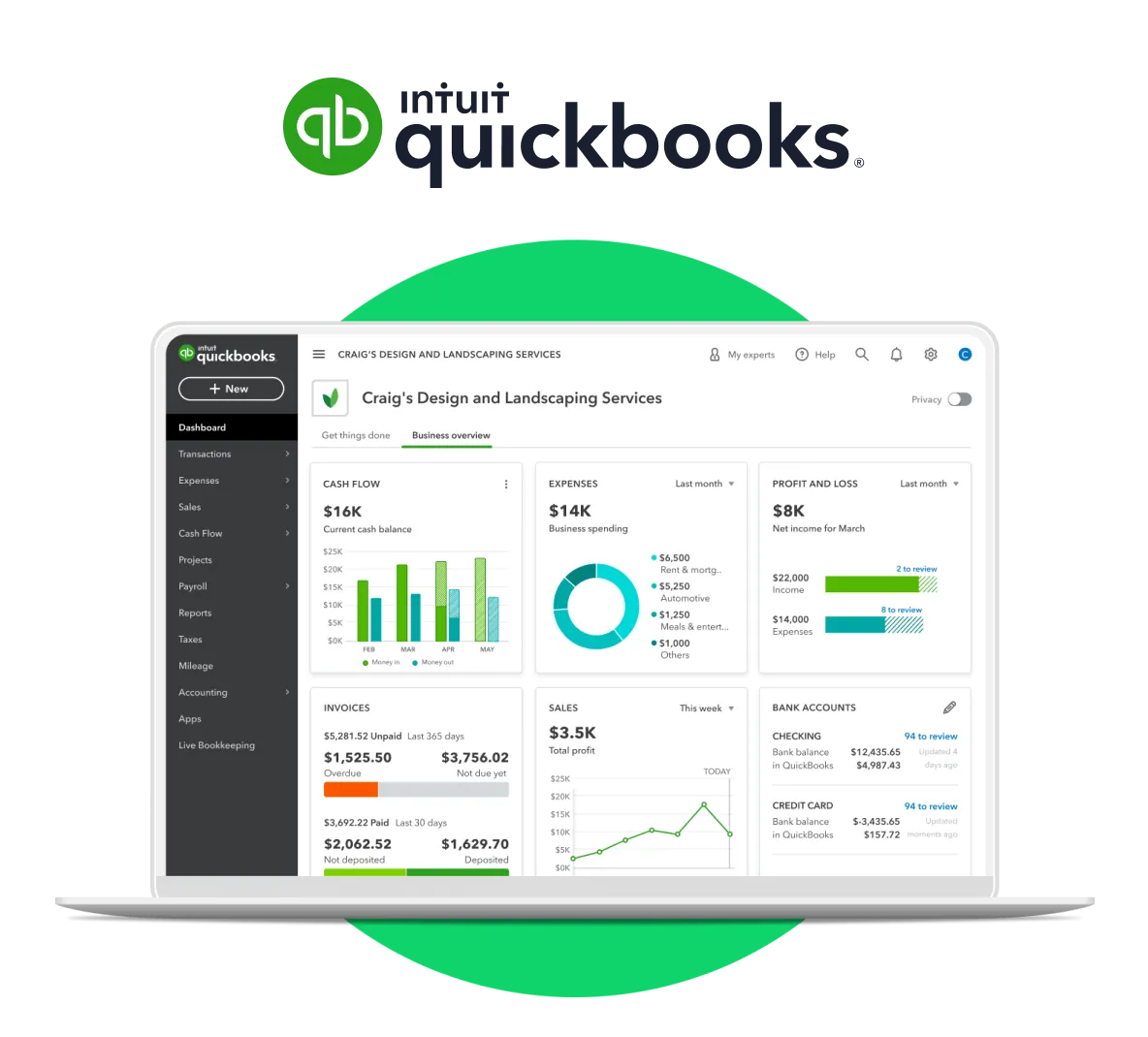
- Seamless QuickBooks Integration: Synchronize your project expenses, purchase orders, and invoices directly with QuickBooks Online to simplify your year-end tax filings and maintain the financial transparency required for RBQ "Good Standing."
Phase 3: Building Codes and Sustainability
Commercial work follows the National Building Code (NBC) with Quebec-specific amendments (Chapter I.1).
1. Electrification & High-Performance Envelopes
Quebec’s building code for commercial projects is primarily governed by Chapter I.1 – Energy Efficiency of Buildings. As of July 13, 2024, a new version of this chapter came into force, based on the NECB 2020 (with Quebec-specific amendments).
- The "Power Demand" Shift: A major 2026 update to the code is the introduction of a maximum power demand calculation for the winter months. If you are using the "performance path" for compliance, you must now prove that your building's peak electric input during a Quebec winter won't overwhelm local grids.
- "Envelope First" (Prescriptive Path): To avoid complex energy modeling, GCs often follow the prescriptive path, which mandates:
- Reduced Thermal Bridging: Enhanced requirements for continuous insulation, specifically where balconies or floor slabs meet the exterior wall.
- Air Leakage Testing: While mandatory for some jurisdictions, many commercial contracts in 2026 now require a Blower Door Test to verify that the high-performance envelope actually performs as designed.
- The Montreal Decarbonization Bylaw: * Phase-In Dates: As of April 2025, the ban on combustion heating (gas/oil) expanded to all new buildings under 2,000 $m^2$. For 2026, this effectively means all new small-to-medium commercial builds in Montreal must be 100% electric for space and water heating.
- Equipment Shifts: You must now plan for large-scale Electric Heat Pump arrays or Commercial Induction for kitchens, as gas hookups for new builds are increasingly restricted to industrial processes only.
2. Seismic and Structural Standards
Quebec’s St. Lawrence Valley (Montreal, Trois-Rivières, Quebec City) is one of the most seismically active regions in Canada. The 2026 standards require that non-structural components (Mechanical, Electrical, and Plumbing, MEP) move with the building during an earthquake.
- Seismic Bracing Requirements: You must install lateral and longitudinal bracing for:
- HVAC Ductwork: Generally required for ducts with a cross-section of 6 ft or larger.
- Electrical Raceways: Required for conduit 5” trade size or bigger, or any trapeze-supported system weighing over 10 lbs per linear foot.
- Suspended Equipment: Any equipment weighing more than 400 lbs (like a unit heater or transformer) must have a certified seismic restraint system.
- The "Attestation of Conformity" Process: 1. Design Phase: An engineer must provide a signed plan showing the location and type of every seismic brace.
2. Inspection Phase: The GC must ensure these are installed exactly as per the plan.
3. Final Attestation: Before the RBQ or municipality issues an occupancy permit, the engineer must perform a site visit and sign a formal Attestation of Conformity, stating that the seismic bracing complies with the NBC 2020 standards.
The Billdr Advantage: Technical Compliance
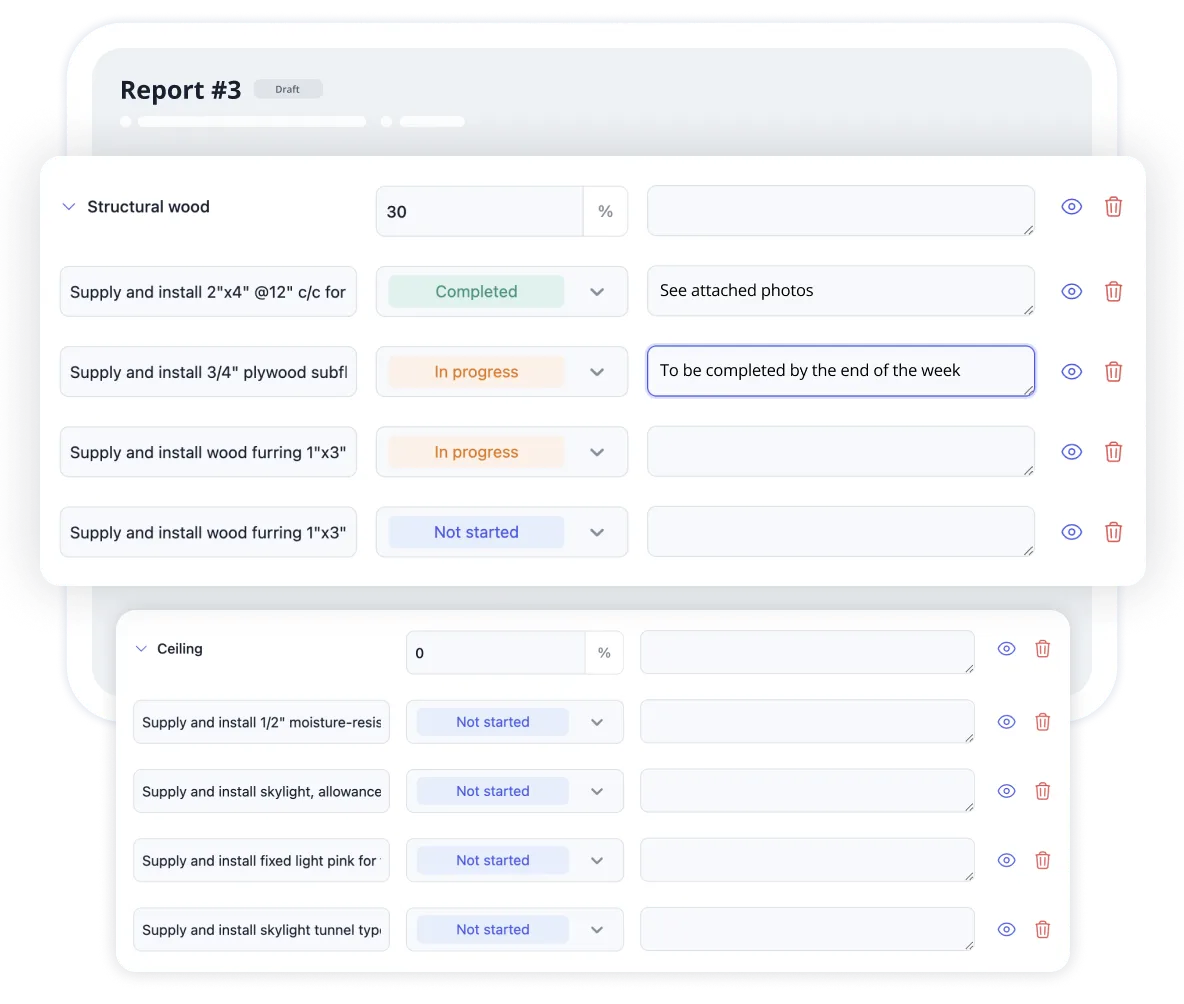
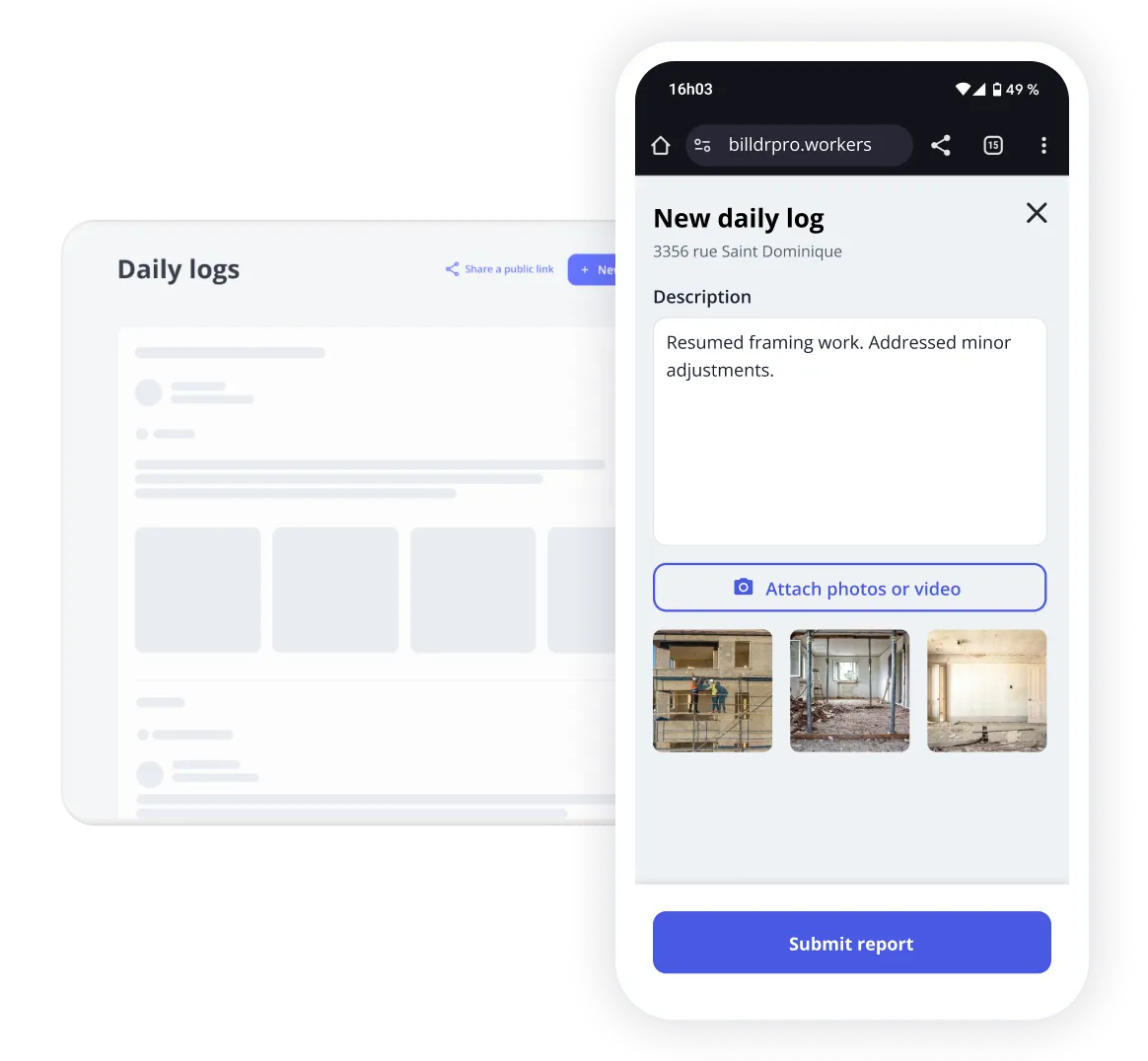
- Professional Progress Reports: Generate polished PDF reports for project owners and engineers that document every major milestone. This clear communication helps speed up the final sign-off process for occupancy permits.
- Digital Thermal Logs: Upload photos of insulation continuity during the "open wall" phase to provide proof of "Envelope First" compliance for future audits.
Phase 4: Bidding, Bonding, and Insurance
To bid on public tenders (via SEAO) or major private projects, you need a "Financial Passport."
1. Commercial General Liability (CGL) Insurance
In 2026, the baseline for commercial GCs has shifted due to rising litigation and reconstruction costs.
- Coverage Limits: While $2M is the absolute minimum, most commercial property managers and municipal tenders now require **$5M in CGL**.
- Pollution/Environmental Liability: If your commercial work involves excavation or HVAC (refrigerants), you often need an "Environmental" rider. A standard CGL does not cover accidental soil contamination or chemical spills, which can cost millions in Quebec.
- Non-Owned Auto: This is a critical 2026 addition. If an employee uses their personal vehicle for a "lumber run" and causes an accident, your company can be held liable. Ensure this is included in your policy.
2. The Bonding Trifecta (Contract Surety)
Bonding is not insurance; it is a line of credit for your reputation. For any public project over $100,000, you will typically need the following:
A. Bid Bond (10%)
- The Purpose: Guarantees that if you win the bid, you will actually sign the contract at the price you quoted.
- The Risk: If you back out because you made a math error in your estimate, the surety pays the owner the 10% difference, and then they collect it from you personally.
B. Performance Bond (50% or 100%)
- The Purpose: Guarantees the project will be completed according to the plans and specs.
- Quebec Standard: Most SEAO tenders require 50%, but high-risk infrastructure projects often demand 100%.
C. Labor & Material Bond (50%)
- The Purpose: This is the "Subcontractor Protection." It guarantees that you will pay your trades and suppliers.
- Strategic Benefit: In 2026, the best subcontractors prefer working for bonded GCs because they know their payment is guaranteed by a third party (the surety), even if the GC goes bankrupt.
3. SEAO & Public Tendering
The SEAO is the gatekeeper for all Quebec public contracts (schools, hospitals, municipal roads).
- The "AMP" Authorization: If you plan to bid on public contracts exceeding $5M (construction) or $1M (services), you must obtain authorization from the Autorité des marchés publics (AMP). This involves a deep background check on your company's officers and shareholders.
- Annual Subscription: To receive automatic alerts and download tender documents, expect an annual SEAO subscription fee (approx. $400 – $600 depending on the service level).
The Billdr Advantage: Financial & Project Readiness
- Surety Support: Our platform generates the detailed financial and project history reports that surety underwriters need to increase your Bonding Capacity.
- SEAO Matching: Integrate your project interests with automated tender alerts so you never miss a relevant commercial bid in your region.
- Prompt Payment Compliance: Our 2026 update includes an Interest Penalty Calculator. If a payment to a sub is delayed, the system calculates the mandatory provincial interest automatically, keeping you compliant with the latest "Good Standing" rules.
Summary Table: Quebec Commercial Startup (2026)
Note: Fees and timelines are verified as of March 2026. RBQ fees are subject to annual indexing. Labor rates are subject to current collective agreement updates.
Conclusion: Navigating the Quebec Advantage in 2026
Becoming a commercial general contractor in Quebec is a high-barrier, high-reward endeavor. The province’s unique "dual-agency" system, the RBQ for business licensing and the CCQ for labor management, creates a strictly regulated environment that demands both administrative precision and financial resilience.
By 2026, the industry has shifted toward a "compliance-first" model. Success is no longer just about the quality of the build; it is defined by your ability to navigate Montreal’s decarbonization bylaws, maintain a flawless $40,000 security bond, and adhere to the rigorous CCQ collective agreements. While the initial investment of $6,500 – $11,000+ and a 6-month lead time may seem daunting, these barriers to entry protect the integrity of the market and ensure that only the most professional firms thrive.
For the modern Quebec GC, the path to scale lies in leveraging technology to automate the "paperwork of construction" from seismic Attestations of Conformity to Monthly CCQ Reports. By mastering these four phases, you move beyond being a local builder and become a competitive force in Quebec’s multi-billion dollar commercial and institutional sector.
To ensure you have the most direct path to the official portals and legal texts, use the following directory of primary resources. These are the "source of truth" for all 2026 Quebec construction regulations.
Official Sources & Resources
Important Disclaimer
Note on Billdr:
Billdr is designed to be a comprehensive project management and compliance support tool. While our platform provides automated reporting, documentation vaults, and regulatory alerts to simplify the complexities of the Quebec construction market, Billdr does not guarantee the issuance or maintenance of your RBQ license.
The granting of a contractor’s license is at the sole discretion of the Régie du bâtiment du Québec (RBQ) and is subject to your ability to pass mandatory exams, maintain financial solvency, and adhere to provincial laws. Billdr is a facilitator to help you manage these professional obligations more efficiently and stay audit-ready, but the legal responsibility for compliance remains with the license holder and the designated guarantors.