
Becoming a licensed home builder in Maryland requires navigating two distinct paths: HBRU Registration for new residential construction and the MHIC License for home improvements and renovations. In 2026, the Maryland construction landscape is evolving rapidly with the implementation of the Maryland Transit and Housing Opportunity Act, which streamlines development near transit hubs, and updated $500,000 general liability insurance requirements. Whether you are building luxury custom homes or launching a boutique remodeling firm, understanding Maryland’s "Statutory Employer" laws and the nuances of the Montgomery County exemption is essential for long-term legal compliance and business growth.

Phase 1: Registration vs. Licensing (The Critical Split)
Maryland does not have a single "General Contractor" license at the state level. Instead, the law looks at the status of the structure you are working on. Building a home on a vacant lot is "Registration"; adding a deck or a second story to an existing home is "Licensing."
1. New Home Builder Registration (HBRU)
Regulatory Agency: Office of the Attorney General (Consumer Protection Division).
- The Intent: The Home Builder Registration Act focuses on traceability and financial protection for buyers of new homes. It is less about your technical ability to frame a wall and more about ensuring you don't disappear after taking a deposit.
- The Scope: Mandatory for anyone who builds or enters into a contract to build a "new home" (defined as a single-family dwelling or a townhouse).
- Initial Registration Fee: $800 (Biennial).
- The Guaranty Fund:
- Unlike many states where you must provide a performance bond for every project, Maryland builders pay into a shared Home Builder Guaranty Fund.
- In 2026, claims for actual losses caused by poor workmanship or contract breach are generally capped at $50,000 per claimant.
- The "Principal" Disclosure: Maryland is aggressive about preventing "Phoenixing" (closing a business to avoid debts and reopening under a new name). You must disclose all principals with a 10% or higher stake, and any history of bankruptcies or unsatisfied judgments must be documented.
2. Home Improvement License (MHIC)
Regulatory Agency: Department of Labor (Maryland Home Improvement Commission).
- The Intent: The MHIC is a regulatory and disciplinary body. This path is much more rigorous because you are working on a structure where people are already living. It requires proving two years of experience and passing a state-monitored exam.
- The Scope: Required for the alteration, remodeling, repair, or replacement of any part of an existing residential building (up to 3 units).
- Initial Application Costs (Total ~$370):
- Application Fee: $281.25
- Guaranty Fund Assessment: $100 (for new applicants)
- Processing Fee: $22.50
- The Exam Requirement: Unlike the HBRU (which has no exam), you cannot get an MHIC license without passing the PSI Maryland Home Improvement Exam (55 questions, open-book, 70% passing score).
- MHIC Guaranty Fund: This fund is separate from the HBRU fund. It compensates homeowners for actual losses up to $30,000 per claim.
The "Dual Status" Builder: Do You Need Both?
Many Maryland builders start as remodelers (MHIC) and grow into ground-up developers (HBRU).
Pro Tip: If you hold an MHIC License, you are automatically exempt from the state's Construction License (a separate $30–$100 local clerk’s fee), but you are not exempt from the HBRU if you build from scratch.
Phase 2: Requirements & The Examination
To qualify for an MHIC license, you must prove that your business is both technically competent and financially "bulletproof."
1. Experience & Financial Solvency
Maryland requires builders to prove they have "skin in the game" before they are allowed to contract with homeowners.
- Experience: You must document at least two years of experience in home improvement or construction. This can include trade work or comparable educational training (e.g., a degree in Construction Management).
- The Financial Solvency Test: You must show a personal net worth of at least $30,000 (increased from $20,000 in previous cycles).
- Note: The Board only considers personal assets (cash, real estate, stocks). Business assets are excluded from this calculation to ensure the individual behind the license is personally solvent.
- The "Solvency Workaround" (Surety Bond): If you do not meet the $30,000 net worth requirement, you must purchase a $30,000 Surety Bond.
- Cost: Premiums typically range from $263 to $527 for a two-year term, depending on your credit score. This bond protects the state's Guaranty Fund if you are found liable for a claim and cannot pay.
- The $500,000 Insurance Mandate: As of June 1, 2024, Maryland dramatically increased the minimum General Liability requirement from $50,000 to $500,000. You cannot obtain or renew a license without providing a Certificate of Insurance (COI) that meets this threshold.
2. The MHIC State Exam
Before you can even submit your license application, you must pass the PSI Maryland Home Improvement Exam.
- Format: 55-question, open-book computer exam.
- Time Limit: 150 minutes (2.5 hours).
- Passing Score: 70% (39 correct answers).
- Core Content: The exam is heavily weighted toward Maryland Home Improvement Law (41 questions). The remaining questions cover the Door-to-Door Sales Act, Labor Laws, Safety Regulations, and basic Estimating.
- Allowed Reference: You are permitted to bring the NASCLA Contractors Guide to Business, Law and Project Management (Maryland Home Improvement Commission Edition) into the testing center.
- Cost: The standard exam fee is $63. If you fail, you must wait 30 days to retake; after a second failure, the waiting period increases to 60 days.
Billdr Advantage: Financial & Exam Preparedness
Billdr's 2026 features are designed to help you clear these hurdles on your first attempt.
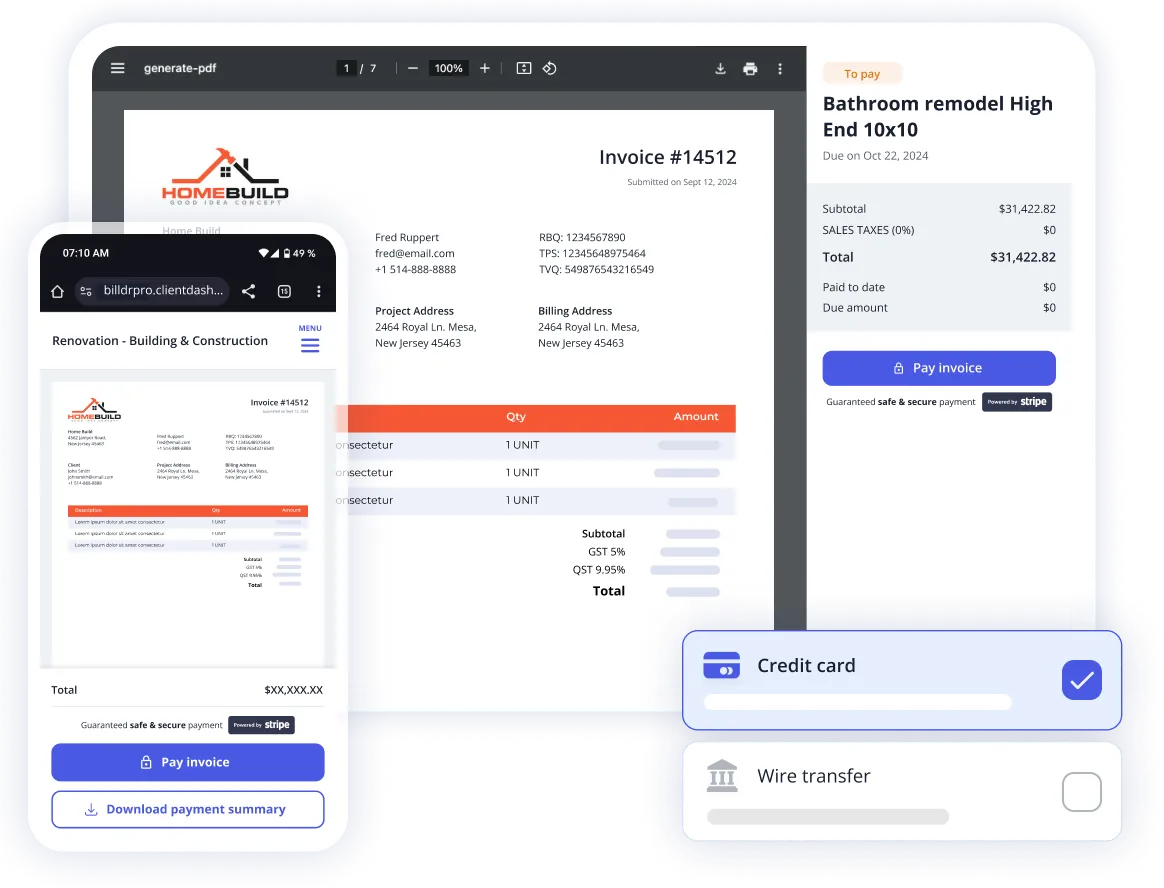
- The Financial Snapshot: Use the Financials Hub to track your asset-to-liability ratio. While the state looks at personal assets, having your business financials perfectly categorized makes it much easier for your accountant to verify your overall solvency for the application.
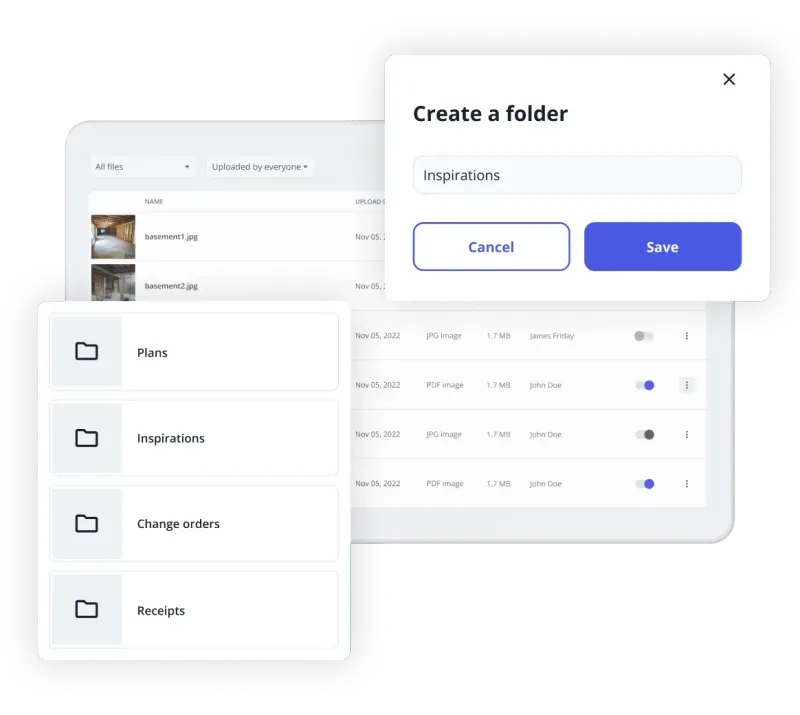
- The Document Hub: Store a high-res digital copy of your PSI Exam Pass Result and your $500,000 COI. Maryland requires these to be uploaded to the licensing portal; having them organized in Billdr prevents the "lost paperwork" delays that often stall applications for weeks.
Phase 3: The 2026 Regulatory Landscape
Maryland’s 2026 construction climate is defined by two forces: aggressive consumer and worker protection on one side, and sweeping pro-development incentives on the other. Navigating this landscape requires more than just trade skill it requires "legal hygiene."
1. The "Statutory Employer" Defense
Under Maryland Labor and Employment § 9-508, you are more than just a client to your subcontractors; you are their "Statutory Employer."
- The Liability Trap: If a sub-contractor’s employee is injured on your site and the sub does not carry Workers' Compensation insurance, the legal and financial responsibility for that claim climbs the ladder directly to you.
- The Penalty: Beyond paying the claim, Maryland imposes fines of up to $25,000 for non-compliance. Corporate officers can be held personally liable, meaning your personal assets are at risk if your business cannot cover the cost.
- Best Practice: Maintain a digital "Compliance Vault." Never allow a sub to unload tools until you have a verified, current Workers' Comp certificate in hand. In 2026, the state has increased audits on "misclassified" independent contractors, so ensure your paperwork proves they are truly independent entities.
2. Montgomery County: The "State-Exempt" Zone
Montgomery County operates as its own regulatory island for new home construction.
- The HBRU Exemption: If you build new homes exclusively in Montgomery County, you are exempt from state HBRU registration. However, you must register with the Montgomery County Office of Consumer Protection (OCP).
- Registration Costs: * New Home Builder: $805 application fee.
- State Guaranty Fund: Even though you are state-exempt, you must still provide a separate check for $250 payable to the Maryland "Office of the Attorney General" for the state-wide Guaranty Fund.
- The Sales Rep Rule: A common trap for builders is the Sales Representative Registration. Even if your building company is exempt from state HBRU registration, any individual acting as a "Sales Representative" for your homes must register with the State of Maryland and pay a $300 fee.
3. Maryland Transit and Housing Opportunity Act (2026)
Passed as part of Governor Wes Moore’s "Housing Growth and Affordability Agenda," this act is the most significant shift in Maryland land use in decades.
- The TOD Revolution: The Act targets Transit-Oriented Development (TOD) specifically areas within a 1/4 to 1/2 mile of Maryland rail stations (Metro, Light Rail, MARC, and the Purple Line).
- Elimination of Parking Minimums: To lower construction costs and increase density, the state has banned local jurisdictions from enforcing "minimum off-street parking" requirements for residential projects within 1/4 mile of high-frequency transit. This allows builders to utilize more of their lot for sellable square footage rather than asphalt.
- Delayed Impact Fees: In a major win for builder cash flow, the Act delays the collection of development excise taxes and impact fees for eligible TOD projects until after construction is complete and occupancy permits are issued. This significantly lowers the "upfront capital" hurdle for new starts.
- Zoning Overrides: The state now mandates that local jurisdictions allow mixed-use development near these transit hubs, overriding restrictive "residential-only" zoning that previously blocked shop-over-apartment projects.
Billdr Advantage: Regulatory Speed
The 2026 landscape rewards builders who can move fast and stay organized.
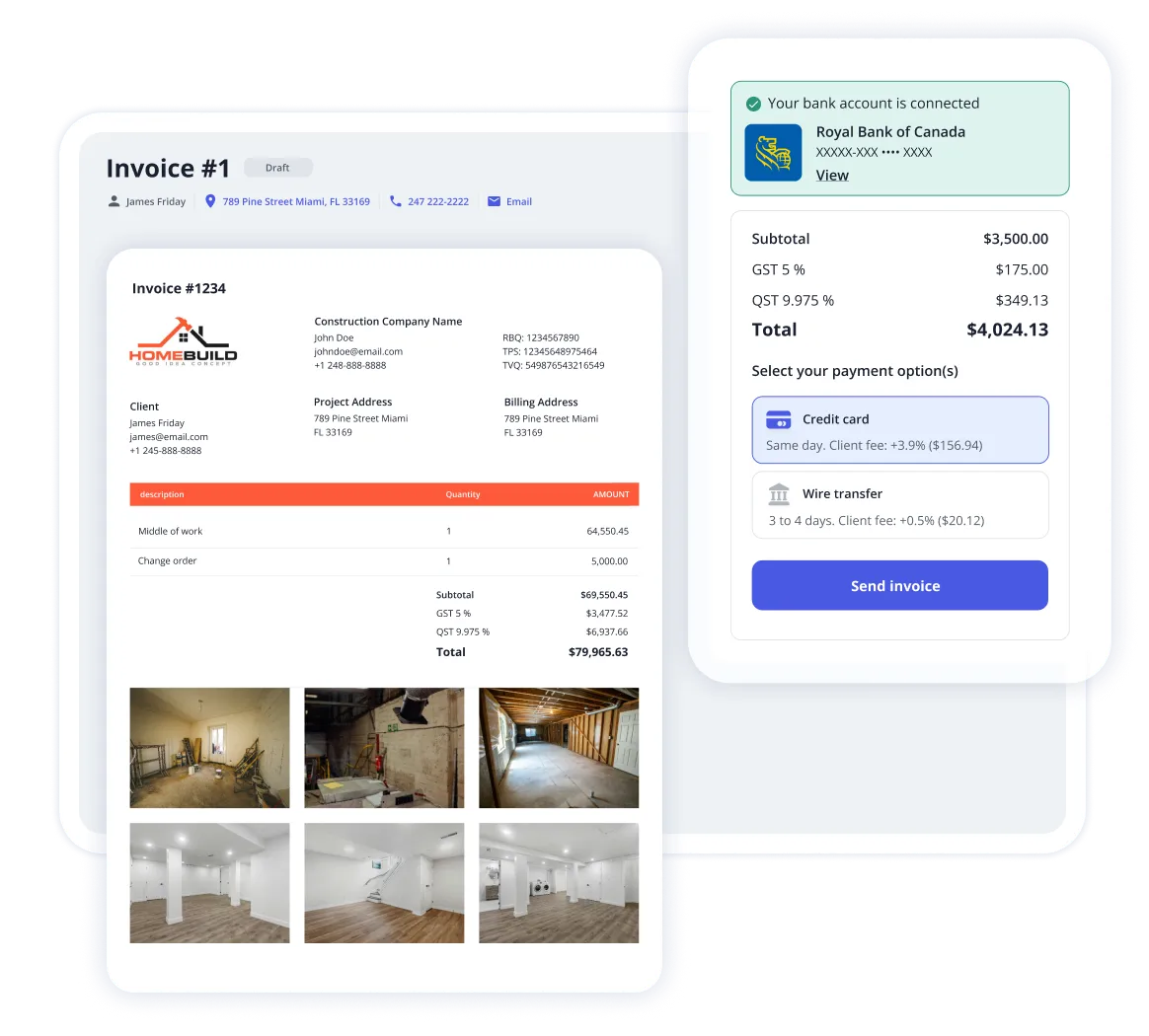
- The Impact Fee Tracker: Use the Financials Hub to track which projects qualify for "Delayed Impact Fees" under the new Transit Act. This allows you to reallocate that upfront cash (often $10k–$30k per unit) toward higher-quality materials or faster labor.
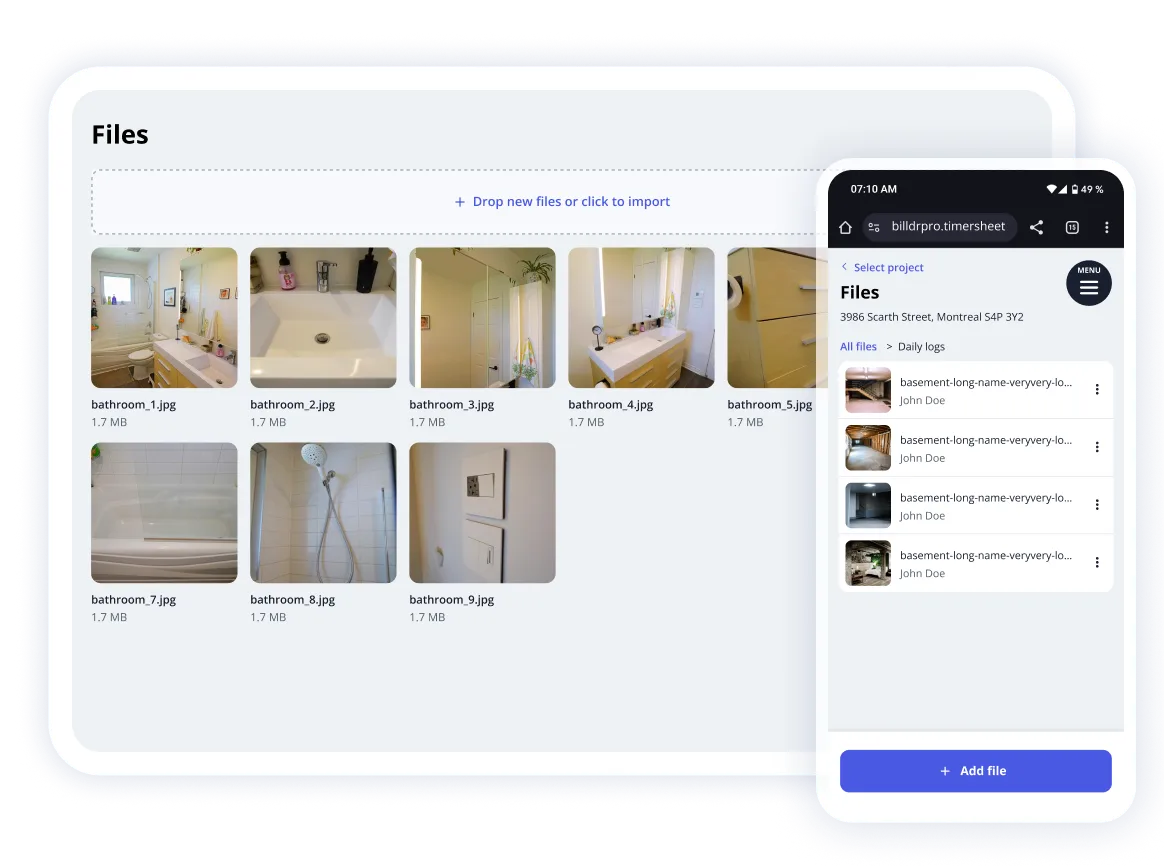
- Montgomery vs. State Folder: Maintain separate document folders for your Montgomery County OCP filings and your State Sales Rep registrations. Having these "License Sets" digitized ensures you never pull a permit with an expired local credential.
Phase 4: 2026 Building Performance Standards
Maryland’s building landscape is no longer governed by "recommendations" but by strict, data-driven performance mandates. The state’s commitment to the Climate Solutions Now Act has turned the Maryland Building Performance Standards (MBPS) into one of the most aggressive green-building frameworks in the country.
1. The 2021 IECC Transition: Beyond the Visual Inspection
As of 2026, the transition to the 2021 International Energy Conservation Code (IECC) is complete across all major jurisdictions (including Prince George’s, Montgomery, and Frederick). This code moves the goalposts from prescriptive "checklists" to mandatory performance testing.
- Mandatory Blower Door Testing: You can no longer "visualize" an air barrier. Every new residential unit must undergo a Blower Door Test to verify that air leakage does not exceed 3.0 Air Changes per Hour (ACH50).
- The Air Barrier Verification: 2021 IECC requires an "Air Barrier Continuity" report. This means you must document with photos that the air barrier is continuous at traditionally weak points: rim joists, knee walls, and attic hatches.
- Electric-Ready Infrastructure: Under 2026 amendments, new builds must be "Electric-Ready." Even if you install gas appliances, you are required to run dedicated 240V circuits to the kitchen and laundry to allow for future induction and heat pump swaps without a panel upgrade.
2. Building Energy Performance Standards (BEPS): The Data Deadline
If you are a builder or owner of large residential projects (multi-family or mixed-use over 35,000 sq. ft.), 2026 is your "Year of Verification."
- June 1, 2026 Deadline: This is the critical cutoff for submitting your annual energy benchmarking report for the 2025 calendar year.
- Mandatory Third-Party Verification: For the first time, "self-reporting" is no longer allowed. Your data must be reviewed and stamped by a credentialed third-party verifier (such as a PE or CEM). This professional ensures that your Energy Star Portfolio Manager data accurately reflects real-world utility consumption.
- The Path to Net-Zero: This data is used to set your building’s baseline. Maryland’s BEPS requires these "Covered Buildings" to achieve net-zero direct greenhouse gas emissions by 2040, with interim targets starting in 2030.
Billdr Advantage: Administrative Defense
Maryland’s 2026 standards turn every project into a "data project." Billdr ensures you aren't buried under the paperwork.
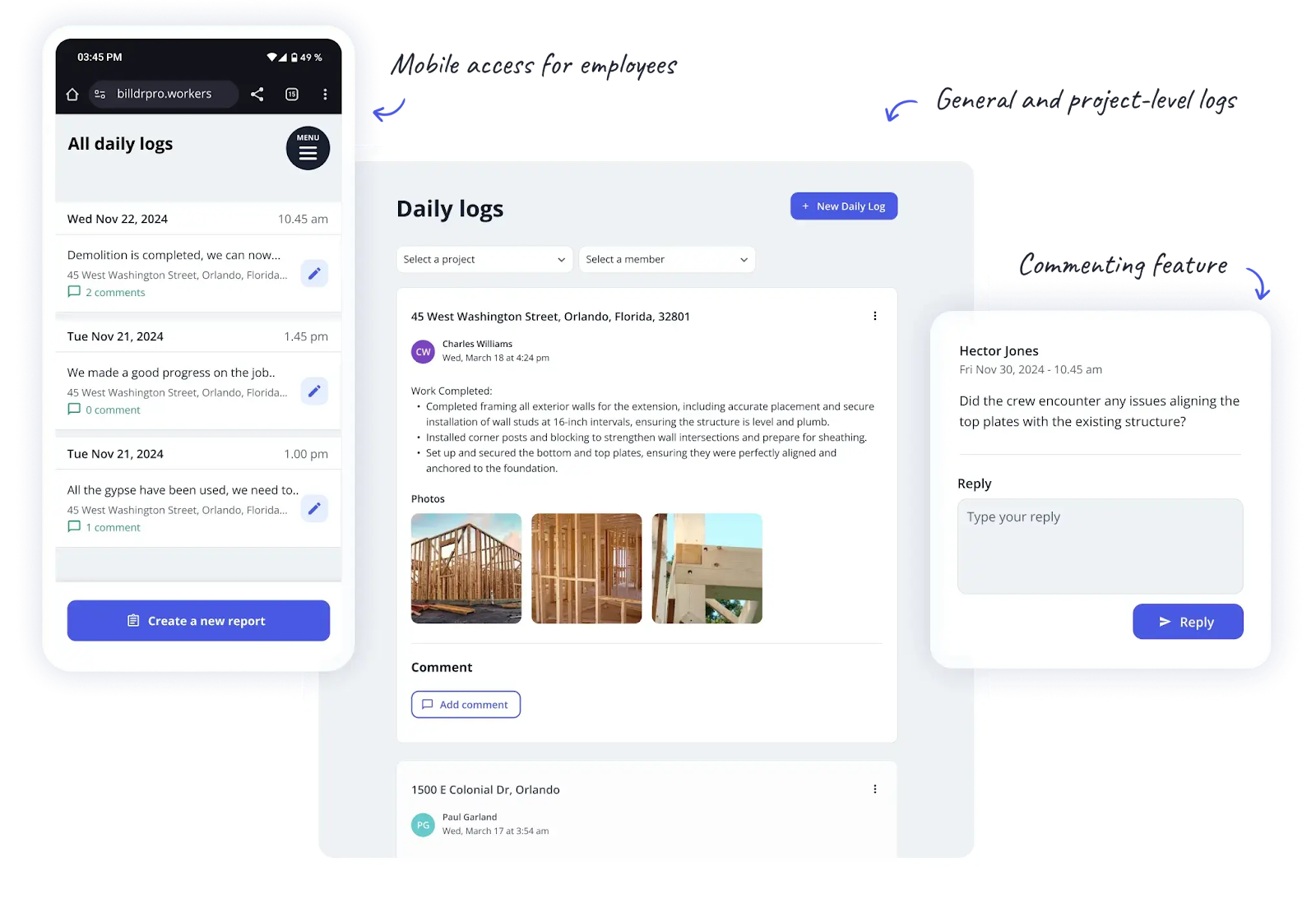
- Field Evidence via Daily Logs: Since inspectors are focused on the "Air Barrier Continuity," use Daily Logs to take time-stamped photos of the rim joist sealing and sill plate gaskets before they are covered by drywall. This digital paper trail can resolve "failed" inspections without costly tear-outs.
Estimated 2026 Startup Costs Summary
Fees are subject to change; verify current schedules at labor.maryland.gov and oag.maryland.gov.
Official Sources & Resources
1. Home Builder Registration Unit (HBRU)
Authority: Maryland Office of the Attorney General (Consumer Protection Division) The HBRU handles all registrations for those constructing or selling new homes.
- Official Portal: oag.maryland.gov/newhomebuilder
- Key Resources:
- Online Registration Portal: Accessible via the "Registration" link on the main page for initial and renewal applications.
- Forms: Includes the "Application to Register," "Principal Information Form," and "New Home Disclosure Form."
- Consumer Pamphlet: Order the mandatory "Consumer Information Pamphlet" that must be provided to every home buyer.
2. Home Improvement Commission (MHIC)
Authority: Maryland Department of Labor The MHIC regulates renovations, additions, and repairs to existing homes.
- Official Portal: labor.maryland.gov/license/mhic
- Key Resources:
- Licensing OneStop: onestop.md.gov – The modern portal for applying and paying the ~$370 initial fee.
- Fee Schedule: labor.maryland.gov/license/mhic/mhicfees – Check for the August 2024 fee increases.
- Guaranty Fund Forms: Request a claim form via email if you need to understand the mediation process.
3. Maryland Building Codes Administration
Authority: Division of Labor and Industry Provides the technical "rulebook" for construction in Maryland.
- Official Portal: labor.maryland.gov/labor/build
- Key Resources:
- MBPS Regulations (COMAR 09.12.51): The official regulations adopting the 2021 IECC and IRC.
- State Building Code Matrix: A scannable chart showing which version of the code is enforced by which county.
4. PSI Exams (Examination Partner)
Authority: Independent Testing Agency The only vendor authorized to administer the MHIC Law & Business exam.
- Official Portal: psiexams.com
- Key Resources:
- Candidate Information Bulletin: Search for "Maryland Home Improvement" to download the PDF guide. It contains the exam outline, sample questions, and the registration form.
- Bookstore: Purchase the NASCLA Contractors Guide to Business, Law and Project Management directly from their site.
5. Montgomery County Office of Consumer Protection (OCP)
Authority: Local County Government The essential secondary registration point for those building in Maryland’s most populated county.
- Official Portal: montgomerycountymd.gov/ocp
- Key Resources:
- Board of Registration for Building Contractors: Information on the monthly board meetings required for local approval.
- BEAR Unit (Business Education and Registration): Offers one-on-one help for the local application process.
Final Legal Disclaimer
IMPORTANT: This article is intended for general informational purposes only and does not constitute legal, financial, or professional advice. While every effort has been made to ensure the accuracy of this information as of February 2026, Maryland laws, fees, and building codes are subject to frequent change through legislative action or agency rulemaking. Always verify current requirements with the Maryland Home Builder Registration Unit and the Maryland Home Improvement Commission before entering into contracts.