
Mastering the County Construction License, 120-Day Lien Notice, and 7-Day Sub-Payment Rule
Updated April 2026 — Commercial general contracting in Maryland is a decentralized model. Unlike residential work, which is governed by a state commission (MHIC), commercial projects require a county-issued Construction License combined with a state tax nexus. Success in 2026 requires strict adherence to the 120-day Notice of Intent window and the state’s demanding 30-day payment cycle.
Phase 1: Classification & Statutory Licensing
Maryland separates licensing into two distinct categories: Home Improvement (MHIC) and Commercial Construction. Navigating this boundary is the first step in avoiding "unlicensed contracting" penalties.
1. Commercial vs. Residential Licensing: The "Mixed-Use" Trap
The division between the Maryland Department of Labor (MDL) and the Maryland Home Improvement Commission (MHIC) is a critical legal boundary.
- The MHIC Threshold: If your commercial project involves any residential component (e.g., ground-floor retail with apartments above), you must hold an MHIC license. Operating on mixed-use sites without it can result in criminal charges, regardless of your commercial standing.
- The Clerk of the Court Construction License: For 100% commercial work, such as warehouses or office fit-outs, you must obtain a Construction License from the Clerk of the Circuit Court in your home county. This is a tax-based license where fees are calculated based on your total capital invested, rather than a flat trade fee.
2. County-Level Regulatory Reciprocity & Local Permits
A county-issued license provides financial authority to work statewide, but you are not authorized to build until you satisfy local operational registrations.
- Local Permitting Authorities: Every county acts as its own gatekeeper. For example, Montgomery County requires a separate contractor license through the Department of Permitting Services (DPS), while Baltimore City requires registration in the DHCD e-permit system.
- Tax Nexus & The Comptroller: To pull any commercial permit, you must prove "Good Standing" with the Maryland Comptroller. This requires an active Combined Registration Number for Sales, Use, and Withholding taxes.
3. The "Foreign Entity" Requirement
If headquartered outside Maryland (e.g., Virginia or D.C.), you must register as a "Foreign Entity" with the State Department of Assessments and Taxation (SDAT). You cannot obtain a Construction License without appointing a Maryland Resident Agent, a physical in-state representative authorized to accept legal service.
The Billdr Advantage: Phase 1 Infrastructure
- May 1st Renewal Automation: All Maryland Construction Licenses expire on April 30th. Billdr's Compliance Dashboard treats this as a hard deadline, triggering automated reminders to your team 60 days in advance. This ensures license fees, which are based on capital investment that are calculated and paid before the state-mandated deadline.
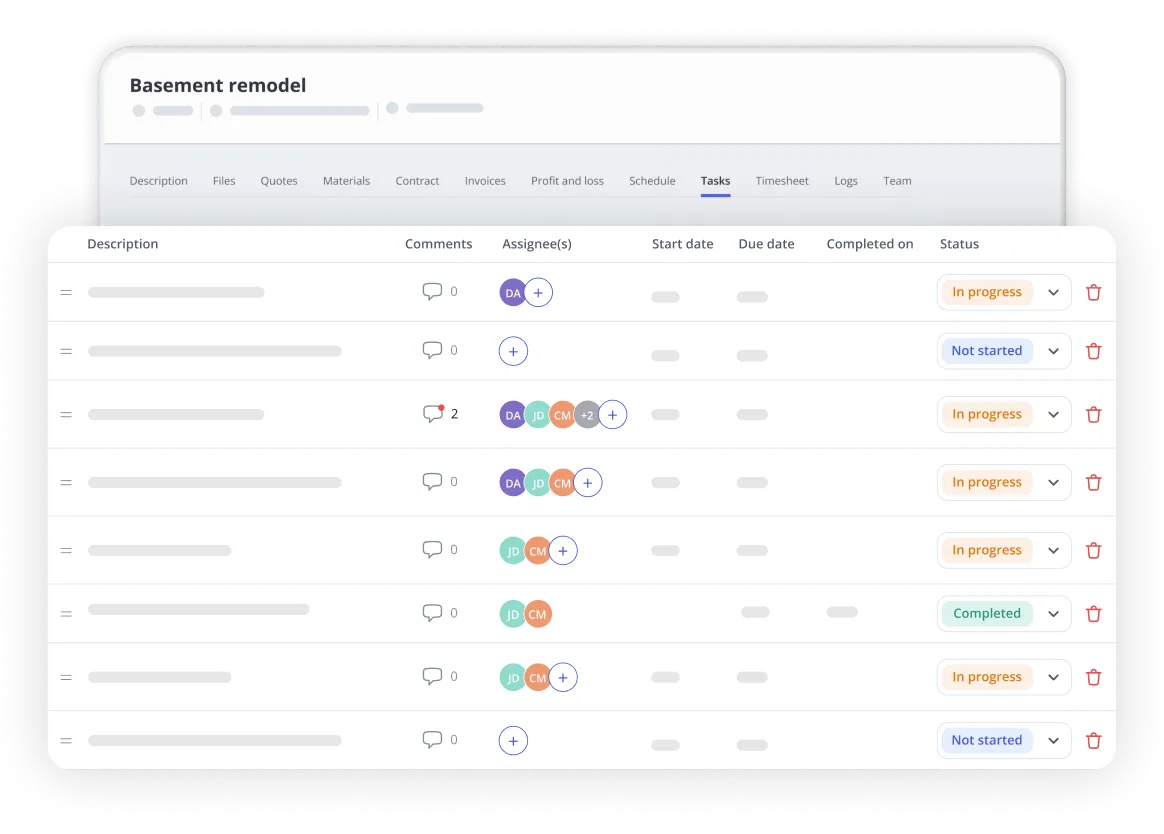
- Jurisdiction-Specific Document Hub: Organize your "authority to build" by county. Use Billdr's Document Hub to create specific folders for Montgomery County DPS and Baltimore DHCD. Store local permit checklists and registration forms separately, ensuring your project managers have the right local rules for every jobsite.
Phase 2: Insurance, Bonding, and Financial Solvency
Maryland has strict financial responsibility expectations for commercial GCs, particularly regarding the protection of state revenue and employee safety.
1. Mandatory Insurance: The "Stop-Work" Trigger
Maryland is proactive in insurance verification, utilizing digital links between state commissions and local counties.
- General Liability (GL): While Maryland Code § 17-301 only mandates "reasonable" coverage, the commercial industry standard is a $1,000,000/$2,000,000 aggregate policy. In Baltimore and DC-metro markets, developers frequently require $5M+ Umbrella policies before site mobilization.
- Workers’ Compensation (CVS Link): The state utilizes the Coverage Verification Service (CVS) to link the Workers' Compensation Commission directly to county building departments. If your policy lapses or cancels, the system automatically notifies local offices (e.g., Montgomery County DPS) to suspend active building permits until new coverage is verified.
2. The Construction License Fee: Tax on Capital
Unlike flat-fee trade licenses, Maryland’s Construction License is a sliding-scale tax on your "Capital Invested."
- Determining Capital: The Clerk of the Court calculates fees based on the total value of inventory, equipment, and cash invested in your Maryland operations.
- The Fee Schedule: Fees generally range from $30 to over $800. Non-resident firms or those with over $100,000 in invested capital fall into the highest brackets.
- The Affidavit: You must submit a signed Affidavit of Capital Invested. Misrepresenting these figures is a misdemeanor and can lead to the revocation of your firm's "Good Standing" status.
3. Bonding Requirements
While not required for all private work, bonds are essential for public contracts and specific local infrastructure.
- The Little Miller Act: Requires Performance and Payment Bonds for most state-funded projects exceeding $100,000.
- County Specifics: Jurisdictions like Prince George’s County may require additional local bonds for site-development or infrastructure work. Documenting these local requirements is vital during the pre-con phase.
The Billdr Advantage: Compliance Oversight
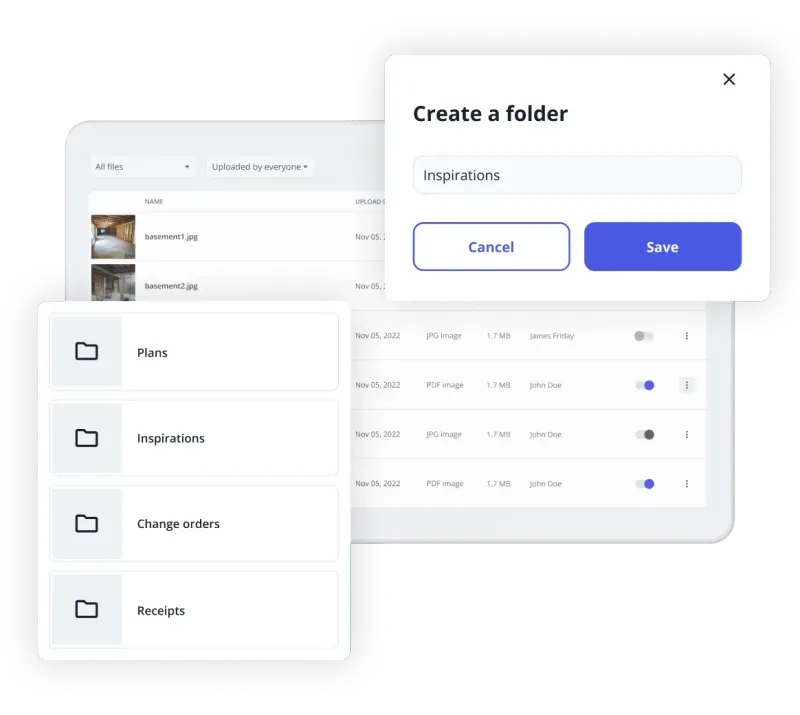
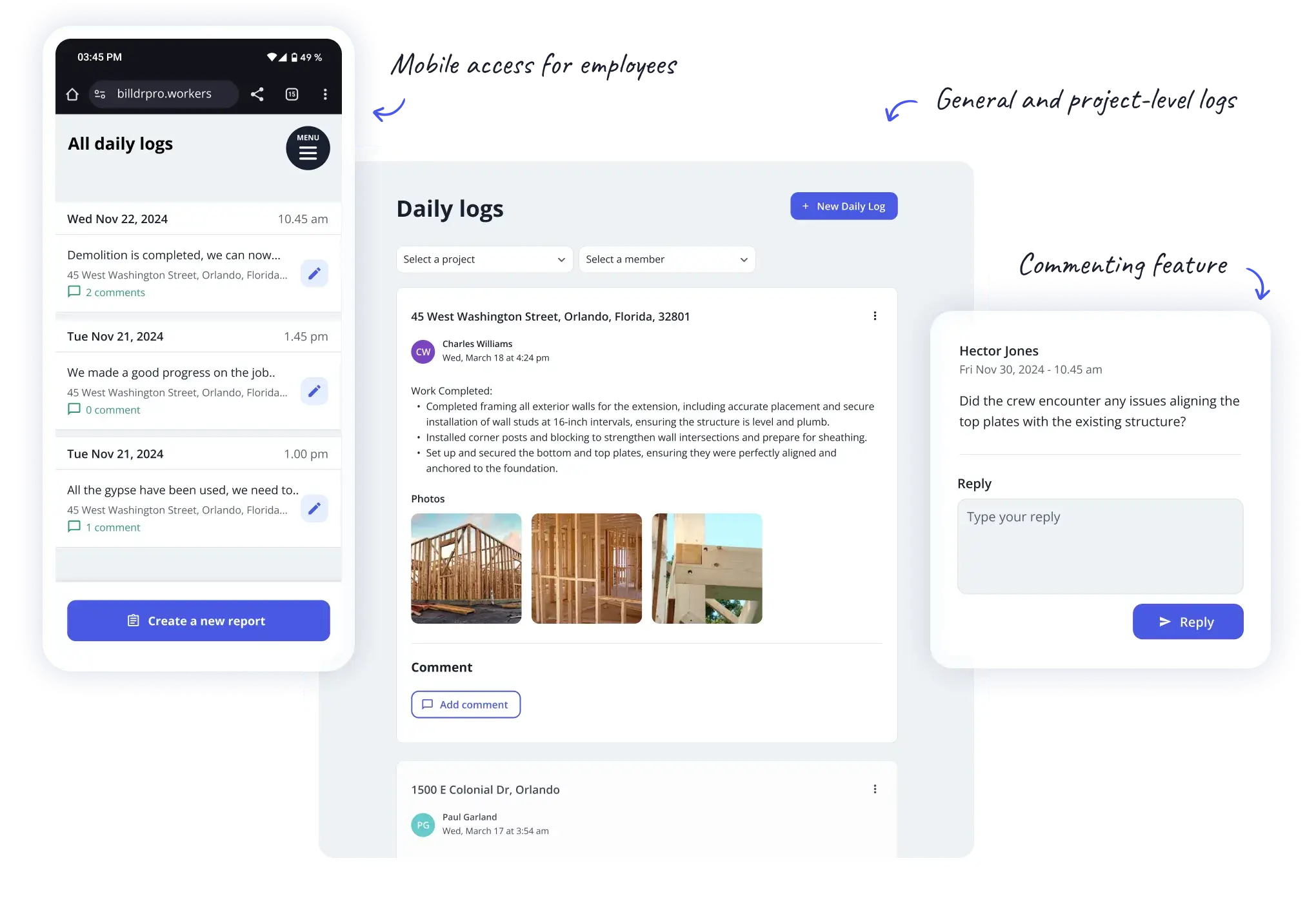
- Audit-Ready Safety Documentation: Defend your Experience Modification Rate (EMR) and secure better insurance rates. Use Daily Logs to document weekly Toolbox Talks and safety inspections with time-stamped photos. When it’s time for your annual audit, export a professional PDF Safety Pack to provide verified proof of your firm’s "Safety Culture."
Phase 3: Maryland’s Prompt Payment Act (MD Code, Real Prop. § 9-301)
Maryland’s Prompt Payment Act features a structured payment framework that is highly protective of contractors on both public and private commercial projects.
1. The 30/7 Payment Cycle: Statutory Teeth
Maryland law mandates specific, high-velocity deadlines for the movement of project funds to ensure liquidity across the supply chain.
- The 30-Day Owner Window: On private commercial projects, owners must release payment within 30 days of receiving a "proper" invoice. If the contract is silent on timing, this window serves as the legally enforceable default.
- The 7-Day Sub-Payment Rule: Upon receiving payment from the owner, you have exactly 7 days to pay subcontractors and suppliers for work included in that pay app.
- Grounds for Withholding: You may only withhold funds in the event of a bona fide dispute (e.g., defective work). Under § 9-302, you must notify the subcontractor in writing of the specific reason for withholding within that same 7-day window.
2. Interest Penalties: The 1.5% "Statutory Bite"
Maryland’s late payment interest rates are designed to discourage the use of construction funds as interest-free loans.
- Automatic Accrual: Late payments not subject to a bona fide dispute accrue interest at a fixed statutory rate of 1.5% per month (18% annually).
- Prevailing Party Protection: In legal actions to enforce payment, courts may award reasonable attorney's fees to the prevailing party if it is determined the non-payment was not made in good faith.
3. Retainage Limits: The 5% Cap
The state imposes strict limits on the amount of cash an owner or GC can hold as security for project completion.
- Statutory Limit: Under MD Code, Real Prop. § 9-304, retainage on private commercial projects is generally capped at 5%.
- The "Mirror" Rule: A GC cannot withhold a higher percentage of retainage from a subcontractor than what the owner is withholding from the GC. If the owner releases retainage at a specific milestone (e.g., 50% completion), you must generally flow that release down to your subcontractors.
The Billdr Advantage: Financial Transparency
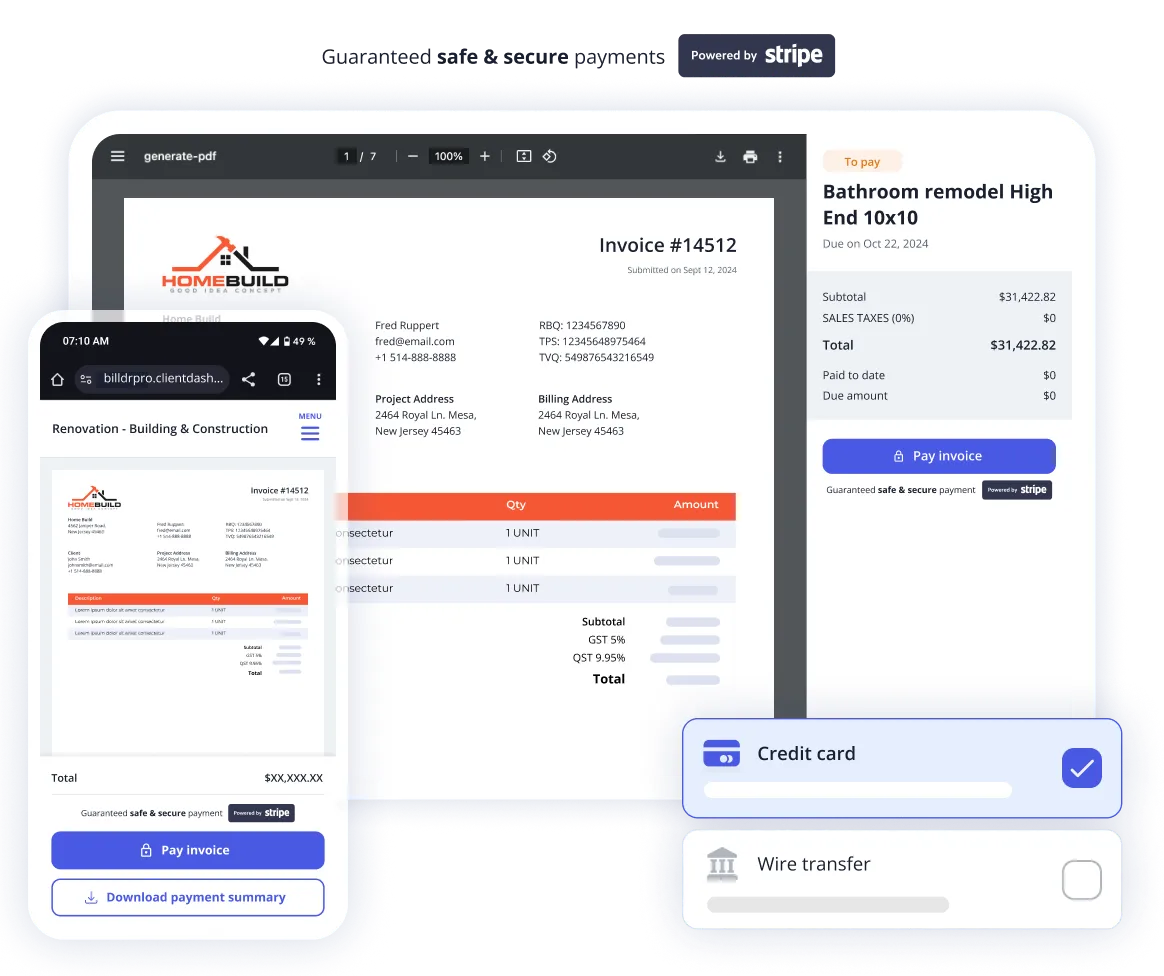
- The 30-Day Statutory Log: The Client Portal tracks exactly when an owner opens and views your pay app. This provides a time-stamped digital receipt that serves as objective proof if you need to enforce the 1.5% statutory interest penalty for payments exceeding the 30-day window.
Phase 4: Site Compliance & The 120-Day Lien Window
Maryland’s mechanic’s lien laws are notably complex, involving a mandatory Notice of Intent that is critical for GCs to monitor.
1. The 120-Day Notice of Intent (NOI): The Early Warning System
Real Property § 9-104 creates a specific hurdle for any party not in a direct contract with the owner, such as subcontractors and suppliers.
- The Mandatory Window: Subcontractors must serve a formal Notice of Intent to Lien to the owner within 120 days of completing work or providing materials.
- The "Double Payment" Shield: This notice protects the owner and the GC. Once an owner receives an NOI, they are legally permitted to withhold that amount from the GC. If you pay a sub after an NOI is served and the sub still files a lien, you may face double payment liability paying the sub and then being forced to reimburse the owner for the same claim.
- Tracking Sub-Tiers: Complexity lies in monitoring sub-tier suppliers. You must verify their "last day of work" to determine when their 120-day window expires.
2. The 180-Day Petition: Judicial Establishment
In Maryland, you do not simply file a paper at land records; you must file a Petition to Establish a Mechanic’s Lien in the Circuit Court.
- Judicial Review: Within 180 days of finishing work, you must take the owner to court. Following a "Show Cause" hearing, if the judge finds the claim valid, they issue an Interlocutory Order establishing the lien.
- The "15% Value Added" Rule: For existing structures, Maryland liens are generally only available if the work improved the building's value by 15% or more. Documenting the "before and after" value is critical for commercial renovations.
3. Site Compliance and "Last Work" Verification
The clock for both the 120-day and 180-day windows starts on the last day of substantial work.
- The "Punch List" Trap: Performing minor warranty work or "punch list" items typically does not reset the 180-day clock in Maryland courts. You must be able to prove exactly when the core contract scope was completed to protect your filing rights.
The Billdr Advantage: Documentation Defense
- GPS-Stamped Court Evidence: Maryland judges require objective proof of the "last day of work" to establish a lien. Billdr's Daily Logs capture unalterable GPS coordinates and time-stamped photos of substantial completion. This provides the "unimpeachable witness" you need during a Circuit Court Show Cause hearing.

Summary of Maryland Compliance Benchmarks (2026)
Building the Future
In 2026, administrative precision is as vital as structural integrity. Maryland's decentralized model offers lower entry barriers, but its aggressive prompt-pay and lien statutes demand modern oversight. Success is defined by transparency in how you document site progress and how you manage capital flow. By leveraging Billdr, you transform statutory hurdles into a competitive advantage, ensuring your firm remains compliant, liquid, and ready to scale across Maryland's diverse jurisdictions.
Official Maryland Resources
To ensure your Maryland commercial operations remain in "Good Standing," you must navigate three primary state systems. These resources are not just for initial setup; they are the portals you will use for annual renewals, permit-pulling verification, and subcontractor vetting.
1. Maryland Department of Labor (MDL): Construction Licensing Portal
This is the central hub for professional regulation in the state. While the Clerk of the Court issues the physical license, the MDL sets the policy for who needs which license.
- What you do here: * Verify if a specific project requires an MHIC (Residential) license versus a Construction License (Commercial).
- Access the Project Search tool to check the licensing status of competitors or partners.
- Review the "Laws and Regulations" section to stay updated on 2026 changes to the Business Regulation Article.
- Official Link: Maryland Department of Labor – Occupational and Professional Licensing
2. Maryland Comptroller: Business Tax Registration & Nexus
In Maryland, a commercial contractor cannot pull a permit without a tax nexus. The Comptroller’s office manages the "Combined Registration" that links your business to the state’s revenue system.
- What you do here: * Apply for your Combined Registration Number, which covers Sales and Use Tax (for materials) and Admissions & Amusement Tax.
- Obtain your Tax Clearance Certificate, often required for bidding on state-funded "Little Miller Act" projects.
- Manage Withholding Tax for employees working on Maryland jobsites.
- Official Link: Maryland Comptroller – Business Tax Forms & Registration
3. Maryland Workers’ Comp Commission (WCC): Coverage Verification
This is the most critical link in the "Real-Time Compliance" chain. Because of the Coverage Verification Service (CVS), this portal is the source of truth for county permit offices.
- What you do here: * Use the Employer Coverage Verification tool to ensure your own policy is showing up as "Active" in the state’s digital ledger.
- Subcontractor Vetting: Before a sub mobilizes, you must verify their coverage here. If they appear as "Expired" or "Cancelled," their work could trigger a stop-work order for your entire site.
- Verify the legal name and FEIN of vendors to ensure they match the certificates of insurance (COI) provided to your office.
- Official Link: Maryland WCC – Employer Coverage Search
Important Platform Disclaimer
Requirements current as of April 2026; always verified with the Maryland Department of Labor and local county Clerk of the Court offices. The information provided in this guide is for educational purposes only and does not constitute legal, financial, or licensing advice. Billdr is a project management tool; the user remains solely responsible for ensuring all legal deadlines and statutory requirements are satisfied according to Maryland law.