

In California, the "Home Builder" designation primarily falls under the Class B - General Building Contractor license issued by the Contractors State License Board (CSLB). Unlike other states, California has a strict $1,000 threshold. Any project totaling more than $1,000 in labor and materials requires a valid license.

Phase 1: Experience & Eligibility
To successfully navigate Phase 1: Experience & Eligibility, you must move beyond general work history and provide verifiable, "journeyman-level" proof that meets the California Contractors State License Board (CSLB) standards for 2026.

1. Defining "Journey-Level" Experience
The CSLB does not count time spent as a trainee or helper. You must prove you have reached the point where you can perform the trade without supervision.
- Eligible Roles: Journeyman, Foreman, Supervising Employee, or Owner-Builder.
- The Scope: For a Class B General License, your four years of experience must include at least two unrelated trades (e.g., framing and electrical) performed on a single project, or overseeing a project that requires at least two unrelated trades.
- Recency: All four years of experience must have occurred within the last 10 years.
2. Documenting the "4-Year Rule"
You will need a Certifier, a person with direct, first-hand knowledge of your work (such as a licensed contractor, employer, or fellow journeyman) to sign your Certification of Work Experience form.
Pro Tip for 2026: The CSLB now uses "Data Forensics" to flag inconsistent applications. Ensure your documented dates match your tax records (W-2s or 1099s). If you were self-employed, keep a "Project List" including:
- Project addresses and dates.
- Building permits issued in your name (if an Owner-Builder).
- Contracts and canceled checks from clients.
3. Strategic Use of Education Credits
You can significantly shorten your time "in the field" by using college degrees or vocational training. However, the CSLB requires at least one year of actual on-site practical experience, regardless of your degree.
Requirement: You must submit sealed, official transcripts directly to the CSLB for these credits to be applied.
4. Age & Identification (2026 REAL ID Update)
- Age: You must be 18+ at the time of application.
- Tax ID: You must have a Social Security Number (SSN) or an Individual Taxpayer Identification Number (ITIN).
- Exam Entry: While you do not need a REAL ID to hold a license, California's testing centers (PSI) require a valid, non-expired, government-issued photo ID that matches the name on your application exactly.
Billdr Advantage:
Proving Your "Journeyman" Status The biggest hurdle in Phase 1 isn't having the experience, it's proving it. The CSLB conducts random audits on 3% of applications, requiring pay stubs, contracts, and permits.
- The Digital Paper Trail: If you are currently working as a foreman or owner-builder, use Billdr's Project Hub to archive every permit, signed contract, and completion certificate.
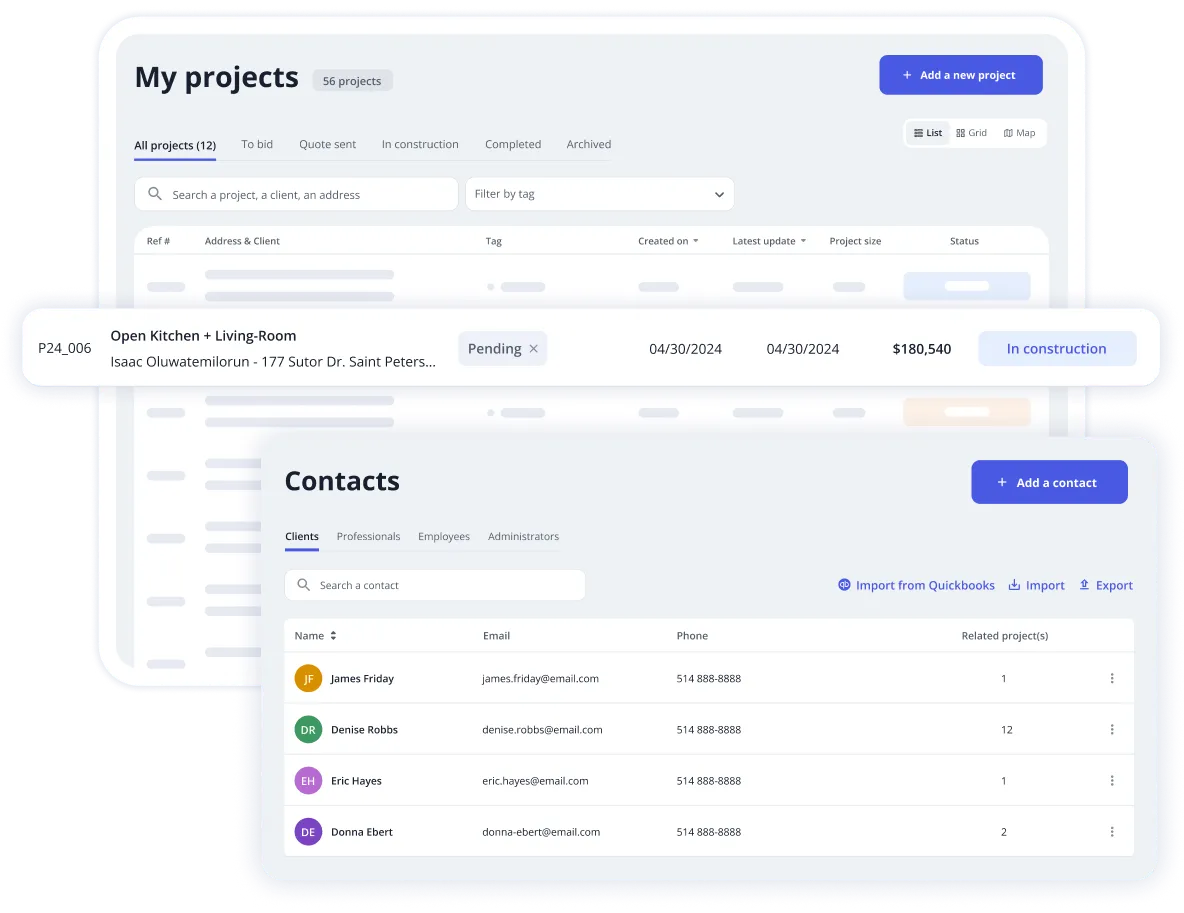
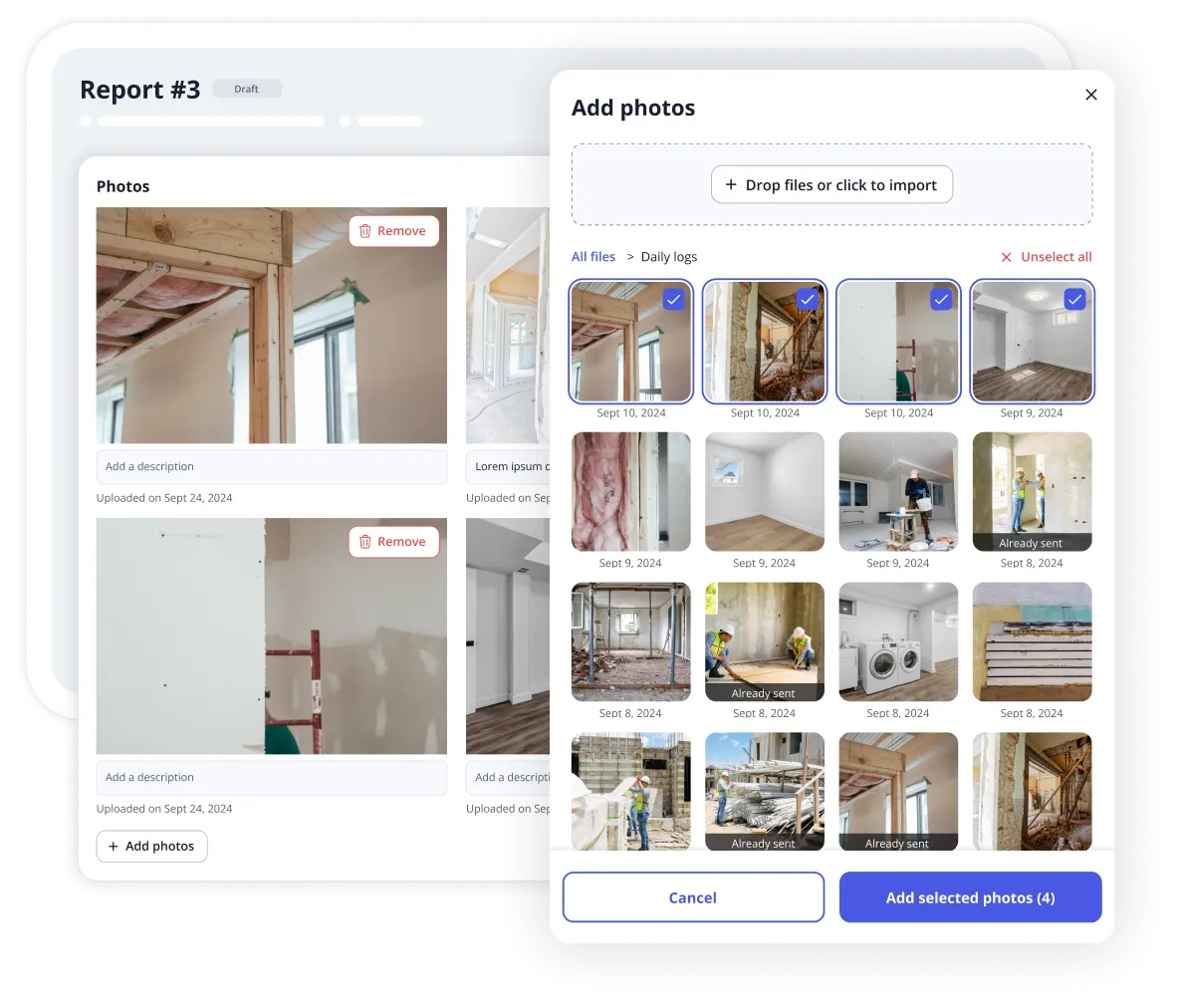
- Verification Ready: When it’s time to have a licensed contractor sign your "Certification of Work Experience," you can hand them a professional Project History Report generated directly from Billdr. This gives your certifier the confidence to sign, knowing every hour of your 4-year requirement is backed by data.
Phase 2: The CSLB Licensing Process
1. Application & The $1,000 "Handy-person" Barrier
In 2026, California strictly enforces AB 2622, which raised the licensing threshold to $1,000. However, the CSLB treats any work done without a license as a "misdemeanor" if it requires a building permit, regardless of cost.
- Application & Background: Submit your application with a $450 non-refundable fee (covering one classification). Once accepted, you must complete a Live Scan fingerprinting for a criminal background check through the DOJ and FBI.
2. Mastering the Dual Exams (Approx. 3 Hours Each)
You must pass two proctored, multiple-choice exams at a PSI testing center. As of 2026, the CSLB has streamlined the process: you now pay PSI directly to schedule or manage your sittings.
- Fees: $51.43 per exam ($102.86 total). Note that the old CSLB rescheduling fees have been eliminated; you now manage your timeline directly with PSI.
- The 2026 Code-Driven Shift: While the general blueprints are stable, the context of questions has shifted to the 2025 Title 24 Energy Code. Expect scenarios involving all-electric infrastructure, heat pump layouts, and "Zone Zero" wildfire mitigation.
- Exam A: Law & Business: Focuses on the 2026 California Contractors License Law & Reference Book. Key weights include Contract Execution (21%), Business Finances (15%), and Employment Requirements (20%).
- Exam B: Trade (Class B): Covers the full lifecycle of a build, from Planning & Estimating (15%) to Framing (20%) and Core Trades (30%). In 2026, "Core Trades" (Plumbing/HVAC/Electrical) are tested through a lens of electrification and high-efficiency standards.
3. The 2026 "Green & Fire" Updates
As of January 1, 2026, the 2025 Title 24 Code is in full effect. Your exams will now include specific questions on:
- Zone Zero Wildfire Safety: Understanding the mandatory 5-foot non-combustible perimeter for all New Residential Construction (NRC).
- Electrification Readiness: Requirements for "Heat Pump Ready" panels and mandatory EV charging conduits.
- Smart Submetering: Mandatory electrical monitoring for new multi-family and large residential builds.
Billdr Advantage: Building Your "Knowledge Base"
While Billdr isn't a "test-prep" app, it is the best tool for Applied Learning, the kind that helps you pass the Trade exam on the first try.
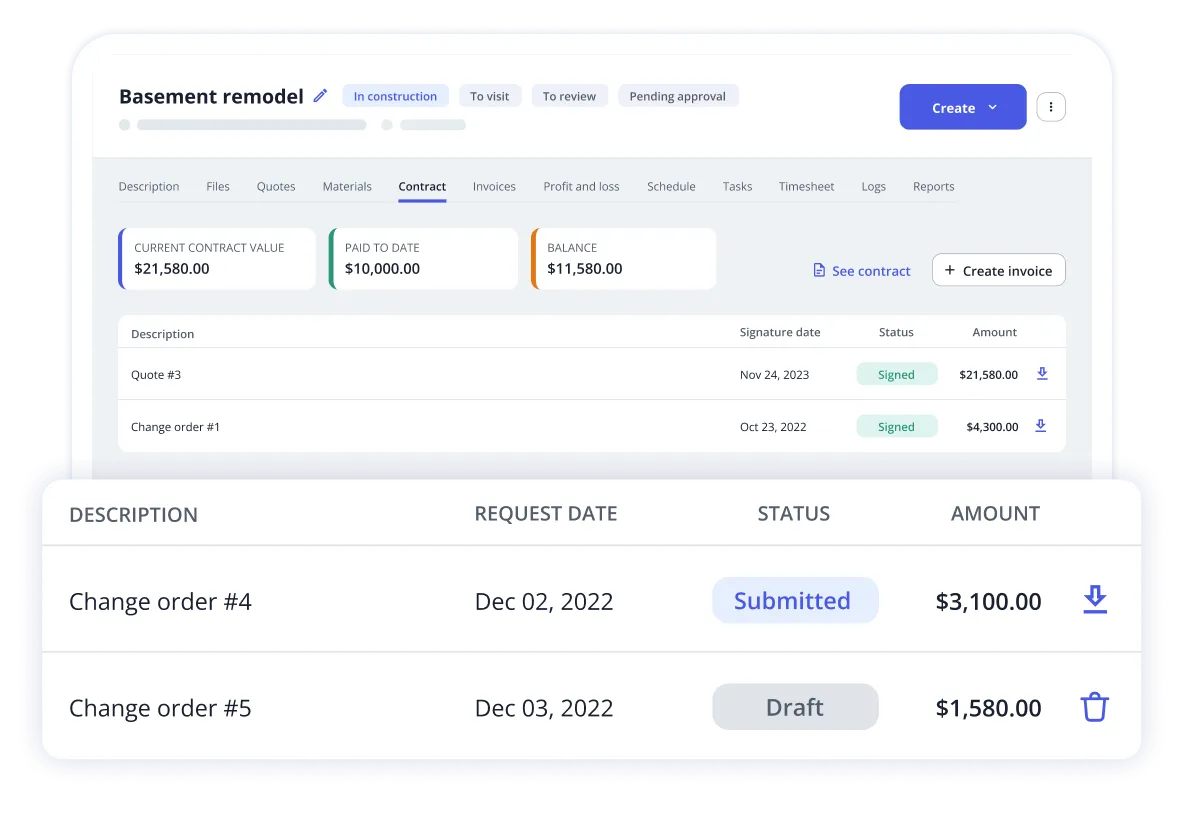
- Study While You Work: When the Law & Business exam asks about Change Order legal requirements, you’ll already know the answer because you’ve been using Billdr's Change Order tool to get digital signatures and time-stamped approvals in the field.
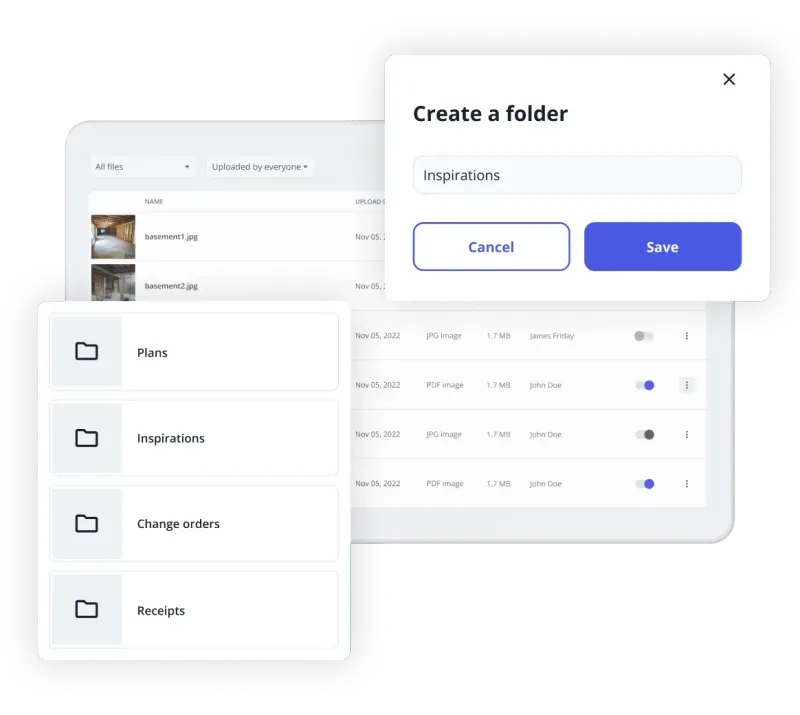
- Blueprint Proficiency: The Trade exam often includes Plan Reading questions. Use Billdr's Document Hub to host your current project's blueprints on your tablet. Pinch-zooming into details and cross-referencing specs in the app is the exact same skill set you’ll need at the PSI testing center.
Phase 3: Bonds, Insurance, and Business Standing
Once you pass your exams, you aren't "active" until you provide financial guarantees to the state. This is the stage where you move from "individual" to "licensed business entity."
1. The $25,000 Contractor License Bond
Every licensed contractor in California must maintain a $25,000 bond on file.
- The Purpose: This is a surety bond that protects the public. If you fail to complete a project or pay your suppliers, the surety company compensates the injured party.
- LLC Extra Requirement: If you choose to structure as an LLC, California mandates an additional $100,000 Employee/Worker Bond (totaling $125,000 in bonding). This is because LLCs have limited personal liability, so the state requires extra protection for your crew's wages.
2. Workers’ Comp (The 2026 "Transition" Reality)
While SB 1455 recently delayed the universal mandate for all contractors until January 1, 2028, 2026 is a critical transition year for enforcement.
- The "Ghost Policy" Strategy: If you have zero employees, you can technically file an exemption. However, in 2026, most major California municipalities and "Class A" general contractors require a "Ghost Policy" (a $0-payroll policy) before you can pull permits or step on a job site.
- Mandatory Trades: If you perform Roofing (C-39), HVAC (C-20), Concrete (C-8), Asbestos (C-22), or Tree Service (D-49), you must carry Workers’ Comp regardless of whether you have employees.
3. General Liability (The Non-Negotiable)
While not a CSLB requirement for activation (unless you are an LLC), General Liability insurance is the bedrock of a professional business. In California’s 2026 litigation climate, a "trip-and-fall" or accidental fire is only the beginning of your risk. Under SB 800, you are liable for structural issues for a full decade. Without comprehensive liability coverage, you are personally exposed to ten years of potential claims. Furthermore, most California municipalities and all major lenders now require proof of insurance before a single shovel hits the dirt.
Billdr Advantage: Defending Against SB 800 (Right to Repair)
California’s SB 800 (The Right to Repair Act) gives homeowners a 10-year window to sue for structural defects. In 2026, where "litigation risk" is at an all-time high, Billdr is your best defense.
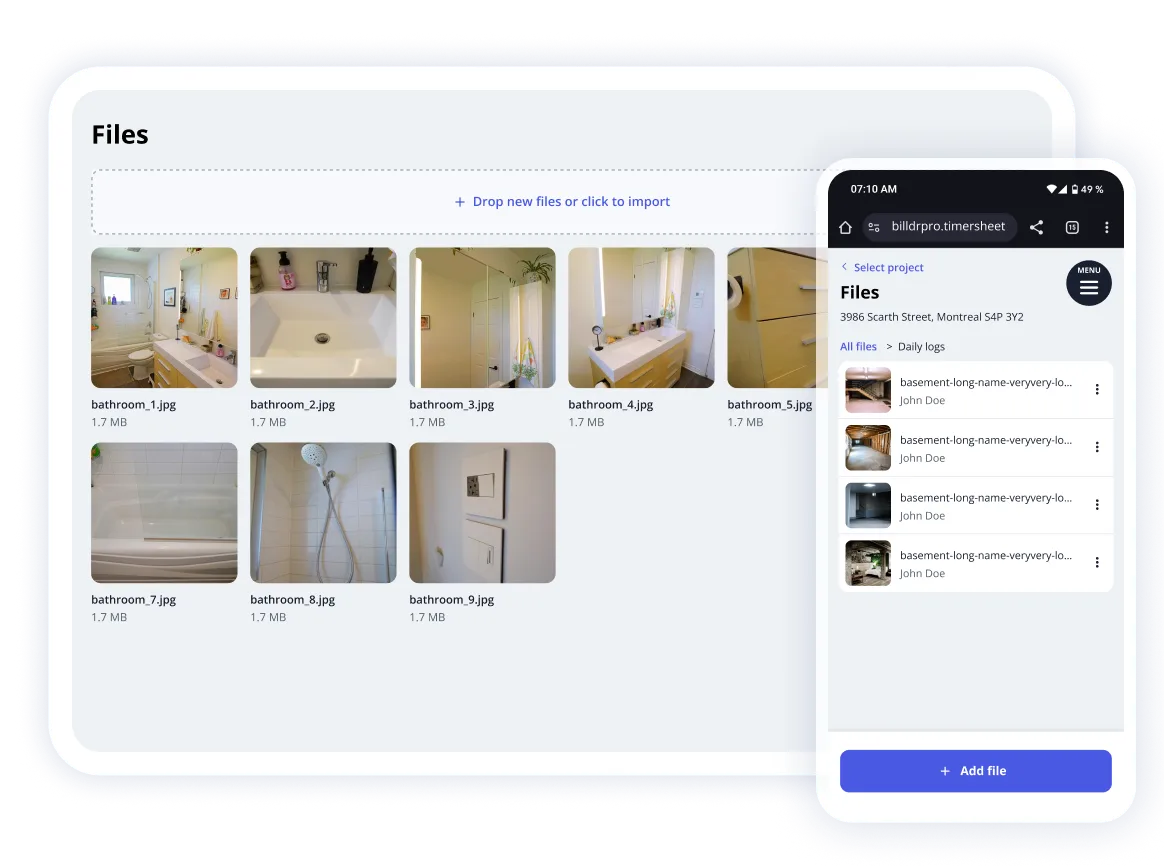
- Immutable Records: Use Billdr's Document Hub to store 4K photo-verified logs of "critical junctions", foundation rebar, window flashing, and waterproofing. In an SB 800 claim, these time-stamped photos serve as your primary legal defense to prove the work was done to code.
Phase 4: Permits & 2026 Code Compliance
1. The "Electric Ready" & Heat Pump Mandate
The 2025 Energy Code has effectively ended the "gas-default" era for new residential construction.
- Prescriptive Default: Heat pumps are now the mandated standard for both space heating and water heating. If you choose to install gas, the efficiency "penalties" in your Title 24 energy modeling will likely force you to compensate with significantly thicker insulation or high-performance windows.
- Infrastructure Readiness: Even if gas is used, homes must be "Electric Ready." This means a dedicated 240V circuit and a pre-marked space in the main electrical panel must be installed within 3 feet of furnaces, cooktops, and clothes dryers to allow for easy future electrification.
2. Solar + Storage: The New Grid Reality
Building on the 2020 solar mandate, the 2026 standards prioritize load shifting.
- Mandatory Storage: Most new non-residential buildings and high-rise multi-family units now require paired battery storage. For single-family homes, while not always mandated by the state, many local jurisdictions (like Oakland and Los Angeles) have added "Reach Codes" that require battery backup to support grid stability during peak hours.
- Energy Modeling: Solar system sizing is now calculated through performance modeling to ensure it offsets a significant portion of the building's projected annual load.
3. Wildfire Resilience: The "Zone Zero" Standard
For any project in a High Fire Hazard Severity Zone, the 2026 code enforces Zone Zero (0-5 feet). This is no longer a recommendation; it is a permit-blocking requirement.
- The 5-Foot Rule: The area within 5 feet of any structure must be entirely non-combustible. This means no wood mulch, no flammable plants (rosemary/juniper), and no wood fences or gates touching the house.
- Ember-Resistant Construction: Vents must have metal screens no larger than 1/8 inch, and all siding and decking must be ignition-resistant or non-combustible.
Billdr Advantage: Mastering the "Energy & Safety" Audit
California's permitting process is notoriously slow, often taking 4–6 months in major cities. Billdr helps you bypass the back-and-forth by centralizing your compliance data.
- Title 24 Documentation: Your Energy Advisor will provide CF1R compliance forms. Use Billdr's Document Hub to host these alongside your plans so that field inspectors can verify "Electric Ready" circuits against the approved energy model in real-time.
- Photo-Verifying Zone Zero: Landscaping is often the last thing done, but it’s the first thing fire marshals check. Use Billdr's Daily Logs to capture date-stamped photos of your gravel/paver "Zone Zero" perimeter and ember-resistant vent screens. This prevents "Correction Notices" that can delay your final Certificate of Occupancy.
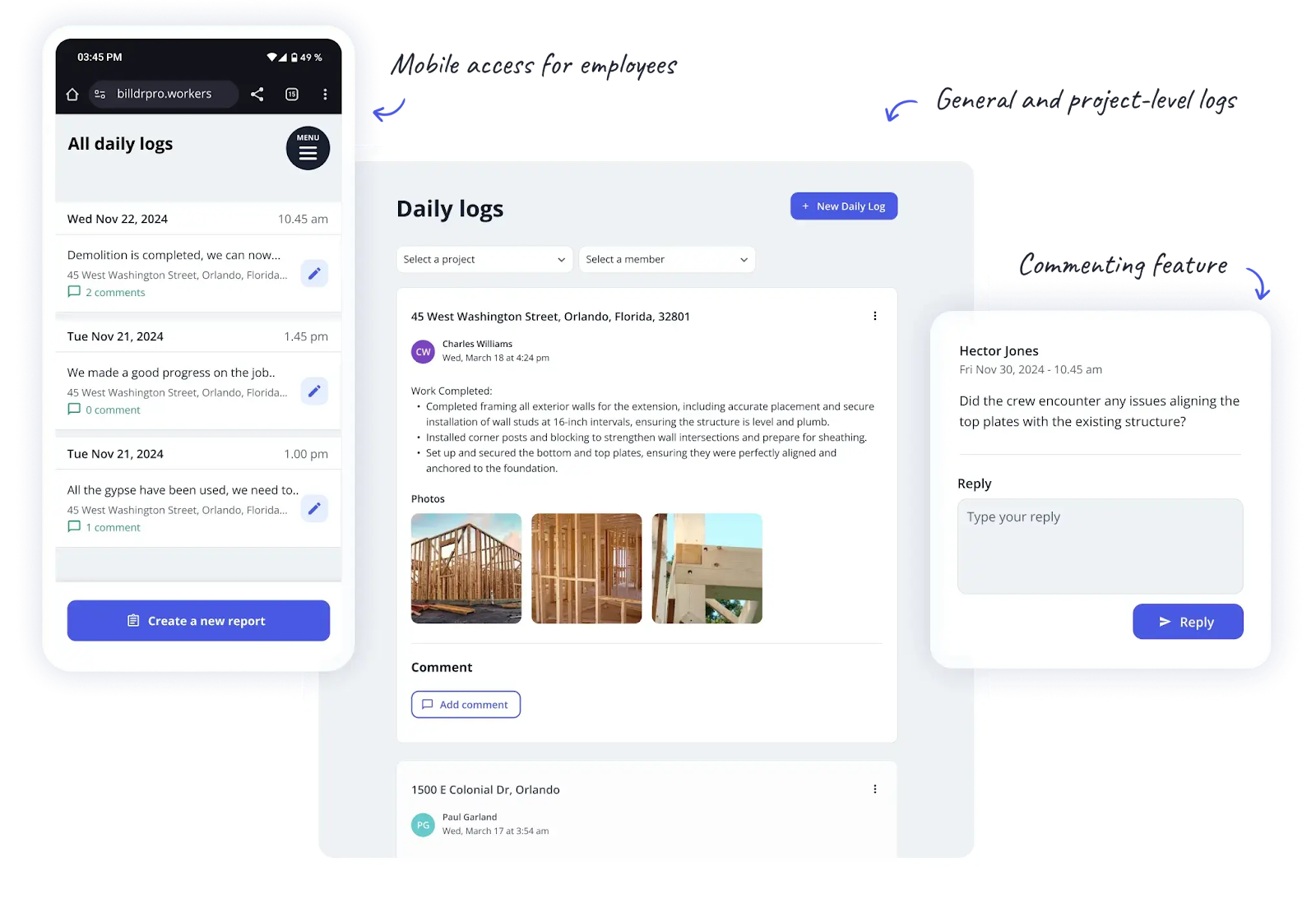
- Battery Commissioning Logs: With the complexity of new Solar+Storage systems, Billdr allows you to store commissioning reports from your solar subs. If the battery isn't communicating with the grid properly, you have the historical data to hold the sub accountable before the final inspection.
2026 Summary of Initial Investment (California)
Conclusion: Navigating the Golden State
California rewards builders who are as good at paperwork as they are at carpentry. With the 2026 shift toward electrification and wildfire safety, the "old way" of building is being phased out.
Billdr is built for this high-compliance environment. Whether it's managing Change Orders to keep up with shifting municipal requirements or using our Financial Reports to satisfy CSLB audits, we help you spend less time in the office and more time on the job site.
Official Regulatory Sources (California)
- Contractors State License Board (CSLB): The primary authority for licensing.
- CSLB Official Website – Use this to check application status, verify license requirements, and access the "Contractors License Law & Reference Book."
- CSLB Classification Definitions – Official description of the Class B General Building Contractor scope of work.
- California Energy Commission (CEC):
- 2025 Building Energy Efficiency Standards (Title 24, Part 6) – Details on the January 1, 2026 updates, including heat pump mandates and electric-ready requirements.
- CAL FIRE (Wildfire Resilience):
- Defensible Space - Zone 0 Requirements – Official guide to the 5-foot non-combustible ember-resistant zone (Zone Zero) mandated for high fire-hazard severity zones.
- California Department of Insurance / State Fund:
- SB 216 Workers' Compensation Mandate – Information on the law requiring all licensed contractors (including those with zero employees) to carry Workers' Comp.
Legal & Technical References
- SB 800 (Right to Repair Act):
- Civil Code Section 895-945.5 – The full text of the legislation regarding construction defect liability and the 10-year statute of repose.
- AB 2622 (Licensing Threshold):
- The 2025/2026 legislation that increased the unlicensed work threshold from $500 to $1,000.
- PSI Exams:
- PSI Exams – The official testing partner for CSLB. Access candidate information bulletins (CIBs) for the Law & Business and Trade exams.
Disclaimer: The information provided in this guide is for educational and organizational purposes only. While Billdr is designed to streamline project documentation, financial reporting, and compliance tracking, its use does not guarantee a passing score on CSLB exams or the successful issuance of a license. Final approval is subject to the discretion of the CSLB based on their independent review of an applicant's experience, criminal history, and financial standing. This guide is not a substitute for legal advice or official CSLB counsel.