

Becoming a homebuilder in New York is a pathway defined by hyper-local regulations rather than a single state license. Unlike states with centralized contractor boards, New York’s system operates on a decentralized model, heavily influenced by New York City’s Department of Buildings (DOB), robust consumer protection laws, and evolving state-level registries.
In 2026, success hinges on mastering municipal registrations, specialized trade licensing, and staying ahead of new transparency laws like the NYSDOL Contractor Registry. This guide breaks your path into four essential phases.

Phase 1: Business Entity & State-Level Foundations
To succeed in New York’s high-stakes building market, Phase 1 is about more than just paperwork; it’s about establishing a "compliance-first" legal shield. In 2026, New York added aggressive transparency layers to combat fraud, meaning "winging it" on your business formation can lead to business-ending fines.
1. LLC Formation & the "Transparency Act" (2026 Update)
Establishing your entity (LLC or Corp) with the NY Department of State (NYSDOS) is the standard first step, but 2026 brings a critical new requirement.
- The LLC Transparency Act: Effective January 1, 2026, all New York LLCs must file a Beneficial Ownership Disclosure with the state. This report identifies every individual with substantial control or 25%+ ownership.
- The "Albany Strategy" (Publication): NY law requires you to publish your LLC formation in two newspapers for six consecutive weeks.
- Pro Tip: Publication in Manhattan can cost over $1,500, whereas publishing in Albany County can be as low as $200. Many builders use a registered agent in Albany to legally save thousands in startup costs.
- Operating Agreement: You are legally required to adopt a written operating agreement within 90 days of filing.
2. NYSDOL Contractor Registry (The 2025/2026 Mandate)
This is no longer optional for anyone touching public funds or large-scale private work.
- Who it covers: Any contractor or subcontractor bidding on public works or private projects where public subsidies cover 30% or more of costs (typically projects over $5M).
- The Fee: A $200 non-refundable fee ($100 for MWBE-certified firms).
- Renewal: Registration is valid for two years. You must apply for renewal at least 90 days before expiration to avoid project stoppages.
3. Consumer Protection & Escrow (GBL §771 & Lien Law §71-a)
New York General Business Law (GBL) is notoriously protective of homeowners.
- GBL §771 Mandatory Clauses: Your contract must be in writing and include:
- A 3-day Right to Cancel notice (midnight of the 3rd business day).
- Estimated start and completion dates.
- A specific notice about Mechanic’s Liens.
- Escrow Requirements (Lien Law §71-a): Any progress payments received before substantial completion must be deposited into a New York State bank escrow account within five business days. You must notify the owner in writing of the bank's name and address within 10 days.
Billdr Advantage: Legal & Compliance Guardrails
New York's "Scaffold Law" and consumer protections make documentation your only defense. Billdr automates these hurdles.
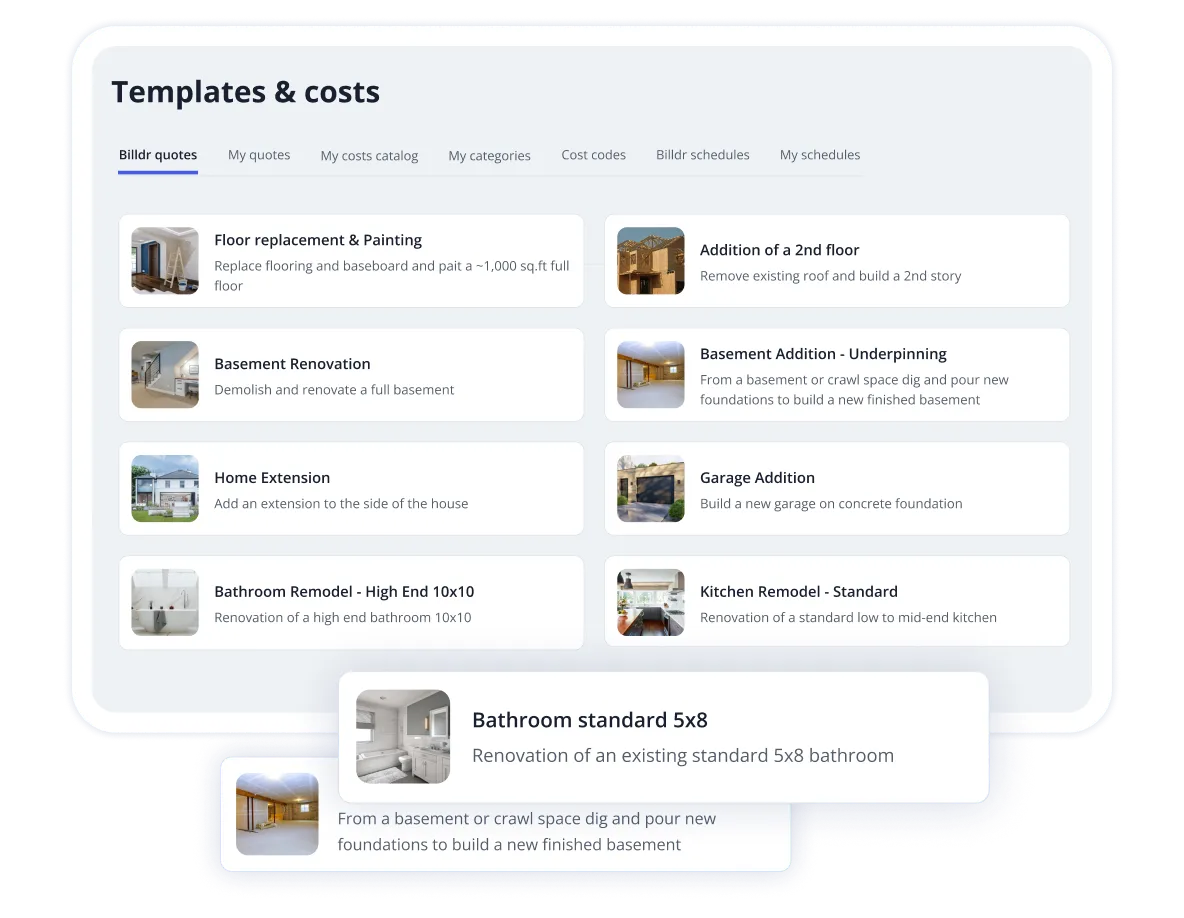
- Statutory Notice Automation: Don't manually type legal warnings. Use Billdr's Quote Builder to pre-save the mandatory GBL §771 "Right to Cancel" and "Mechanic’s Lien" notices into your default Terms & Conditions. This ensures every proposal you send is a compliant contract.
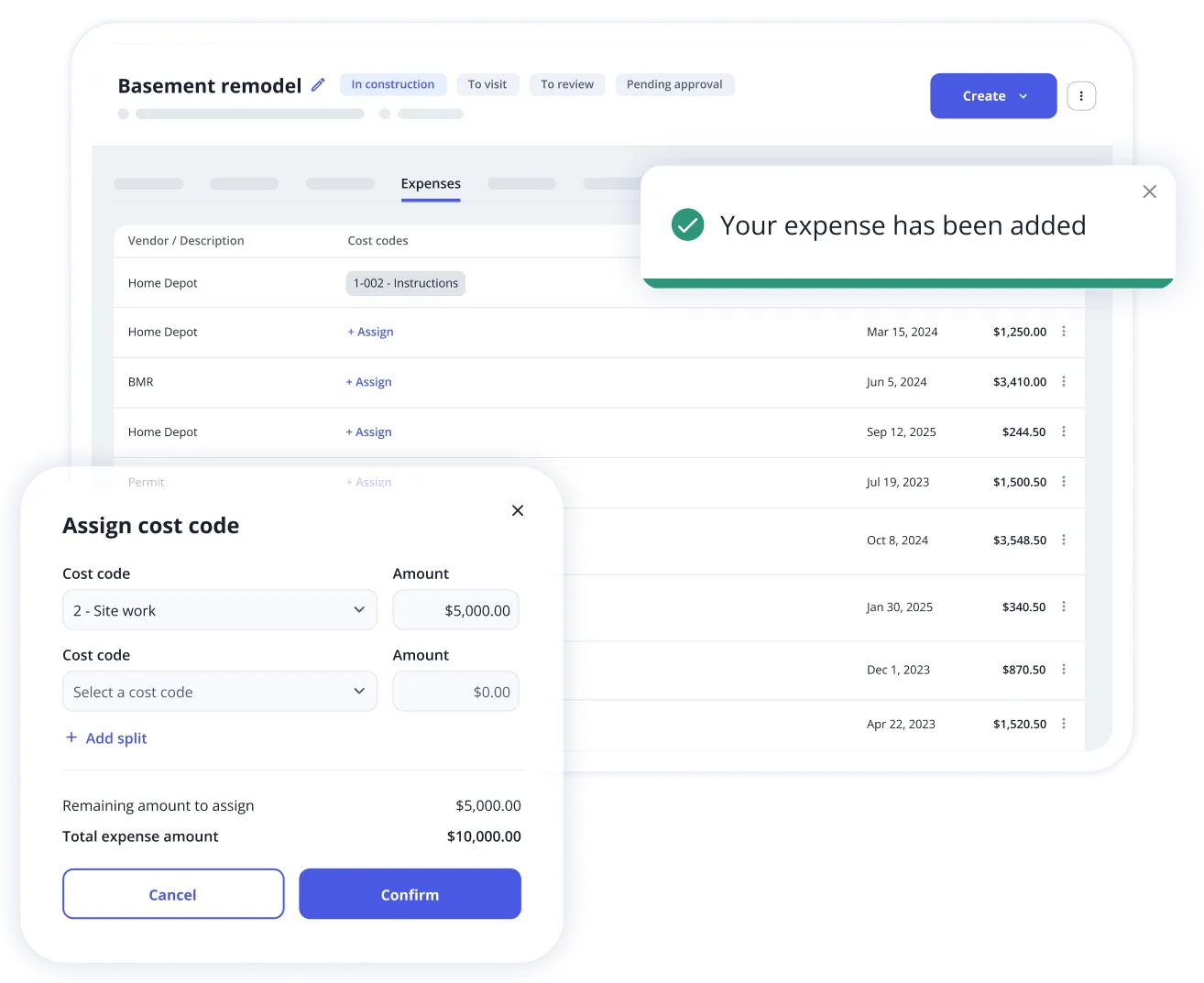
- Escrow Tracking: Use the Financial Hub to tag deposits. Billdr allows you to record the specific escrow bank and account details for each project, generating the required written notice to the owner automatically when a deposit is logged.
Phase 2: Municipal & County-Specific Licensing
This is the core of New York building. You must distinguish between "General Contractor Registration" (for new homes) and "Home Improvement Licensing" (for renovations).
1. New York City: The DOB vs. DCWP Divide
Building in NYC requires navigating two distinct agencies.
- NYC DOB General Contractor Registration (New Construction): If you are building new 1-3 family homes, you must register with the NYC Department of Buildings (DOB).
- Requirements: Be 18+, demonstrate English proficiency, and pass a rigorous background check.
- The Financial Check: You must show a business bank account with a consistent balance (often $25,000+) and carry massive insurance limits (typically $1M per occurrence).
- NYC DCWP HIC License (Renovations): If your project involves "home improvement" (renovations, basements, driveways) rather than new construction from the ground up, you need a license from the Department of Consumer and Worker Protection (DCWP).
- The Exam: You must pass a 30-question multiple-choice exam covering NYC home improvement business laws and consumer protections.
- The Trust Fund: You must either pay a $200 fee into the DCWP Trust Fund or provide a $20,000 surety bond.
2. The 2026 "One-Job" Superintendent Rule (Local Law 149)
As of January 1, 2026, NYC has significantly tightened safety oversight.
- The Change: Previously, a Construction Superintendent (CS) could oversee up to ten non-major buildings. Now, a Primary CS is limited to only one active job site at a time (major or non-major building).
- Strategic Impact: This drastically increases the need for dedicated safety staff. You can no longer spread one superintendent across multiple residential projects.
3. Regional Authority: Nassau, Suffolk, & Westchester
Once you cross the city line, the DOB has no power. You are now under the jurisdiction of the County Offices of Consumer Affairs.
- Suffolk & Nassau Counties: These counties are aggressive about Home Improvement Contractor (HIC) licensing. Even "General Contractors" building new homes must often hold an HIC license to operate legally.
- Westchester County: Requires a license for any permanent residential improvement. Like NYC, Westchester is strict about insurance certificates specifically naming the county as an "Additional Insured."
2026 Snapshot: Requirements by Region
Billdr Advantage: Multi-Zone Management
Managing multiple municipal rules in the "Tri-State" area is a logistical nightmare. Billdr turns this into a competitive advantage.
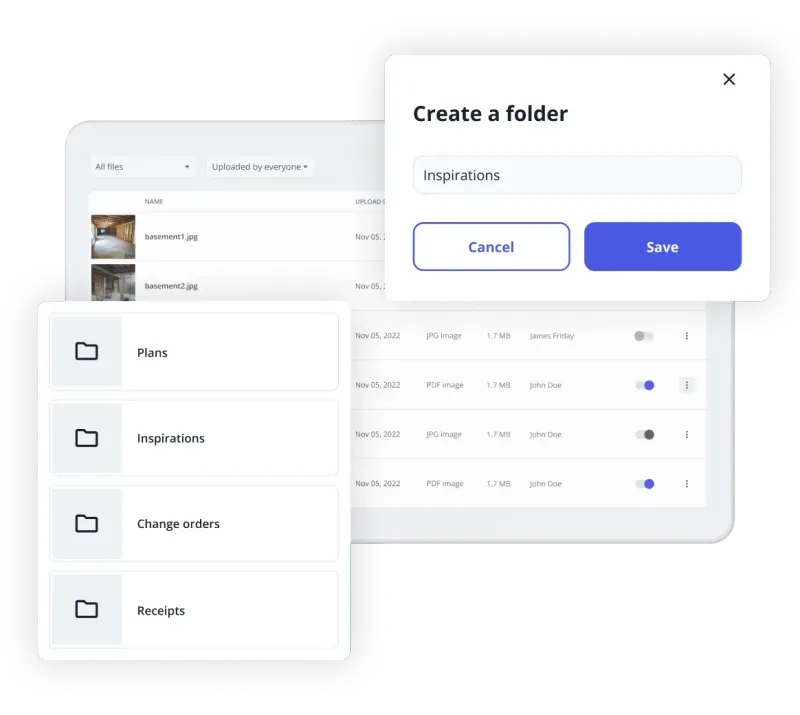
- Hyper-Local Folders: Use the Document Hub to separate permits for Nassau from NYC. Keep your One-Job superintendent logs in a specific, time-stamped folder. This allows you to prove to a DOB inspector that your superintendent is dedicated to that specific site, avoiding massive LL 149 fines.
Phase 3: Insurance, Bonding & Financial Stability
New York has some of the highest insurance premiums in the country due to Labor Law 240 (The Scaffold Law), which imposes "absolute liability" on contractors for gravity-related injuries.
1. General Liability & The "Action Over" Trap
A standard General Liability (GL) policy isn't enough in New York. You must avoid the "Action Over" Exclusion (also known as an Employee Exclusion or Labor Law Exclusion).
- The Risk: If an injured subcontractor's employee sues you (the GC) for a fall, an "Action Over" exclusion allows your insurance company to deny the claim. You are then left to pay six- or seven-figure settlements out of pocket.
- The "Addendum 855 NY": In 2026, many NY municipalities require the ACORD 855 NY addendum. This form explicitly discloses exclusions in your policy so that the building department can verify you are actually covered for Labor Law claims.
- Cost Reality: Expect to pay $10,000 to $30,000+ annually for a policy that includes Action Over coverage.
2. Workers’ Comp & Disability (The "Double Mandate")
New York is hyper-aggressive about its social insurance programs. One day of missed coverage can trigger an automated fine from the Workers' Compensation Board (WCB).
- Workers’ Comp (Form C-105.2): Mandatory for all employers. Fines for non-compliance can reach $2,000 for every 10-day period without coverage. By the time you get your first letter, you could owe $12,000+.
- Disability & Paid Family Leave (Form DB-120.1): Unlike other states, NY requires you to provide off-the-job injury coverage. Failure to carry disability insurance is a misdemeanor and carries additional payroll-based penalties.
3. NYC DOB Financial Integrity & Background Checks
To register as a General Contractor in NYC, the DOB doesn't just check your skills; they check your wallet.
- The $25,000 Solvency Requirement: You must provide the last three consecutive months of business bank statements, each showing an ending balance of at least $25,000. Online printouts must be officially stamped by the bank.
- Background Investigation: You must pay a $330 non-refundable fee for a background check that looks for:
- Outstanding tax liens or child support arrears.
- Prior "moral turpitude" convictions (fraud, grand larceny).
- Past-due NYC government fines or "Environmental Control Board" (ECB) violations.
Billdr Advantage: Risk Mitigation
In the "Absolute Liability" environment of New York, your only defense is a perfect digital trail. Billdr is your shield.
- Subcontractor COI Vault: Since you are liable for your subs' accidents, use Billdr's Crew Portal to verify their coverage. In 2026, the app specifically flags policies that lack the necessary Labor Law 240 endorsements, ensuring you never let a "high-risk" sub on your site.
- Daily Safety Logs & "Toolbox Talks": Use the Daily Logs to document daily safety huddles and ladder inspections. If a lawsuit arises three years later, these time-stamped records showing you provided a safe site and required PPE are your primary evidence to mitigate damages.
- Financial Transparency Hub: Keep your business "Solvency Ready." Use the Financial Hub to track your cash flow, ensuring you always meet the NYC DOB’s $25,000 balance requirement before your triennial registration renewal.
Phase 4: Building Codes & Permits
New York operates under the NYS Uniform Fire Prevention and Building Code, with NYC maintaining its own even stricter NYC Building Code.
1. The All-Electric Buildings Act (The 2026 Mandate)
New York is now the first state in the country to implement a total ban on fossil-fuel systems in new construction.
- The Ban: For any new residential building permit issued on or after January 1, 2026, the installation of fossil-fuel equipment (gas furnaces, stoves, water heaters) is strictly prohibited for buildings up to seven stories.
- The Alternative: New homes must be equipped with high-efficiency electric heat pumps for heating and cooling, and induction cooktops for kitchens.
- Zero-Emission Exception (S9046): Be aware of the 2026 legislative exceptions for zero-emission buildings. If your project was permitted prior to Jan 1, 2027, but falls under specific greenhouse gas categories, you may still face a transitional compliance period.
2. 2026 Energy Standards: NYStretch & IECC
New York has updated the 2025 Uniform Code, making the NYStretch Energy Code the mandatory baseline for many jurisdictions.
- Blower Door Testing: This is no longer optional. Every new residential unit must undergo an ACH50 test (Air Changes per Hour). For 2026, the standard is tightening toward 3.0 ACH50 or lower for most new construction to minimize energy waste.
- U-Factor Mandates: Windows and doors must meet high-performance "U-Factors" (thermal transmittance). In 2026, the standard for windows in Climate Zone 4 (NYC/Long Island) and Zone 5 (Upstate) has dropped to ensure maximum insulation.
3. Permit Filing: DOB NOW & NYC.ID Integration
In NYC, the legacy BIS system is a thing of the past. All permit actions now occur in DOB NOW: Build.
- eFiling & NYC.ID: As of June 2024, all DOB NOW accounts must be linked to a single NYC.ID. You must register as an "eFiling Applicant" to pull permits.
- Stakeholder Attestation (New for Jan 2026): For alterations in multi-unit buildings (co-ops/condos), the DOB now requires a designated board representative to log into DOB NOW: Build and digitally attest that the work is authorized by the building's board.
Billdr Advantage: Inspection & Compliance Readiness
In 2026, New York inspectors are increasingly using digital verification to move through the city’s massive backlog. Billdr ensures your site is ready for the "Green Tape."
- All-Electric Asset Tracking: Use the Product Hub to store technical spec sheets for your electric heat pumps and induction units. When the inspector verifies your "All-Electric" compliance, you can instantly pull up the manufacturer data to prove the unit meets 2026 efficiency standards.
- Pre-Inspection Photo Logs: NY inspectors often issue "Red Tags" for fire-blocking or air-sealing that they can't see once the drywall is up. Use Billdr's Daily Logs to take time-stamped, high-resolution photos of your insulation and fire-caulking. These photos can be shared as "digital proof" to resolve disputes without a costly re-visit.
- Centralized DOB NOW Documents: Store your Approved Plans (with the DOB stamp) and your eFiling confirmation in the Document Hub. Version control is vital in NYC. Billdr ensures your crew is building off the "Post-Approval Amendment" (PAA) set, not the initial filing, preventing code violations.
2026 Summary of Initial Investment (New York)
Official Sources & Resources
1. New York City (NYC) Primary Authorities
- NYC DOB General Contractor Hub: nyc.gov/site/buildings
- The Go-To For: Official registration steps for building 1–3 family homes. Use this to download the LIC6 form and view the latest background check requirements.
- DOB NOW: Build & Licensing: nyc.gov/dobnow
- The Go-To For: All digital permit filings, eFiling registration, and Construction Superintendent tracking. This is where you will manage the 2026 "One-Job" rule compliance.
- NYC DCWP (Department of Consumer & Worker Protection): nyc.gov/site/dca
- The Go-To For: Renovations and Home Improvement Contractor (HIC) licenses. Access the HIC Exam Study Guide and the Trust Fund enrollment forms here.
2. State-Level Compliance & Transparency
- NYSDOL Contractor & Subcontractor Registry: dol.ny.gov/contractor-registry
- The Go-To For: The mandatory biennial registry for contractors on public and subsidized private work. As of late 2025, this portal also integrates Certified Payroll requirements for Article 8 labor law projects.
- NYS Division of Building Standards & Codes: dos.ny.gov/building-standards-and-codes
- The Go-To For: Access to the 2025/2026 Uniform Code and the NYStretch Energy Code. Use their "Code Hotline" for technical questions on the all-electric building mandate.
3. Regional County Authorities
- Nassau County Consumer Affairs: nassaucountyny.gov/1544/Consumer-Affairs
- The Go-To For: Licensing for work in the Towns of Hempstead, North Hempstead, and Oyster Bay.
- Suffolk County Department of Labor & Licensing: suffolkcountyny.gov/Departments/Labor
- The Go-To For: The mandatory Suffolk HIC license and restitution fund payments.
- Westchester County Consumer Protection: westchestergov.com/consumer
- The Go-To For: Licensing for Westchester projects and verifying the specific "Additional Insured" language required for county-level insurance certificates.
Disclaimer
The information provided in this guide is for educational and organizational purposes only. While Billdr provides the documentation, project management, and compliance tracking tools necessary to streamline a construction business, its use does not guarantee municipal approval, passing of local exams, or successful project completion. New York's requirements are hyper-local and subject to change; builders must independently verify all local ordinances, state laws (specifically Labor Law 240/241), and licensing requirements with the respective authorities.