

In Illinois, you don't "get a license" from the state capital; you earn the right to build through a series of local municipal hurdles and specialized state trade certifications. Whether you are building in the high-regulation environment of Chicago or the growing suburbs of Will County, your success in 2026 depends on mastering local registration and state-mandated safety standards.

Phase 1: Entity Formation & The "Specialized" Licenses
In 2026, Phase 1 is your legal and technical launchpad. Because Illinois lacks a statewide general contractor license, the state uses Specialized Trade Licenses as a proxy for regulatory oversight. If you are building homes, you aren't just a "builder", the state identifies you primarily by your ability to manage high-risk systems like roofing and plumbing.
1. LLC Formation: The Transparency Act (2026 Update)
Your first move is filing Articles of Organization with the Illinois Secretary of State.
- The Filing: The fee remains $150 for a standard LLC.
- The Transparency Mandate: As of 2024–2025, you must comply with the Federal Beneficial Ownership Information (BOI) reporting. Failure to disclose who owns and controls your LLC can result in fines up to $500 per day.
- Registered Agent: You must maintain a physical Illinois address (not a P.O. Box).
- Annual Reports: Mark your calendar. Illinois requires a $75 annual report due before your anniversary month. Missing this by 60 days triggers an automatic $100 penalty.
2. The Roofing License: Your "De Facto" State GC License
In the eyes of the Illinois Department of Financial and Professional Regulation (IDFPR), you cannot even offer to perform roofing work (which is part of every new home) without this license.
- The "Qualifying Party" (QP): Every company must designate one individual as the QP. Under SB 2503 (2025/2026), this person must be actively engaged in the day-to-day activities of the business. You can no longer "rent" a license from someone who isn't on-site.
- The Bond: You must submit a continuous surety bond.
- Limited License: $10,000 bond (Residential up to 8 units).
- Unlimited License: $25,000 bond (All residential, commercial, industrial).
- 2026 Contract Rules: Every roofing contract must now explicitly include a land-based phone number and an email address of record.
3. The Plumbing Barrier (IDPH Oversight)
Plumbing is the most strictly regulated trade in Illinois. Unlike other states, there is no "handyman" exception for plumbing.
- Licensed Plumber of Record: Your business cannot perform plumbing work unless a member of the firm is a licensed Illinois plumber.
- Contractor Registration: Even if you sub out all plumbing, the subcontractor must be registered with the Illinois Department of Public Health (IDPH).
- Registration Fee: $150 annually, expiring every April 30th.
- Indemnification Bond: A $20,000 bond must be on file with the IDPH.
Billdr Advantage: Credential Management
In Illinois, "forgetting" to renew a license isn't just a mistake, it's a Class A Misdemeanor. Billdr prevents these business-ending oversights.
- Compliance Vault: Upload your IDFPR Roofing License and IDPH Plumbing Registration once. The app uses OCR technology to read the expiration dates and creates an automated "Compliance Calendar."
- 90-Day Renewal Alerts: You’ll receive a push notification 90 days before your roofing or plumbing credentials expire. This gives you ample time to complete the mandatory Continuing Education (CE) and renew your surety bonds.
- Subcontractor Verification: Before you hire a plumbing sub, ask them to upload their IDPH license to your Billdr Crew Portal. The system will flag them if their insurance or $20,000 bond has lapsed, protecting you from secondary liability.
Phase 2: Municipal Rules & City-Specific Costs (2026 Updates)
In Phase 2, we move from state-level trade licenses to the local municipal "battleground." In Illinois, the local city hall is the gatekeeper of your build. For 2026, the City of Chicago has overhauled its licensing to match the modern economy, while the surrounding suburbs have leaned into stricter bonding to protect homeowners.
1. The Chicago "New Deal" (2026 GC License Overhaul)
Effective January 6, 2026, Chicago implemented a "pay more, build more" model. While fees have risen for the first time in over two decades, the project limits have doubled, allowing smaller builders to scale without jumping to an "Unlimited" Class A license.
- Revised Project Limits: * Class B: Now covers projects up to $10 Million (Ideal for mid-sized multi-family).
- Class C: Now covers projects up to $5 Million (Perfect for high-end custom homes).
- Class D: Now covers projects up to $2 Million (The standard for residential additions).
- The 2026 Insurance Mandate: To keep up with rising construction and litigation costs, the City of Chicago now requires Class C and D holders to maintain $2 Million in General Liability per occurrence.
- Note: You must specifically list the "City of Chicago" as an additional insured on a primary and non-contributory basis on your COI.
2. Chicago Licensing: The CTS Factor
All Chicago GC licensing is administered by Continental Testing Services (CTS).
- No Exam for GCs: While trade licenses (Electric/Plumbing) require exams, General Contractors in Chicago primarily undergo a financial and character audit.
- The eFiling Shift: By Fall 2026, Chicago plans to migrate all trade licenses to a fully paperless online system. Until then, applications must still be mailed to the LaGrange, IL processing center.
3. Suburban Registration: The "Bond and Badge" System
Outside Chicago, "licensing" is replaced by "contractor registration." Cities like Naperville, Joliet, and Aurora focus on two things: your Certificate of Insurance and your Surety Bond.
- The Additional Insured Clause: Every suburb will demand that their specific city name be listed as an "Additional Insured" on your policy. If you work in 10 towns, you need 10 separate certificates.
- Surety Bonds (The 2026 Standard): * Naperville: Requires a $10,000 bond specifically for work on city property.
- Joliet: Maintains a $20,000 performance bond for general construction.
- Aurora: As a leader in the 2026 Stretch Energy Code, Aurora requires contractors to demonstrate knowledge of high-performance envelope standards before permit issuance.
2026 Snapshot: Requirements by Region
Billdr Advantage: Multi-Zone Management
Managing a portfolio across the "Chicagoland" area means juggling dozens of unique municipal expiration dates. Billdr makes this effortless.
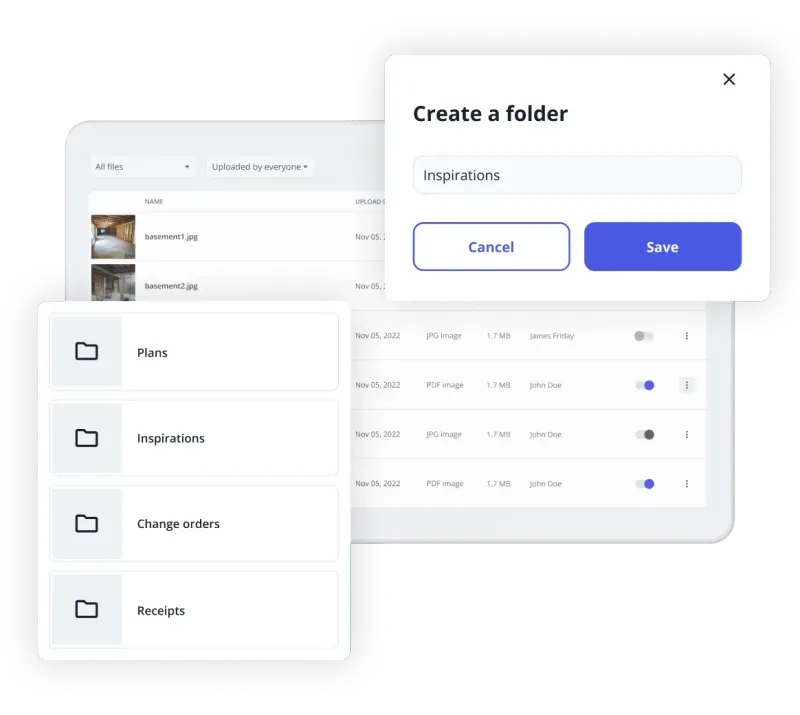
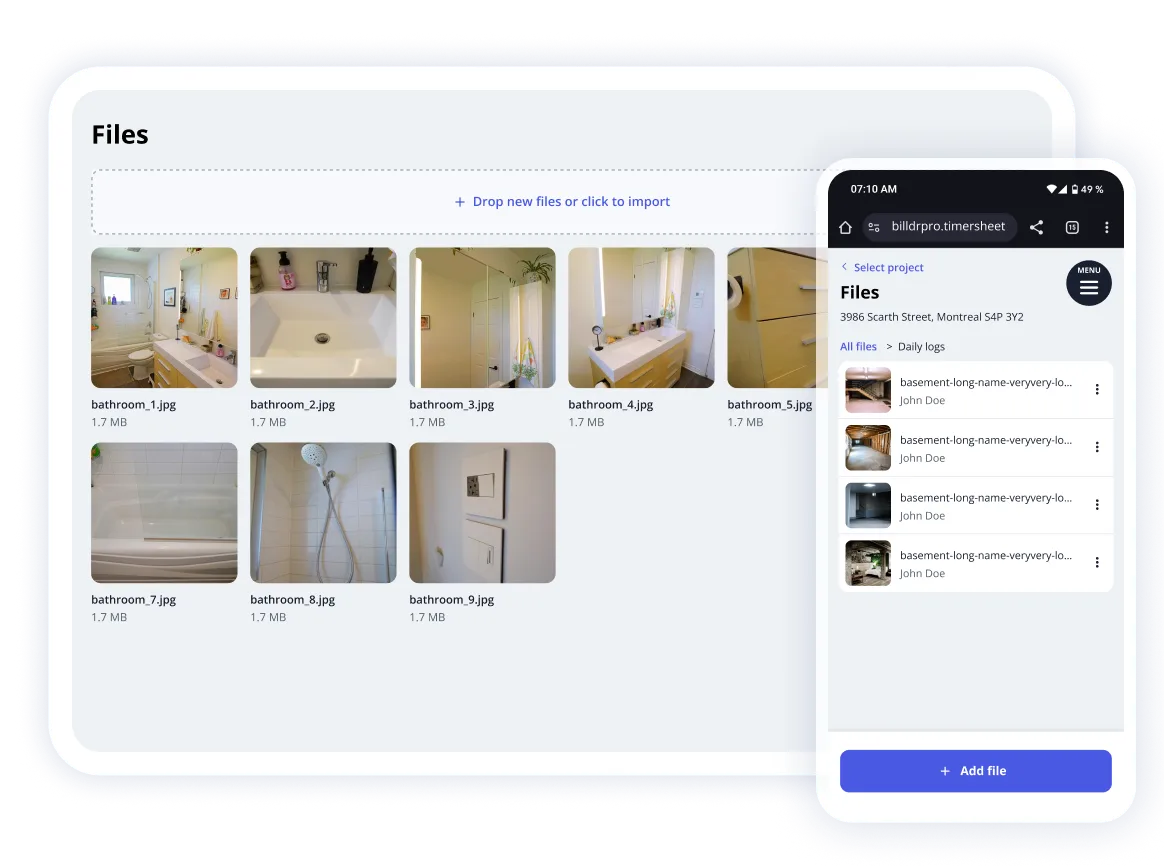
- Hyper-Local Folders: Use the Document Hub to create a dedicated folder for each municipality. Store the specific Naperville Bond and the Joliet License so they are ready the moment you bid on a new project in that zone.
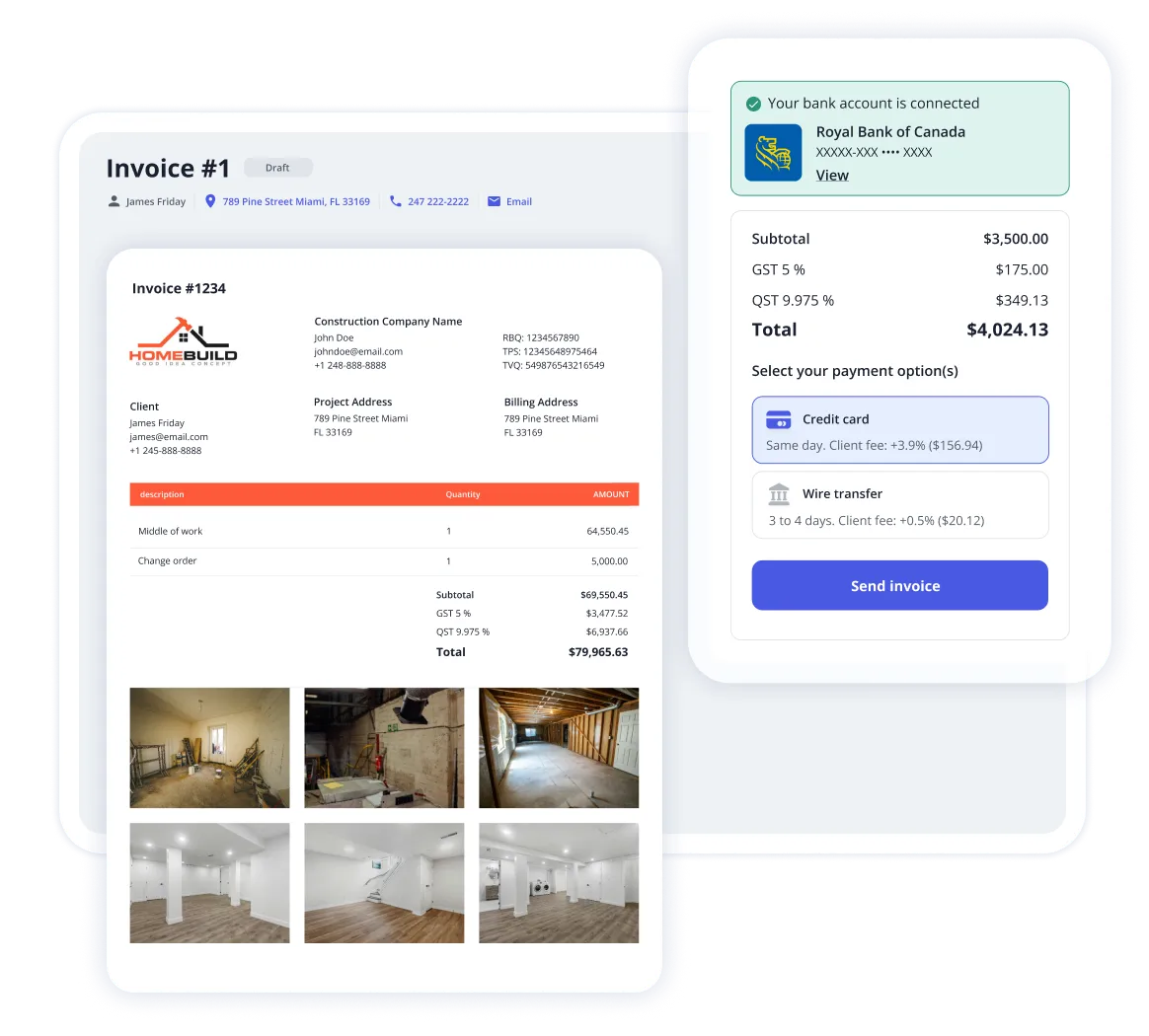
- 2026 Fee Tracker: With Chicago's new CPI-adjusted fees starting in 2027, use the Financial Hub to track these overhead costs. The app helps you factor these rising municipal fees directly into your project estimates, protecting your margins.
Phase 3: Financial Protection & Prompt Payment (770 ILCS 60)
In Illinois, Phase 3 is where your "paper trail" becomes your bank account. Because Illinois law is designed to prevent "double payment" while ensuring contractors get paid, the state has some of the most technical notice requirements in the country. In 2026, failing to hit a 60-day or 90-day deadline doesn't just result in a delay. It results in the total legal loss of your payment rights.
1. The Contractors Prompt Payment Act (815 ILCS 603)
This act is a builder’s best friend for cash flow. It mandates that on private projects, contractors must be paid within 15 days after the owner approves a request for payment.
- The 25-Day Approval Rule: Owners must approve or reject your payment application within 25 days of receipt. If they do not provide a written rejection detailing why they are withholding funds, the application is automatically deemed approved on the 25th day.
- The 10% Interest Penalty: If payment is not issued within 15 days of approval, the owner is liable for the amount due plus 10% annual interest (~$0.833% per month$).
- Right to Stop Work: If payment is late, you have the legal right to suspend work without being in breach of contract, provided you give 7 days' written notice.
2. The Mechanics Lien Act (770 ILCS 60)
This is the most powerful tool in your belt, but it is notoriously difficult to "perfect" in Illinois due to the strict deadlines.
- General Contractors (The 4-Month Rule): To maintain your lien’s priority over other lenders (like the homeowner’s mortgage bank), you must record your lien within 4 months of your last day of work. If you miss this, you can still lien the property for up to 2 years, but your claim will be "subordinate" to the bank meaning you might not get paid if the house is sold or foreclosed.
- Subcontractors (The 60 & 90-Day Deadlines):
- 60-Day Notice (Owner-Occupied Homes): For residential projects where the owner actually lives in the house, you must serve a notice to the owner within 60 days of your first day on the job.
- 90-Day Notice of Intent: No matter the project type, you must serve a written notice of your claim to the owner and lender within 90 days of your last day of work.
3. Lien Waivers & Sworn Statements (770 ILCS 60/5)
In Illinois, you cannot waive your lien rights before you start work. However, once work begins, the exchange of "Waivers for Checks" is the industry standard.
- The Sworn Statement: Under Section 5 of the Act, a property owner can request a "Sworn Statement" from the GC at any time. This document must list every sub and supplier, their contract amount, and what is still owed. No Sworn Statement = No Payment.
- Conditional vs. Unconditional Waivers:
- Conditional: "I waive my rights if the check clears." (Best for GCs and Subs).
- Unconditional: "I have the money; my rights are gone." (Best for Owners).
Billdr Advantage: The "Audit-Ready" Trail
Illinois law rewards the organized and punishes the messy. Billdr is built to automate the "770 ILCS 60" headache.
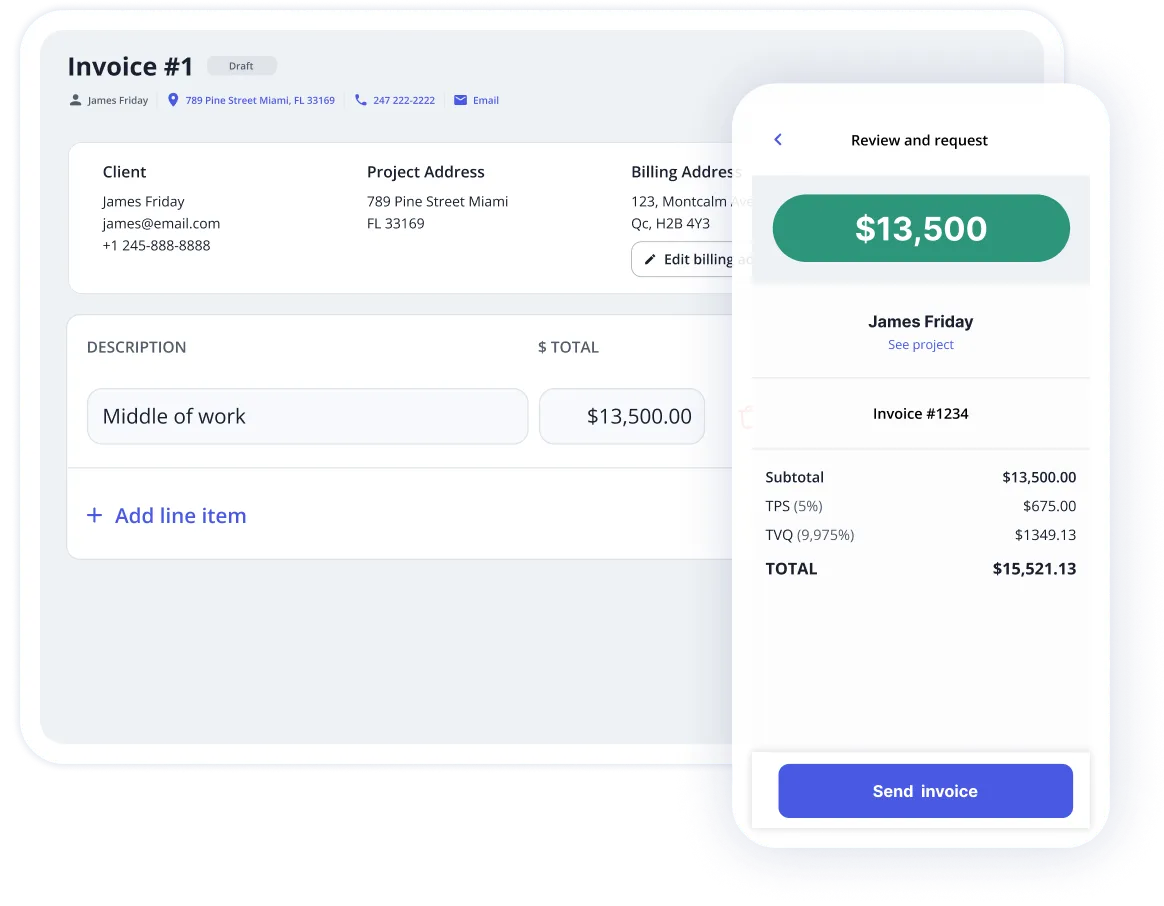
- Time-Stamped Invoicing: Billdr's invoicing hub tracks exactly when an owner opens and approves your payment request. If they miss that 25-day approval window, you have the digital proof needed to enforce the deemed approval and start accruing 10% interest.
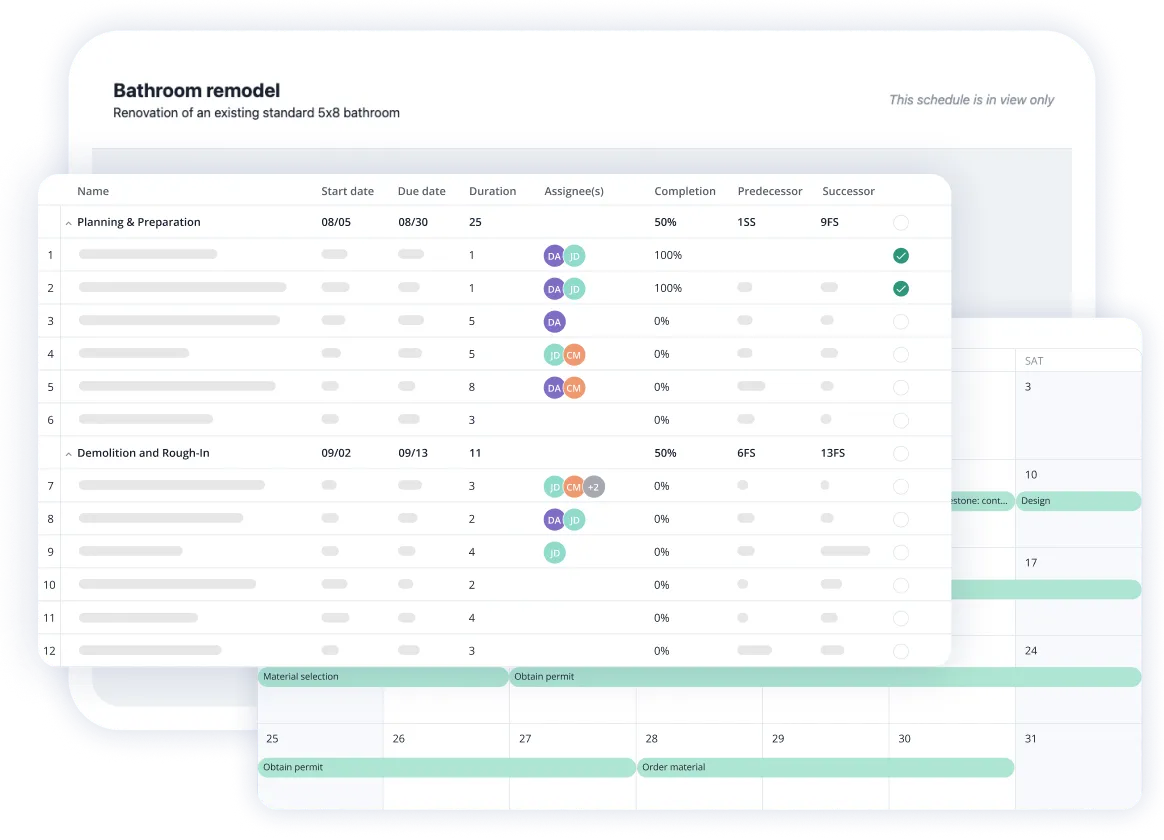
- The "Notice Calendar": Never miss a 60-day or 90-day deadline. The app tracks your "First Furnishing" and "Last Day of Work" dates, sending you automated push notifications when it’s time to serve a notice to the homeowner.
Phase 4: The 2026 Illinois Stretch Energy Code
In Phase 4, we move from legal and financial paperwork to the actual performance of the home. In 2026, Illinois is no longer just building for "now"; it is building for a decarbonized future. The Climate and Equitable Jobs Act (CEJA) has made the Illinois Stretch Energy Code the gold standard for progressive municipalities (like Evanston and Aurora).
For a builder, this means that "passing code" is no longer just about safety. It is about hitting rigorous, data-driven efficiency targets.
1. Tighter Envelopes: The 3.0 ACH50 Standard
The 2026 Stretch Code aims to be 60% more efficient than the 2006 baseline. This is achieved primarily through a "build tight, ventilate right" philosophy.
- The 3.0 ACH50 Barrier: For new residential construction, you must prove the home’s airtightness is at or below 3.0 Air Changes per Hour (ACH50).
- Beyond the Envelope: To hit this target without sacrificing air quality, you are often required to install Energy Recovery Ventilators (ERVs) or Heat Recovery Ventilators (HRVs) to provide balanced mechanical ventilation.
- Prescriptive vs. Performance: You can choose a prescriptive path (specific R-values and U-factors) or a performance path (using energy modeling to prove the home uses ~40% less energy than the 2006 IECC standard).
2. "Electric Ready" & "Solar Ready" Mandates
Even if your client currently insists on gas, the 2026 code requires you to prepare the home for a 100% electric future.
- Branch Circuits: You must install dedicated branch circuits within three feet of every fuel-gas-fired appliance (stove, water heater, furnace). This reduces the cost for future homeowners to switch to heat pumps or induction.
- EV-Capable Garage: Under the Illinois Electric Vehicle Charging Act, new single-family homes with a designated parking space must have at least one EV-capable spot. This means the electrical panel capacity and conduit are already in place for a Level 2 charger.
- Solar Readiness: New homes must include construction documentation of a "Solar-Ready Zone" on the roof, including load-bearing capacity and a conduit path to the electrical panel.
3. Blower Door Testing: The Gatekeeper to the CO
In Illinois, a Certificate of Occupancy (CO) is not issued until a certified third party (RESNET or BPI certified) performs a final pressure test.
- The Test: The house is depressurized to -50 pascals to measure exactly how much air is leaking through the shell.
- Pre-Drywall Testing: Savory Illinois builders perform a "mid-build" blower door test before insulation and drywall. This is the only time you can easily find and fix leaks in the top plates or rim joists.
Billdr Advantage: Inspection & Code Readiness
High-performance codes like the 2026 Stretch Code leave zero room for error. Billdr ensures your team hits these targets the first time.
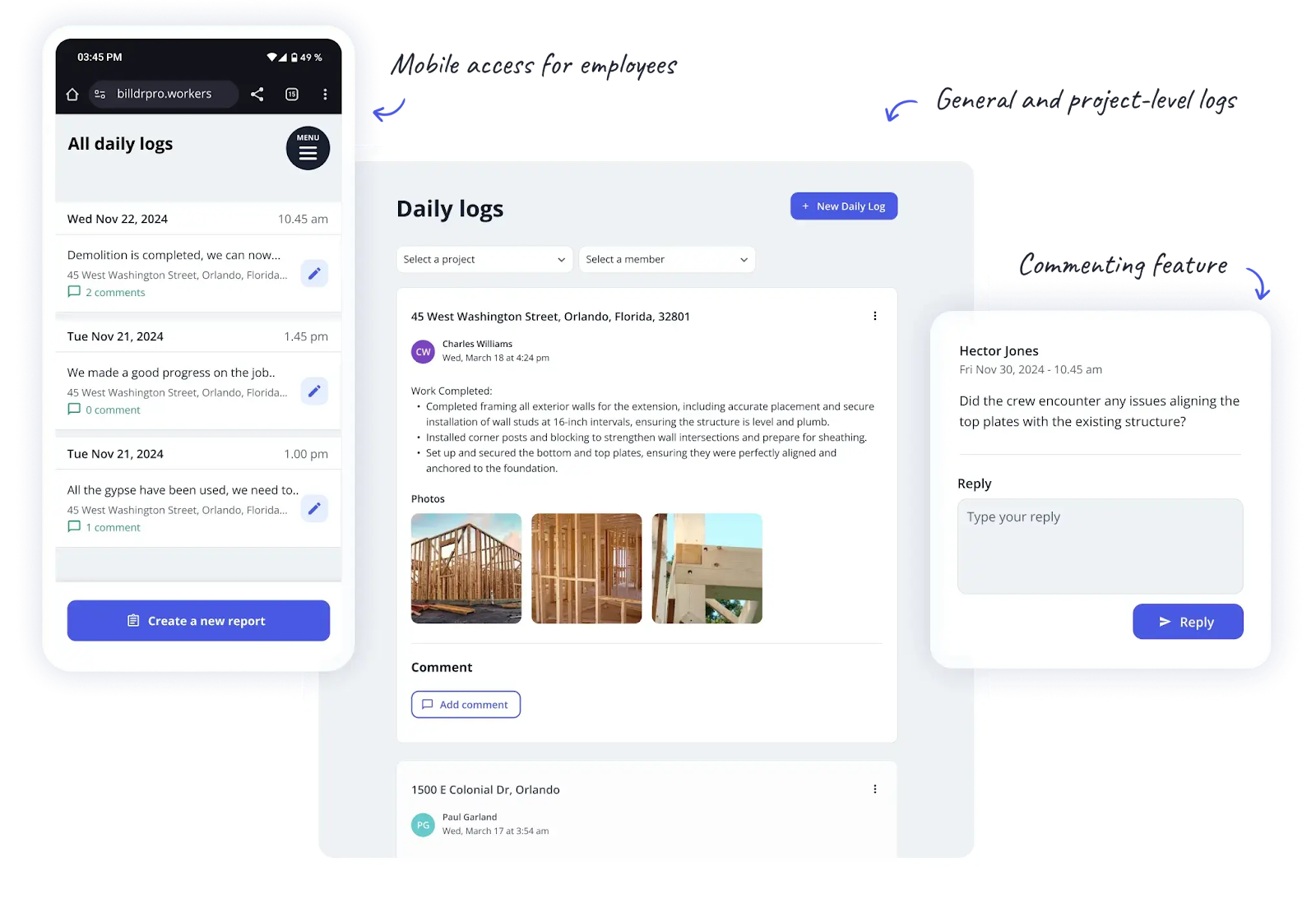
- Photo-Verified Seal Points: Use Billdr's Daily Logs to document your air-sealing milestones. Photograph the spray foam at the rim joists and the gasket sealing at the top plates before they are covered. If your blower door test fails, these photos help you backtrack to find the leak.
- Code Vault: Keep a digital copy of the 2026 Stretch Code amendments in your Document Hub. When an inspector questions your "Electric Ready" conduit placement, you can instantly pull up the code text to prove your compliance.
2026 Summary of Illinois Startup Costs
Official Sources & Resources
1. Primary Regulatory Portals
- Chicago Dept of Buildings (DOB) - GC Licensing: chicago.gov/buildings
- 2026 Focus: This is where you monitor the eFiling migration and verify your Class-specific project limits.
- Resource: Download the Official 2026 GC Fee & Insurance Schedule to ensure your $2M liability policy meets the new mandate.
- IDFPR Roofing Portal: idfpr.illinois.gov
- 2026 Focus: Use this to manage your Qualifying Party (QP). If your QP leaves, you have 30 days to notify the IDFPR via this portal or risk an automatic license suspension.
- IDPH Plumbing Program: dph.illinois.gov/plumbing
- 2026 Focus: Access the Plumbing Contractor Registration Form. Remember: The $20,000 bond must be original and bear the raised seal of the surety company.
- Illinois Capital Development Board (Stretch Code): cdb.illinois.gov
- 2026 Focus: Download the 2026 Residential Stretch Energy Code amendments. This document is your "bible" for hitting the 3.0 ACH50 target.
2. Legal & Financial Enforcement Resources
- Illinois General Assembly (ILGA) - 770 ILCS 60: ilga.gov/legislation/ilcs/
- The Go-To For: Verifying the exact wording for your 60-day Owner-Occupant Notice. One typo in this notice can invalidate your entire lien claim.
- Secretary of State (SOS) - Business Services: ilsos.gov
- The Go-To For: Filing your Annual Report ($75) and checking your "Certificate of Good Standing." Most municipalities will not issue a permit if your LLC is not in "Good Standing" with the SOS.
3. Technical Testing & Compliance Partners
- Continental Testing Services (CTS): continentaltesting.net
- The Go-To For: The only authorized provider for Chicago GC license processing and State Roofing Exams.
- RESNET (Blower Door Certification): resnet.us
- The Go-To For: Finding a certified HERS Rater to perform your mandatory 2026 Blower Door tests.
Disclaimer
The information provided in this guide is for educational and organizational purposes only. While Billdr provides the documentation, subcontractor management, and financial tracking tools necessary to streamline a construction business, its use does not guarantee municipal approval, passing of local exams, or successful project completion. Illinois building requirements are hyper-local; builders must independently verify all municipal ordinances, state trade laws (Specifically Roofing/Plumbing), and 2026 code updates.