
Building a commercial contracting firm in Georgia requires navigating a state licensing system that prioritizes financial stability, trade competency, and management experience. Managed by the Georgia State Licensing Board for Residential and General Contractors (GSLRGC) under the Georgia Secretary of State – Professional Licensing Boards Division. The system provides two distinct paths for commercial operations.

Phase 1: Classification & License Tiers
In Georgia, your "financial ceiling" is determined at the application phase. Choosing the right tier is a strategic business decision based on your target project scale.
1. Unlimited vs. Limited Tier
- General Contractor (Unlimited): This classification is for large-scale commercial, private, public, and industrial projects. There is no limit on project value. Applicants must demonstrate a minimum net worth of $150,000, typically verified via a CPA-prepared financial statement or equivalent affirmation.
- General Contractor Limited Tier: This classification allows for similar commercial work but caps individual contracts at $1,000,000 per project. It requires a more accessible minimum net worth of $25,000, for which an affirmation often suffices.
2. Qualifying Agent (QA) Status
Georgia requires licensed contracting businesses to maintain an active Qualifying Agent. This is an individual (owner or officer) who passes the necessary examinations on behalf of the company. If a QA leaves the company, the business must notify the Board and replace them within the specified statutory timeframe to maintain license validity.
3. Business Registration
Before the Board reviews an application, the business entity must be in good standing with the Georgia Secretary of State Corporations Division. Your Control Number and eventual license number are required on all commercial bids and building permit applications.
The Billdr Advantage: Phase 1 Infrastructure
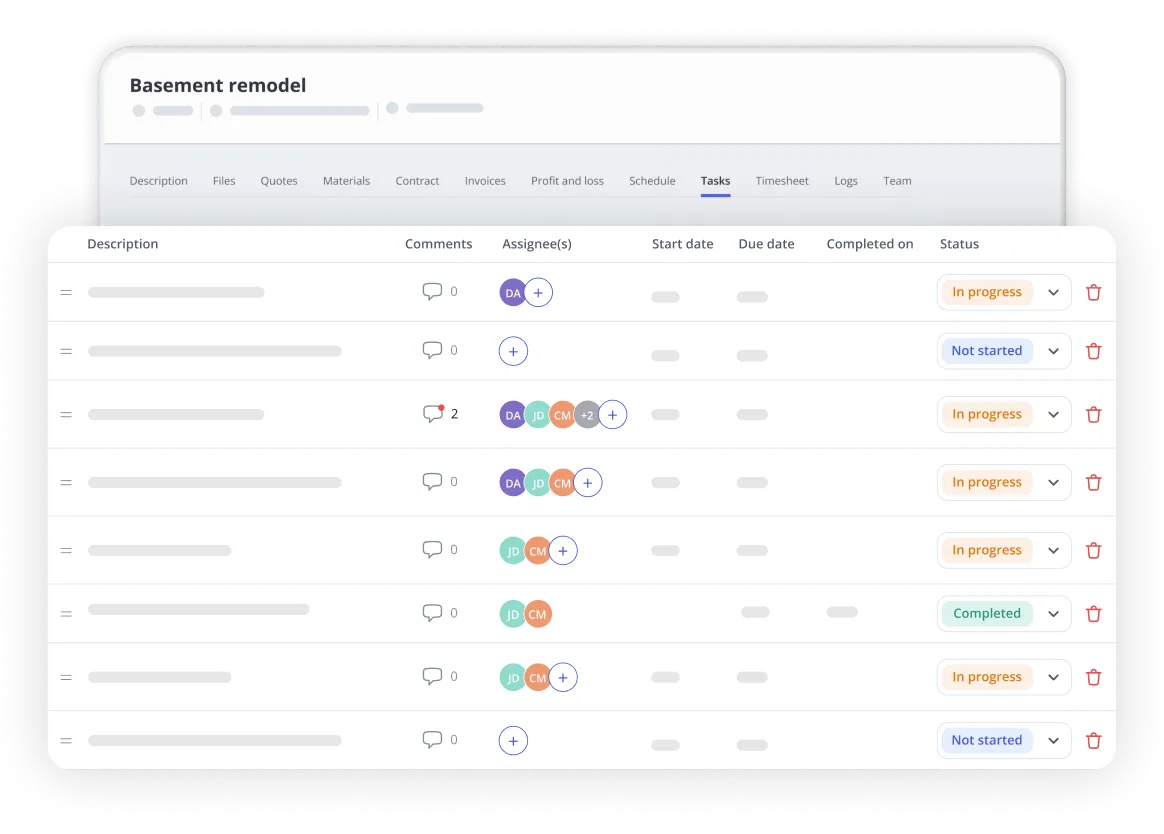
- QA Succession Management: Losing a Qualifying Agent (QA) can shut down a commercial project overnight. Use Billdr's Credential Vault to store your QA’s NASCLA transcripts, Georgia Business & Law exam scores, and employment affidavits. By setting a Recurring Task with high-priority alerts for license renewals (due by June 30 of even-numbered years), you ensure your firm never loses its "Active" status due to an administrative oversight.
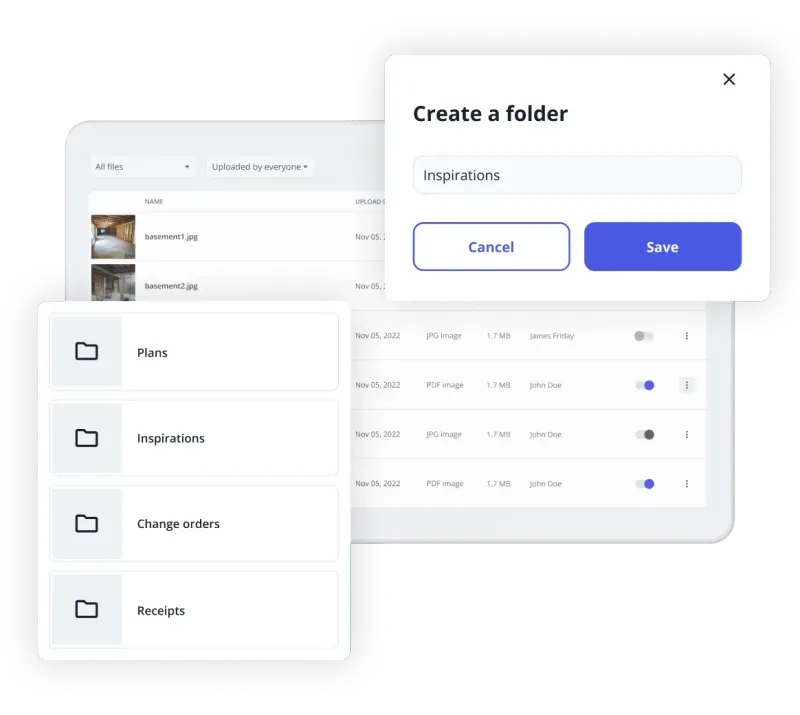
- SOS Digital Compliance Hub: Store your Articles of Organization and annual SOS "Good Standing" certificates in a centralized Document Hub. When bidding on municipal projects in Atlanta or Savannah, use a Public Share Link to provide verified proof of your firm’s legal standing instantly, accelerating the pre-qualification and permitting phases.
Phase 2: Examinations & Financial Solvency
Georgia accepts the NASCLA Accredited Examination, allowing for trade score portability while maintaining high state-specific financial and legal standards.
1. Testing: NASCLA & Georgia Law
Applicants must pass two examinations, often coordinated via the National Examination Database (NED):
- NASCLA Accredited Examination for Commercial General Building Contractors: A nationally recognized exam covering trade competency, project management, and safety.
- Georgia Business & Law Exam: A state-specific test focusing on the Official Code of Georgia (O.C.G.A.) and state safety codes.
2. Financial Solvency Scrutiny
The Board has intensified its review of financial stability. For Unlimited applicants, a reviewed or audited balance sheet prepared by a CPA is the standard. For Limited Tier applicants, the Board allows more flexibility, including the use of surety bonds or letters of credit to meet the $25,000 requirement.
3. Insurance Minimums
- General Liability: Mandatory (minimum $500,000 per occurrence for commercial tiers, though contract requirements often demand higher limits).
- Workers' Compensation: Mandatory for firms with 3 or more employees (including officers).
The Billdr Advantage: Compliance Oversight
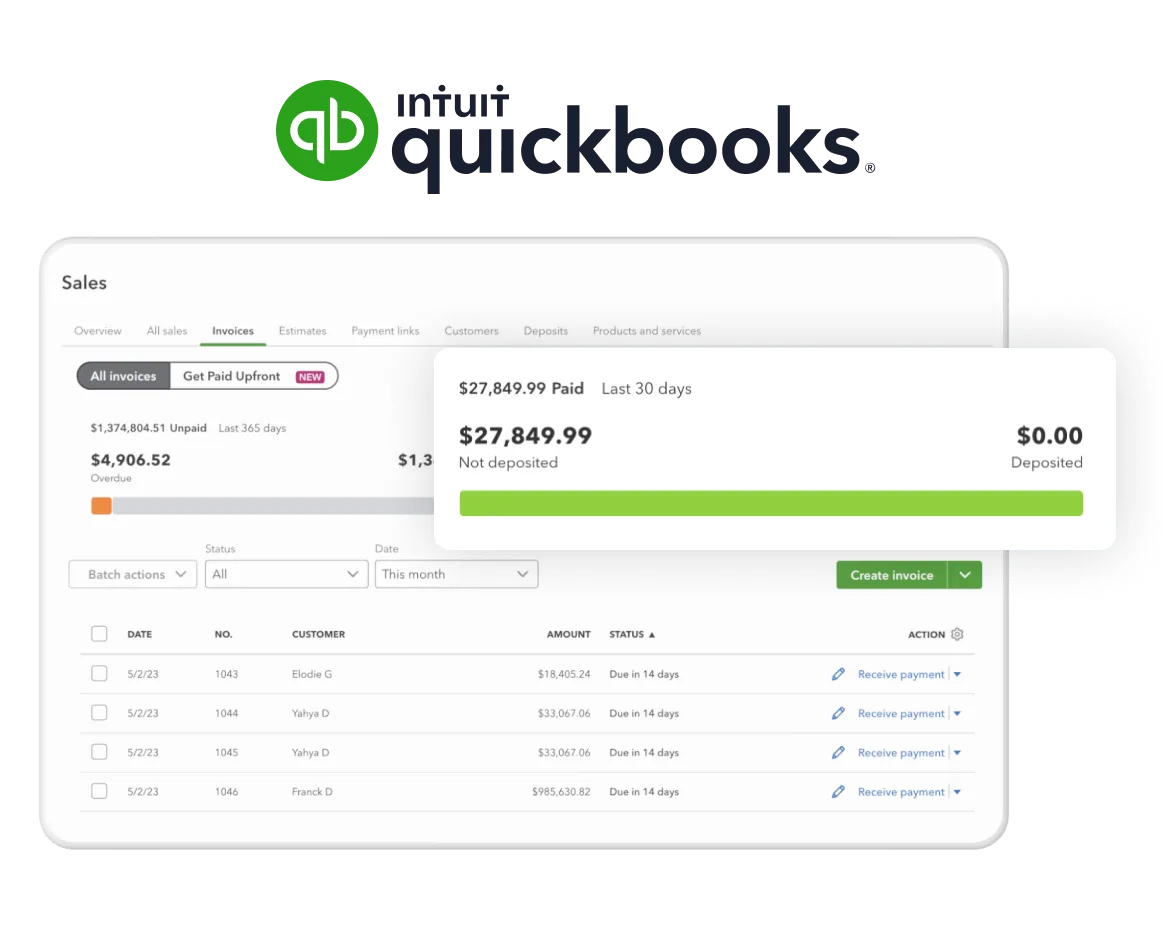
- Audit-Ready Financials: Proving a $150,000 net worth for an Unlimited license requires impeccable record-keeping. Billdr's Financial Reporting Module allows you to pull real-time balance sheets and P&L statements. This live data ensures your firm is always "Audit-Ready," providing your CPA with the accurate project financials needed to produce the reviewed or audited statements required by the Board.
Phase 3: Georgia Prompt Pay & Cash Flow (O.C.G.A. § 13-11)
Georgia features one of the fastest payment statutes in the Southeast, governed by the "15/10 Rule."
1. The 15/10 Payment Cycle: Statutory Timelines
Georgia’s Prompt Pay Act sets default timelines that are among the most aggressive in the Southeast. These rules apply to both private and public projects (excluding residential projects of 12 units or fewer).
- Owner to GC (15 Days): Once you submit a "proper" payment request, the owner has 15 days to release funds.
- GC to Subcontractor (10 Days): After you receive payment from the owner, the "flow-through" clock starts. You have 10 days to pay your subcontractors and material suppliers for their portion of that work.
- Contractual Freedom: Be aware that O.C.G.A. § 13-11-7(b) allows parties to "contract out" of these specific windows. If your contract says "Net 45," that agreement typically overrides the statutory 15-day default. Always review your prime contract for these "Prompt Pay Waivers."
2. The "Proper Invoice" Requirement
The 15-day clock does not start until the owner receives a "proper" payment request. If your invoice is missing data, the owner can legally reset the clock. To be "proper" in Georgia, an invoice should typically include:
- Detailed Schedule of Values (SOV): A line-item breakdown of work completed.
- Lien Waivers: Most commercial owners require an "Interim Waiver and Release Upon Payment" to be attached.
- Stored Materials Proof: If you are billing for materials not yet installed, you must provide proof of insurance and secure storage.
3. Late Payment Interest (1% per Month)
If an owner or GC misses the deadline without a valid reason (like defective work or a lien claim), they owe interest at a rate of 1% per month (12% annually).
- The "Notice" Trap: Under O.C.G.A. § 13-11-7(a), you cannot collect interest unless you have notified the payer of this specific code section at the time the payment request is made.
- Prevailing Party Clause: Georgia law allows for the recovery of reasonable attorney’s fees if you have to sue to collect a late payment, provided you are the "prevailing party."
The Billdr Advantage: Financial Transparency
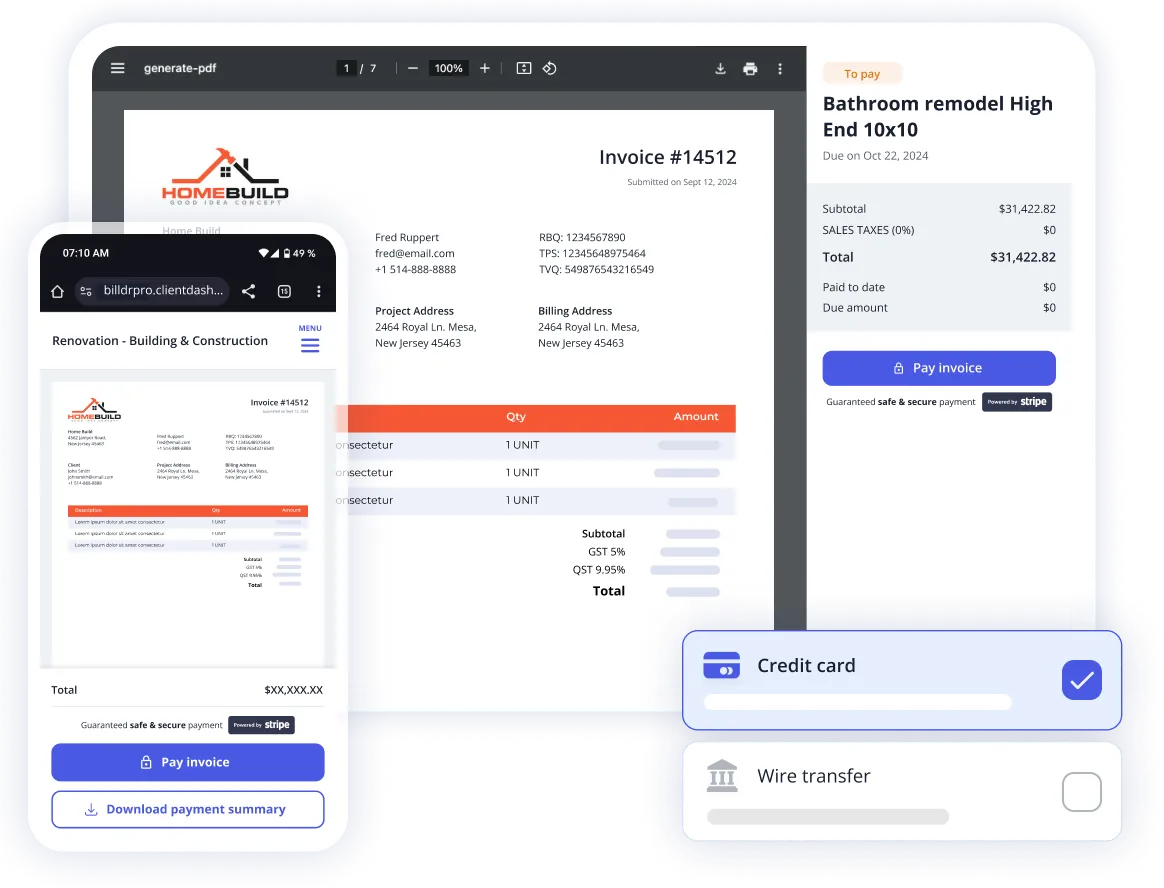
- The Statutory Clock-Starter: Under the Georgia Prompt Pay Act, timing is everything. Every invoice sent via the Billdr Client Portal creates a time-stamped digital receipt upon delivery and viewing. This audit trail provides the primary evidence needed to establish the 15-day payment window and, if necessary, enforce a 1% interest claim for late payments.
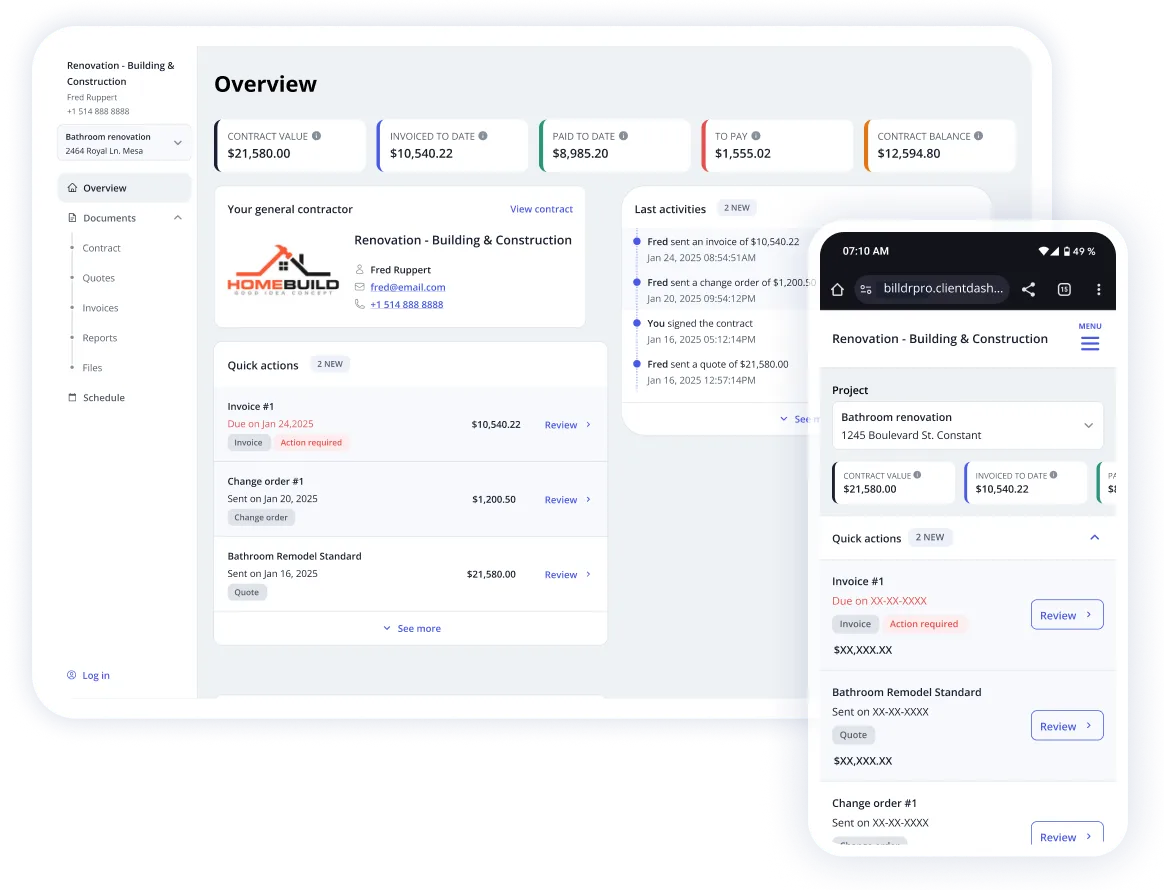
- 10-Day Flow-Through Alerts: Georgia law requires GCs to pay subcontractors within 10 days of receiving funds from the owner. Billdr's Payment Dashboard alerts you the moment an owner’s payment is recorded. By automatically flagging linked subcontractor invoices, the platform helps you manage the 10-day "flow-through" deadline, ensuring you avoid state board complaints and maintain healthy vendor relationships.
Phase 4: Site Compliance & Project Close-Out
Georgia’s lien and safety laws require precise documentation to preserve your right to final payment.
1. Notice of Commencement (NOC)
A Notice of Commencement (O.C.G.A. § 44-14-361.5) is typically filed in the superior court of the county where the work is performed within 15 days of work commencement. Failing to file an NOC can significantly complicate your ability to defend against sub-tier lien claims and manage "blind" liability.
2. Lien Rights & Enforcement (O.C.G.A. § 44-14-361.1)
- Claim of Lien: A claim must be recorded within 90 days from the last day of furnishing labor or materials.
- Enforcement Action: To actually enforce a lien, a legal action (lawsuit) must be filed within 365 days of the date the lien was recorded.
3. OSHA & Safety Responsibility
General contractors share responsibility as controlling employers on multi-employer worksites. Documenting daily safety walkthroughs is essential to mitigate liability for subcontractor safety infractions.
The Billdr Advantage: Documentation Defense
- Commencement Automation: Within the first 15 days of a project, the Notice of Commencement (NOC) must be filed and shared. Use Billdr's Document Hub to store your court-stamped NOC and set it as an automated attachment for all sub-tier contracts. This ensures every vendor has the required legal notice to follow proper lien procedures, protecting your firm from "blind" lien claims.
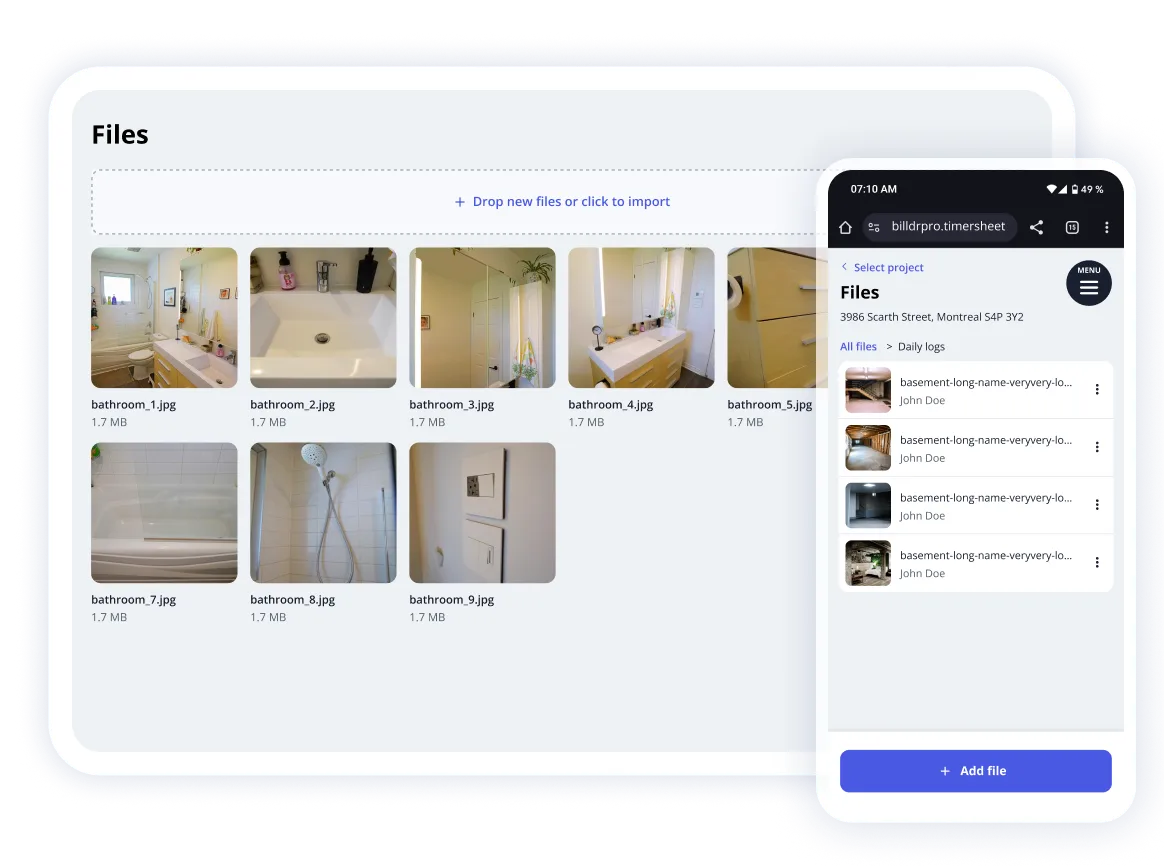
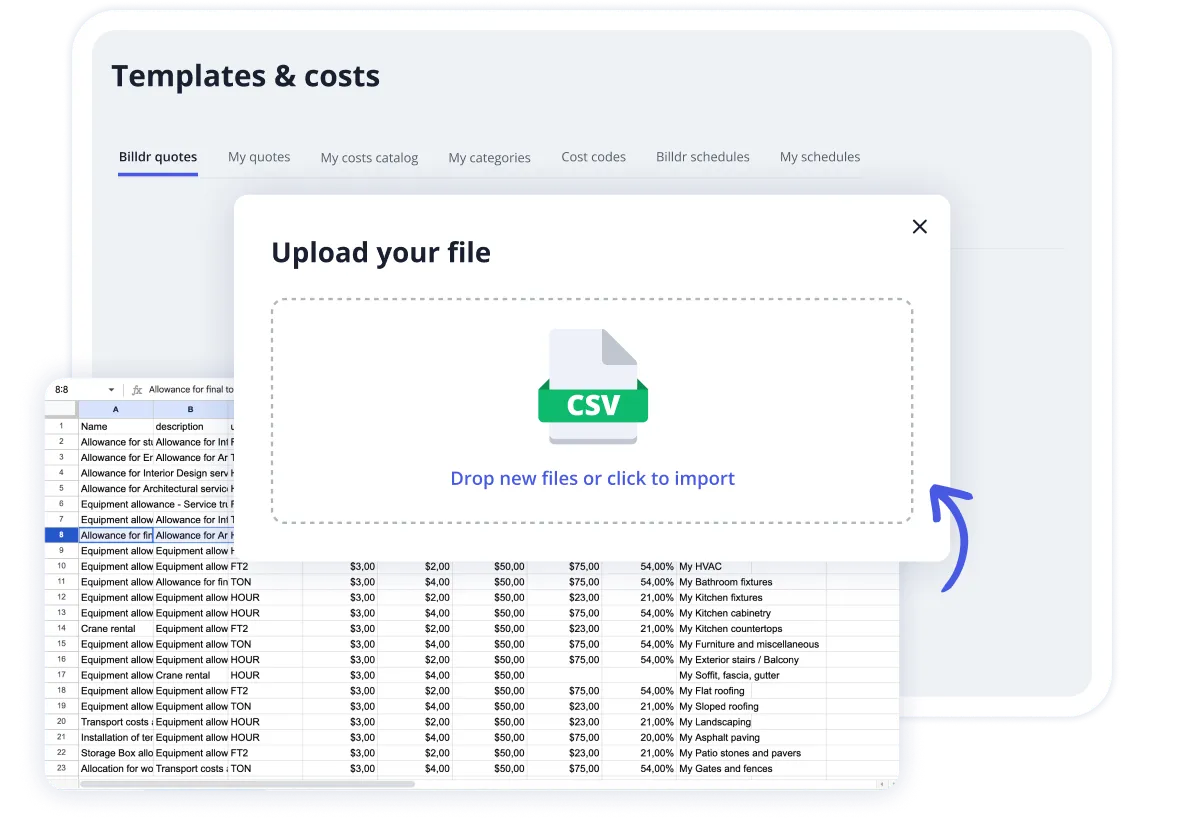
- Statutory Lien Waiver Workflow: Georgia’s lien waivers are governed by specific statutory forms. Billdr allows you to store these templates in your Template Library and mandate their upload via the Subcontractor Portal. By requiring a signed waiver before a progress payment is released, you create a fail-safe process that protects project owners from "double payment" risks and keeps your close-out documentation audit-ready.
Summary of Key Georgia Deadlines (2026)
Building the Future
In 2026, the Georgia commercial market is thriving, but it rewards only the most organized firms. With the $150,000 net worth requirement and the move toward CE Broker integration, the GSLRGC has made it clear that "Limited" is a starting point, but "Unlimited" is a standard. By pairing Georgia’s rapid 15-day payment cycle with the administrative precision of Billdr, you can scale your firm while maintaining the financial and legal transparency that project owners demand.
Official Georgia Resources
1. Georgia State Licensing Board: Commercial GC How-To Guide
Primary Portal: https://sos.ga.gov/how-to-guide/how-guide-commercial-general-contractors This guide is the definitive manual for the Georgia State Licensing Board for Residential and General Contractors. In 2026, it serves as your "pre-flight checklist" for the GOALS (Georgia Online Analytical Licensing System) portal.
- The Financial Affirmation: The guide specifies exactly what constitutes a "proper" net worth affirmation. For General Contractors, it confirms the $150,000 requirement, while the Limited Tier is $25,000.
- GOALS Account Management: Use this to register your Qualifying Agent (QA) and link them to your business entity.
- Continuing Education (CE Broker): As of January 1, 2026, all licensees must use CE Broker to report their continuing education. The guide provides the direct integration steps to avoid a "delinquent" status during your biennial renewal.
2. Georgia Corporations Division: Business Search
Primary Portal: https://ecorp.sos.ga.gov/businesssearch The Business Search tool is your firm's "public record of health." It is the first place a project owner or insurance underwriter will look before signing a contract.
- Control Number Verification: This search tool provides your unique Control Number, which you must include on your state license application.
- Annual Registration Status: You can instantly verify if your firm is "Active/Compliance." In Georgia, if you miss an annual registration filing (due between Jan 1 and April 1), your entity can be administratively dissolved, which automatically invalidates your contractor license.
3. NASCLA: National Exam Information
Primary Portal: https://www.nascla.org/nascla-commercial-exam Since Georgia utilizes the NASCLA Accredited Examination for Commercial General Building Contractors, this portal is where your national trade competency is managed.
- NED Database: After passing the exam, your scores are stored in the National Examination Database (NED). You use this site to electronically "beam" your transcripts directly to the Georgia Board.
- NASCLA Candidate Bulletin: This is the "study bible" for the exam. It lists the 20+ reference books allowed in the testing center and breaks down the 115 questions by category (e.g., project management, site work, structural).
Important Platform Disclaimer
Requirements current as of April 2026; always verify with the official GOALS portal and board. The information provided in this guide is for educational purposes only and does not constitute legal, financial, or licensing advice. Billdr is a project management tool; the user remains solely responsible for ensuring all legal deadlines and statutory requirements are satisfied according to Georgia law (O.C.G.A.).